
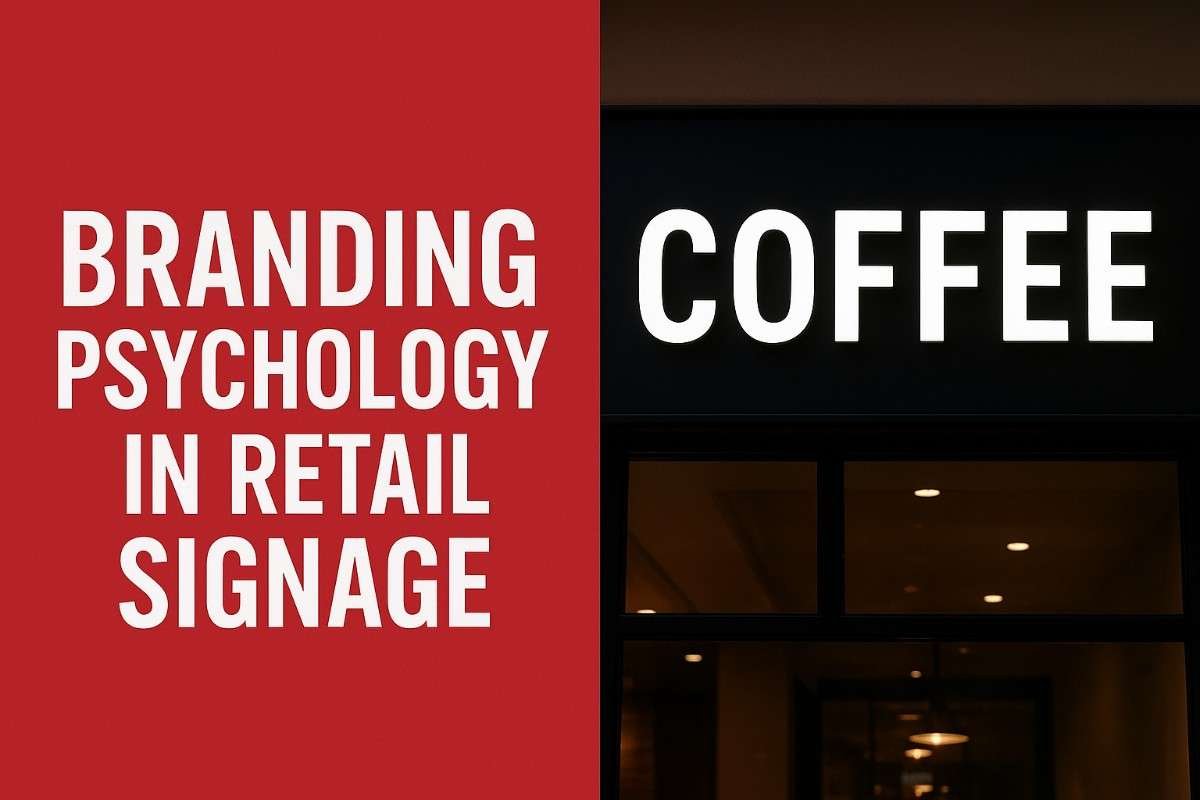
In the competitive world of retail, your signage does far more than show your store’s name—it shapes how customers think, feel, and behave the moment they walk by. This is where retail signage psychology becomes essential. Understanding the psychological principles behind design, colors, fonts, placement, and materials can dramatically improve your store’s ability to attract shoppers and increase conversions.
This guide explores how retail signage influences customer perception and how NYC retailers can use psychological strategies to strengthen their branding.
👉 Explore more sign options: /custom-signs-signage/
1. Why Retail Signage Psychology Matters
Signage is the silent salesperson of your store. It communicates brand personality before a customer even steps inside.
The brain makes snap judgments in 0.1 seconds, meaning your signage must instantly:
- Capture attention
- Create emotional connection
- Reflect brand values
- Build trust
Great retail signage takes branding psychology and turns it into visual communication.
2. The Psychology of Colors in Retail Signage
Colors influence emotions and purchasing behavior. Choosing the right palette is crucial.
Common Retail Color Associations
- Red: urgency, excitement, appetite
- Blue: trust, reliability
- Black & Gold: luxury, premium quality
- Green: freshness, calm, eco-friendly
- Yellow: happiness, optimism
In a fast-paced retail environment like NYC, the right color can be the difference between blending in and standing out.
👉 Need custom-designed visuals? Check out /vinyl-graphics-nyc/
3. Typography and Readability: Why Fonts Matter
The font you choose affects how customers perceive your brand.
Serif Fonts: Classic, trustworthy—great for heritage or luxury brands.
Sans-Serif Fonts: Modern, clean, approachable—perfect for lifestyle and contemporary brands.
Script Fonts: Elegant and personal—but must be legible from a distance.
Psychological Impact: Readable typography reduces cognitive load, making it easier for customers to process your message quickly.
4. The Power of Shape and Layout
Certain shapes trigger specific responses:
- Rounded shapes: friendly, welcoming
- Sharp edges: bold, modern, high-tech
- Symmetry: conveys order and professionalism
- Vertical layouts: prestige, authority
- Horizontal layouts: calm, stable
Retail signage psychology focuses on creating a layout that visually guides the customer’s eyes where you want them to go.
5. Material Psychology: The Feel of the Brand
Materials subtly communicate brand values.
Acrylic & Glass: Sleek, modern, tech-driven.
Metal: Strong, industrial, premium.
Wood: Warm, natural, grounded—great for eco or handcrafted brands.
Vinyl Graphics: Versatile, trendy, cost-effective—ideal for seasonal promotions.
Each material sends its own message about quality, price, and brand identity.
6. Lighting and Illumination: Shaping Mood
Lighting dramatically influences customer emotions. Warm lighting feels inviting, while bright lighting feels energetic and modern.
Backlit or halo-lit retail signs:
- Create a high-end impression
- Boost visibility
- Trigger positive emotional responses
7. How Retail Signage Influences Customer Behavior
Effective retail signage can:
✔ Increase walk-in traffic
✔ Guide customers through the store
✔ Highlight promotions strategically
✔ Encourage impulse purchases
✔ Improve brand recall
✔ Create a memorable shopping experience
Every signage decision—from color to font to lighting—serves a psychological purpose.
8. Applying Psychology to Your Retail Storefront (NYC-Specific Tips)
New York City’s retail environment is fast-paced and competitive. These psychology-based improvements help your sign stand out:
- Use bold, high-contrast colors to compete with visual noise
- Add motion or lighting to break through clutter
- Use clean fonts for quick readability
- Incorporate vinyl graphics for windows to maximize branding space
- Use signage to tell a cohesive brand story
Conclusion
Retail signage is not just decoration—it’s applied psychology. By understanding how color, typography, layout, materials, and lighting impact emotions and behavior, NYC retailers can create signs that attract customers, improve brand perception, and boost sales.
If you want signage that blends design psychology with expert craftsmanship, we’re here to help.
👉 Ready for a custom quote? /request-quote/