
Accessibility isn’t optional in New York City—it’s the law. Businesses, property managers, medical offices, and commercial buildings must comply with ADA sign requirements NYC regulations to ensure spaces are accessible to everyone, including people with disabilities.
Failure to meet ADA signage standards can lead to fines, failed inspections, lawsuits, and reputational damage. This complete guide explains what ADA signs are required in NYC, where they must be installed, and how to stay compliant without sacrificing design.
What Are ADA Signs?
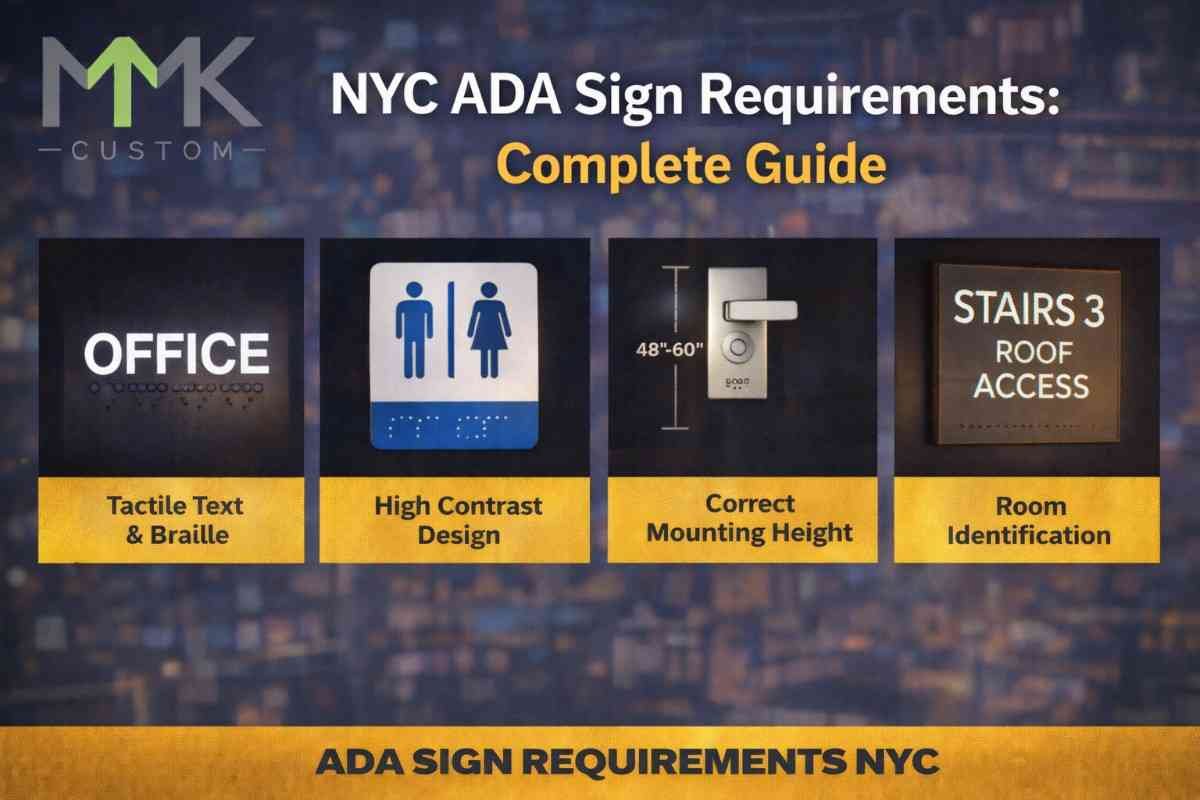
ADA signs are accessibility-compliant signs designed to assist individuals with visual, mobility, or cognitive impairments. These signs follow federal ADA (Americans with Disabilities Act) guidelines, which are strictly enforced in NYC alongside local building codes.
ADA-compliant signs typically include:
- Raised (tactile) lettering
- Braille (Grade 2)
- Proper font styles and character spacing
- High color contrast
- Correct mounting height and placement
👉 Learn more about compliant solutions here: ADA Signs NYC
Which Businesses in NYC Need ADA Signage?
ADA signage is required in most public and commercial spaces, including:
- Office buildings
- Retail stores
- Restaurants and cafés
- Medical and dental clinics
- Hotels and hospitality venues
- Schools and educational facilities
- Apartment buildings with public areas
If the public can access your space, ADA signage is mandatory.
Required ADA Signs in NYC
1. Room Identification Signs
These are the most common ADA signs and must include raised text and Braille.
Examples include:
- Restrooms
- Offices
- Conference rooms
- Mechanical rooms
2. Restroom ADA Signs
Restroom signs must:
- Identify the room function
- Include tactile lettering and Braille
- Be mounted on the wall next to the latch side of the door
3. Exit & Stairwell Identification Signs
Stairwell and exit signs in multi-story buildings require:
- Tactile text
- Braille
- Floor level identification
- High-contrast design
4. Directional ADA Signs
Directional signs guide visitors to accessible routes, entrances, elevators, and restrooms. While not all directional signs require Braille, they must remain clear, legible, and properly contrasted.
ADA Sign Design Requirements (NYC Standards)
To meet ADA sign requirements NYC, signage must follow these core rules:
✔ Text & Font
- Sans-serif fonts only
- No italics or decorative styles
- Characters must be raised at least 1/32 inch
✔ Braille
- Grade 2 Braille required
- Placed directly below corresponding text
✔ Color Contrast
- Minimum 70% contrast between text and background
- Matte or non-glare finishes
✔ Mounting Height
- Baseline of tactile characters: 48–60 inches from floor
- Mounted on the latch side of doors
ADA Interior Signage & NYC Compliance
ADA signs are most commonly part of a larger interior signage system. When designed correctly, ADA signage blends seamlessly into your branding while remaining fully compliant.
👉 Explore interior solutions here: Interior Signage NYC
Professionally designed interior ADA signage ensures:
- Compliance with inspections
- Clear navigation for visitors
- Consistent visual identity
Common ADA Signage Mistakes NYC Businesses Make
Avoid these costly errors:
- Missing Braille or raised text
- Improper mounting height
- Poor color contrast
- Using glossy or reflective finishes
- Installing signs on the wrong side of doors
These mistakes can result in violations even if the sign “looks compliant.”
ADA Inspections, Fines & Legal Risks in NYC
NYC enforces ADA compliance aggressively. Non-compliance may lead to:
- Fines and violation notices
- Mandatory replacement costs
- Legal complaints or lawsuits
- Failed DOB inspections
Proper ADA signage is far less expensive than correcting violations later.
How to Ensure ADA Compliance in NYC?
The safest approach is working with a professional signage provider who understands:
- Federal ADA standards
- NYC building codes
- Installation requirements
- Inspection readiness
An expert consultation helps ensure every sign is correctly designed, produced, and installed the first time.
Final Thoughts
Understanding and meeting ADA sign requirements in NYC is essential for every business and property owner. Compliant signage protects your business legally, improves accessibility, and creates a welcoming environment for all visitors.
Whether you’re opening a new space or upgrading existing signage, investing in proper ADA signs is a smart and responsible decision.