
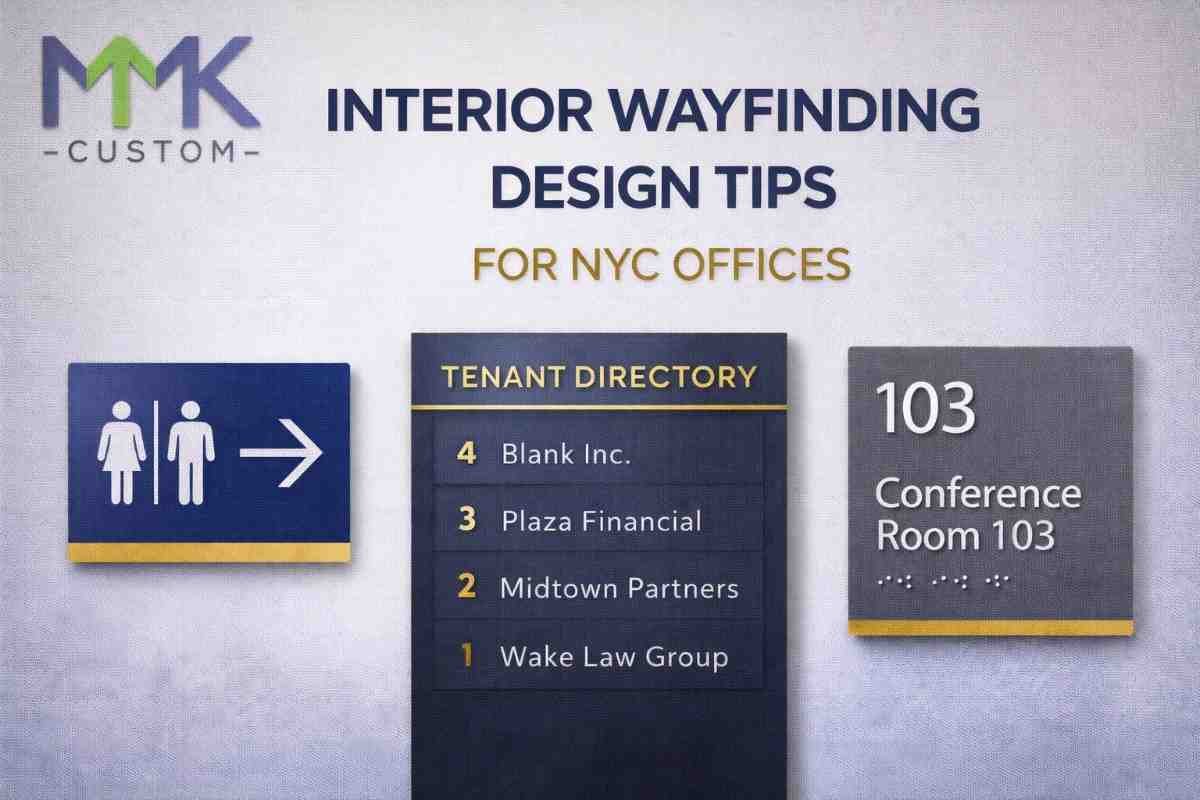
Navigating a large office building in New York City can be overwhelming — especially in multi-floor corporate headquarters, medical centers, coworking spaces, and commercial complexes. That’s why interior wayfinding NYC businesses implement is critical for creating a seamless visitor and employee experience.
Effective wayfinding signage reduces confusion, improves efficiency, enhances accessibility, and reinforces your brand identity. In competitive NYC office environments, clear navigation isn’t just helpful — it’s essential.
Below are practical interior wayfinding design tips tailored for large office spaces.
Why Interior Wayfinding Matters in NYC Offices?
Large offices often include:
- Multiple departments
- Conference rooms
- Shared workspaces
- Elevators and stairwells
- Reception and waiting areas
Without proper navigation systems, visitors can feel lost, and employees waste valuable time giving directions.
Professional interior wayfinding systems are typically part of comprehensive custom interior signage programs that combine reception signs, wall signs, ADA signs, and directional graphics.
1. Start with a Clear Wayfinding Strategy
Before designing signage, evaluate:
- Entry points
- High-traffic areas
- Decision-making intersections (hallways, elevator lobbies)
- Floor layouts
- Visitor flow patterns
Mapping the user journey helps determine where directional signs, directories, and identification signs are most needed.
In NYC high-rise offices, this often includes:
- Lobby directories
- Floor-level directories
- Suite identification signs
- Elevator bank signage
- Restroom and emergency exit markers
2. Maintain Brand Consistency
Interior wayfinding in NYC offices should align with the company’s branding.
Consistent elements include:
- Typography
- Brand colors
- Logo placement
- Material finishes
- Mounting style
When directional signs match lobby and wall signage, the space feels organized and professionally designed. Many NYC companies integrate wayfinding into broader interior signage systems.
3. Prioritize Readability
Wayfinding signage must be clear and easy to read from a distance.
Key readability tips:
- Use high-contrast color combinations
- Choose simple, legible fonts
- Avoid overcrowding text
- Maintain consistent arrow styles
- Ensure proper letter sizing based on viewing distance
In large offices, small design mistakes can create major navigation problems.
4. Incorporate ADA-Compliant Design
Accessibility is mandatory in NYC commercial spaces. Interior wayfinding must meet ADA standards, including:
- Raised lettering
- Braille
- Proper mounting height
- High color contrast
ADA-compliant signage ensures your office is accessible to all visitors while maintaining a polished, modern appearance.
5. Use Hierarchical Signage Systems
Large offices function best with layered wayfinding systems:
Primary Signs
- Main lobby directories
- Floor maps
Secondary Signs
- Directional hallway signs
- Department indicators
Tertiary Signs
- Room numbers
- Office nameplates
This structured approach guides visitors step-by-step instead of overwhelming them with too much information at once.
6. Consider Materials & Durability
NYC office buildings experience heavy foot traffic. Wayfinding signage should be:
- Durable
- Scratch-resistant
- Easy to clean
- Professionally mounted
Popular materials include:
- Acrylic panels
- Aluminum signs
- Vinyl wall graphics
- Dimensional lettering
High-quality materials ensure signage remains professional-looking for years.
7. Leverage Wall Graphics for Large Spaces
In expansive corporate offices, vinyl wall graphics can reinforce directional cues.
Examples include:
- Color-coded departments
- Large floor numbers
- Branded directional arrows
- Inspirational graphics guiding employees through corridors
This approach blends branding with navigation, making wayfinding functional and visually engaging.
8. Integrate Digital Directories (When Appropriate)
Modern NYC offices sometimes incorporate digital directory screens in lobbies. These allow:
- Real-time updates
- Tenant listings
- Event information
- Interactive navigation
Digital solutions work best when combined with clear physical signage throughout the building.
9. Test the Visitor Experience
After installation, evaluate your wayfinding system by asking:
- Can a first-time visitor find the reception without help?
- Are restrooms clearly marked?
- Are meeting rooms easy to locate?
- Is emergency exit signage visible and compliant?
If visitors frequently ask for directions, your signage system may need refinement.
10. Work with Professional Signage Designers
Interior wayfinding for NYC businesses requires strategic planning, fabrication expertise, and proper installation.
Professionally designed systems:
- Ensure code compliance
- Maintain brand consistency
- Improve user experience
- Reduce long-term maintenance issues
If you’re planning to upgrade your office navigation system, the first step is requesting a tailored consultation
Benefits of Strong Interior Wayfinding in Large Offices
When done correctly, wayfinding signage:
- Improves operational efficiency
- Enhances visitor confidence
- Strengthens brand perception
- Reduces employee interruptions
- Supports accessibility compliance
In NYC’s fast-paced business environment, seamless navigation directly contributes to productivity and professionalism.
Final Thoughts
The importance of interior wayfinding that NYC offices implement cannot be overstated. In large commercial spaces, clear and consistent navigation systems transform confusing layouts into organized, welcoming environments.
From lobby directories to ADA-compliant room identification signs, strategic wayfinding design ensures your office functions as smoothly as it looks.
If your large office space needs improved navigation and cohesive interior signage, investing in a professionally designed wayfinding system is one of the smartest upgrades you can make.