
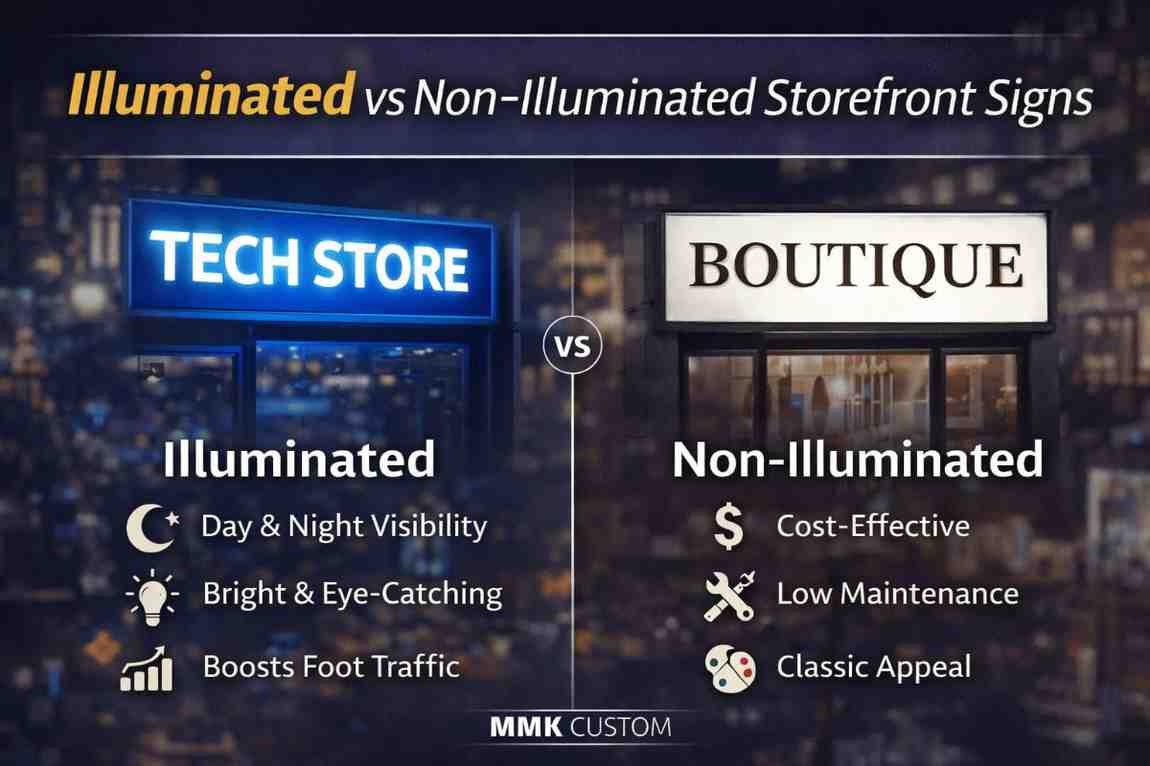

Choosing between illuminated and non-illuminated signage is one of the most important decisions for any retail business. The right choice can significantly impact your visibility, branding, and customer engagement—especially in a competitive market like NYC.
If you’re exploring illuminated storefront signs in NYC, this guide will help you understand the differences and choose the best option for your business.
Why Storefront Signage Matters?
Your storefront sign is often the first impression customers have of your business. In busy streets and crowded retail environments, signage must:
- Capture attention instantly
- Clearly communicate your brand
- Remain visible day and night
High-quality storefront retail signage solutions in NYC are designed to maximize both visibility and impact.
What Are Illuminated Storefront Signs?
Illuminated signs use lighting elements such as LEDs or neon to enhance visibility.
Common Types:
- Backlit signs
- Channel letters
- LED lightbox signs
- Halo-lit signs
Many modern businesses prefer acrylic backlit signage solutions in NYC for their sleek appearance and strong visibility.
Benefits of Illuminated Signs
- 24/7 Visibility: Your business remains visible even at night
- High Attention Value: Bright signage stands out in crowded areas
- Modern and Professional Look: Enhances brand perception
- Increased Foot Traffic: More visibility = more walk-ins
Drawbacks of Illuminated Signs
- Higher upfront cost
- Requires electricity
- Maintenance of lighting components
However, the long-term benefits often outweigh these factors.
What Are Non-Illuminated Storefront Signs?
Non-illuminated signs rely on natural or ambient light.
Common Types:
- Painted signs
- Vinyl graphics
- Metal or wood signs
- Acrylic panels without lighting
Benefits of Non-Illuminated Signs
- Cost-Effective: Lower initial investment
- Low Maintenance: No electrical components
- Classic and Elegant Look: Great for boutique or minimalist brands
- Easy Installation: Simpler setup compared to illuminated signs
Drawbacks of Non-Illuminated Signs
- Limited nighttime visibility
- Less eye-catching in crowded areas
- May rely heavily on external lighting
Illuminated vs Non-Illuminated: Key Differences
| Feature | Illuminated Signs | Non-Illuminated Signs |
|---|---|---|
| Visibility | Day & Night | Mostly Daytime |
| Cost | Higher | Lower |
| Maintenance | Moderate | Low |
| Impact | High | Moderate |
| Best Use | High-traffic areas | Low-light or niche branding |
Which Option Is Best for NYC Businesses?
In a city like NYC, where competition is intense and foot traffic continues after dark, illuminated signage often provides a strong advantage.
Choose Illuminated Signs If:
- Your business operates at night
- You’re in a high-traffic area
- You want maximum visibility
Choose Non-Illuminated Signs If:
- You’re working with a limited budget
- Your business operates only during the day
- You prefer a subtle or classic aesthetic
Many businesses combine both for maximum effectiveness.
The Role of Materials in Sign Performance
The durability and effectiveness of your signage also depend on materials. Businesses that align lighting choices with retail sign material strategies in NYC achieve better long-term performance and ROI.
Boost Your Business with the Right Signage
Your choice between illuminated and non-illuminated signage should align with your business goals, location, and branding. Start your project with a custom signage quote request and get expert guidance tailored to your business needs.n