
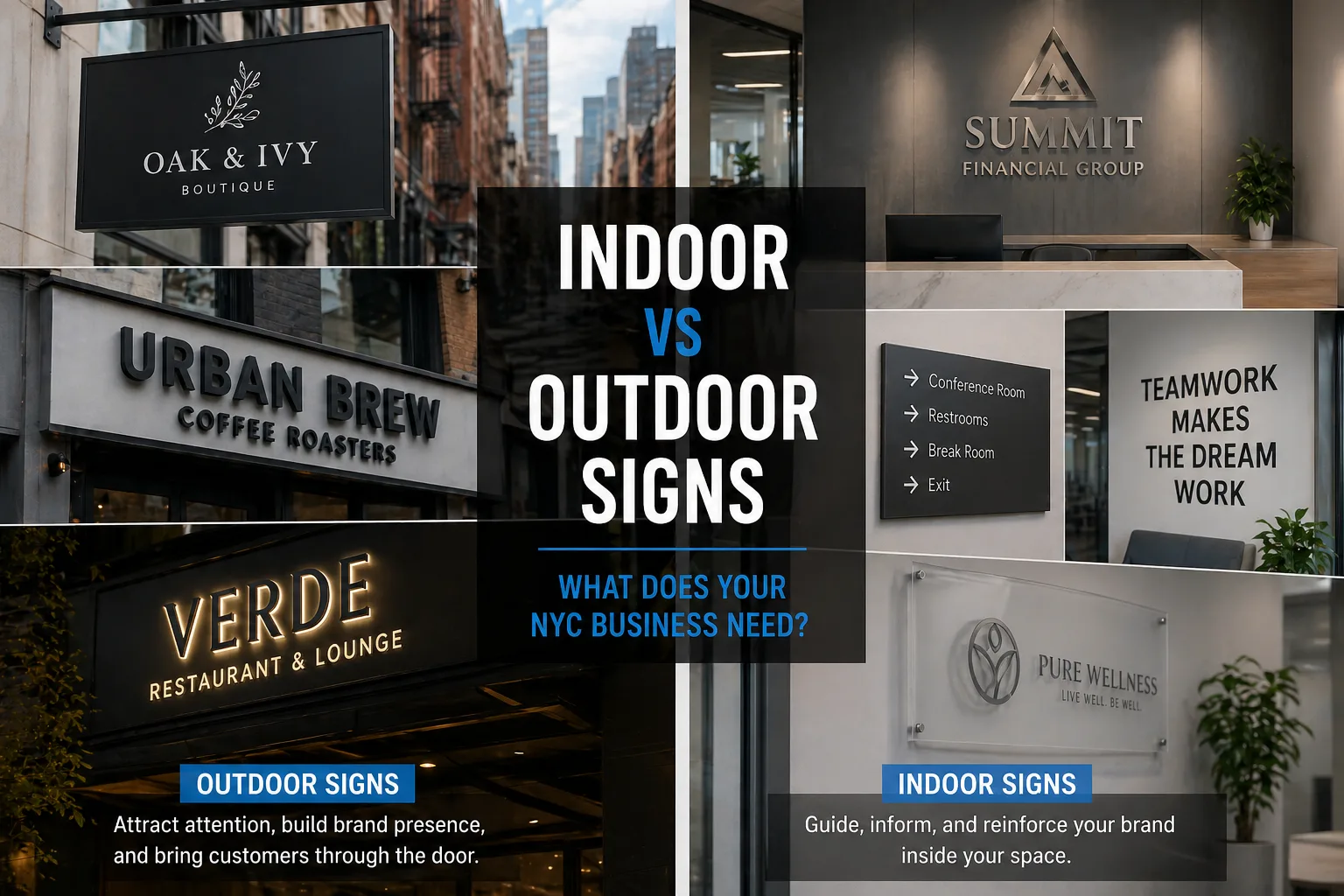

Choosing the right signage is one of the most important branding decisions for any business in New York City. Whether you run a retail store, office, restaurant, or medical practice, your signage directly impacts visibility, customer experience, and brand perception.
But one common question businesses ask is:
👉 Should you invest in indoor signs, outdoor signs, or both?
The answer depends on your business goals, location, customer flow, and branding strategy. In this guide, we’ll compare indoor vs outdoor signs and help you decide what your NYC business truly needs.
Why Business Signage Matters in NYC?
NYC is one of the most competitive business environments in the world. Advertising, storefronts, and visual distractions constantly surround customers.
Effective signage helps businesses:
- Increase visibility
- Improve customer navigation
- Strengthen branding
- Create professional first impressions
- Drive more walk-in traffic
The right combination of indoor and outdoor signage can dramatically improve how customers interact with your business.
What Are Outdoor Signs?

Outdoor signs are designed to attract attention from outside your business location.
These signs are typically installed on:
- Storefronts
- Building exteriors
- Sidewalk displays
- Windows
- Pylons or monument structures
Popular outdoor signage includes:
- Channel letter signs
- Blade signs
- LED illuminated signs
- Window graphics
- Building-mounted signage
Many NYC businesses invest heavily in exterior signage for buildings because it’s often the first thing potential customers notice.
Benefits of Outdoor Signs
- Increased Visibility: Outdoor signage helps customers discover your business—even from a distance.
- Better Brand Recognition: Consistent exterior branding improves customer trust and memorability.
- 24/7 Marketing: Illuminated signs promote your business day and night.
- Higher Walk-In Traffic: Eye-catching storefront signs encourage impulse visits.
Challenges of Outdoor Signs
Because NYC weather can be harsh, outdoor signs face:
- Rain and snow
- UV exposure
- Wind and pollution
- Temperature fluctuations
That’s why selecting durable signage materials NYC businesses can rely on is essential for long-term performance.
What Are Indoor Signs?

Indoor signs are installed inside your business space to improve branding, navigation, and customer experience.
Common indoor signs include:
- Reception signs
- Wall graphics
- Wayfinding signage
- ADA signs
- Conference room signs
- Acrylic logo displays
Businesses often use interior office signage solutions to create polished and professional environments.
Benefits of Indoor Signs
- Enhances Customer Experience: Wayfinding signs make navigation easier for visitors.
- Reinforces Branding: Interior signs create a cohesive branded environment.
- Improves Office Aesthetics: Modern signage transforms plain interiors into engaging spaces.
- Supports Employee Productivity: Clear directional signage improves organization and workflow.
Indoor vs Outdoor Signs – Key Differences
| Feature | Indoor Signs | Outdoor Signs |
|---|---|---|
| Main Purpose | Branding & navigation | Visibility & attraction |
| Exposure | Controlled environment | Weather exposure |
| Durability Needs | Moderate | High |
| Lighting Requirements | Optional | Often essential |
| Customer Impact | Experience-focused | Attention-focused |
Which Signs Does Your NYC Business Need?
The ideal solution depends on your business type.
Retail Stores
Best Choice: ✅ Strong outdoor signage + promotional indoor signage
Recommended:
- Illuminated storefront signs
- Window graphics
- Indoor product displays
Corporate Offices
Best Choice: ✅ Interior branding + professional exterior identity
Recommended:
- Reception logo signs
- Wayfinding signage
- Building entrance signs
Restaurants & Cafés
Best Choice: ✅ High-visibility outdoor signs + indoor ambiance branding
Recommended:
- LED signs
- Menu boards
- Wall murals
Medical Offices
Best Choice: ✅ Clear wayfinding + professional building signage
Recommended:
- ADA signs
- Reception signs
- Exterior directional signage
Why Many NYC Businesses Need Both?
The most successful businesses strategically combine indoor and outdoor signage.
- Outdoor Signs: 👉 Bring customers in
- Indoor Signs: 👉 Improve their experience once inside
This combination strengthens branding and creates a seamless customer journey.
Choosing the Right Signage Materials
Material selection matters—especially in NYC.
Best Outdoor Materials:
- Aluminum
- Stainless steel
- Acrylic with UV protection
- LED components
Best Indoor Materials:
- Acrylic
- Vinyl graphics
- PVC
- Frosted glass film
Outdoor signage requires stronger materials because of constant exposure to weather and pollution.
Signage Trends NYC Businesses Are Using
Current trends include:
- Halo-lit channel letters
- Minimalist acrylic signage
- Large-format wall graphics
- Sustainable materials
- Smart digital signage
Modern businesses are focusing on signage that combines functionality with aesthetic appeal.
Final Thoughts
So, what does your NYC business need—indoor or outdoor signs?
The answer is usually both.
- Outdoor signage attracts customers and builds visibility
- Indoor signage improves branding and customer experience
Together, they create a complete signage strategy that helps your business stand out in one of the world’s most competitive markets.
If you’re unsure which signage solution is right for your space, it’s best to get professional guidance tailored to your location, goals, and branding needs.
👉 Ready to upgrade your business signage? Get expert signage recommendations and discover the best indoor and outdoor sign solutions for your NYC business.