
Understanding ADA Signage Requirements for New York Offices and Buildings (2026 Guide)
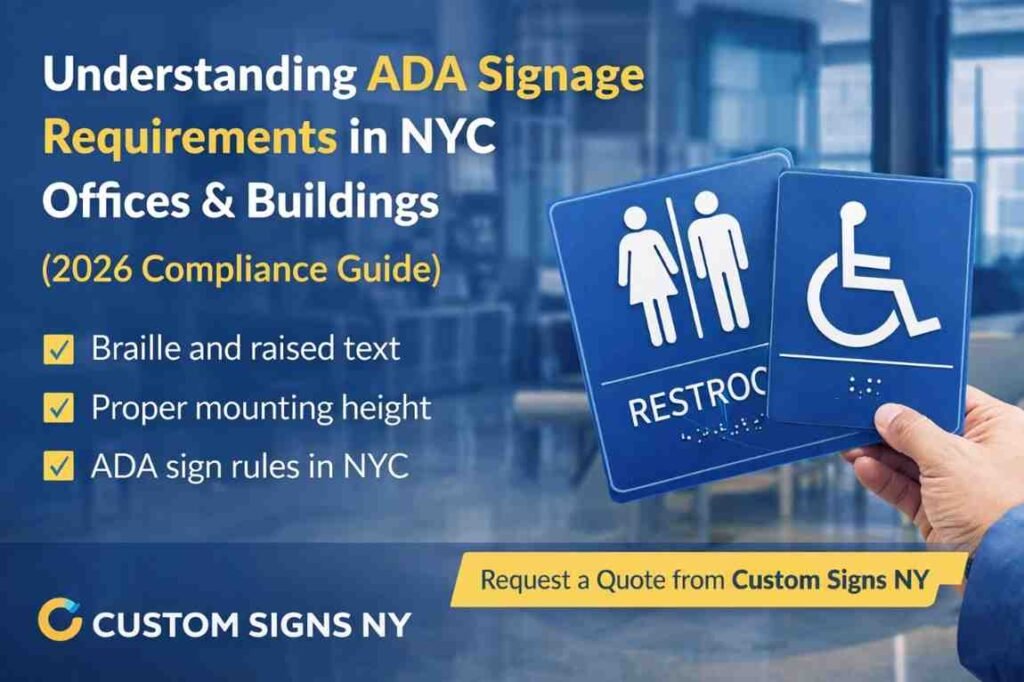
In New York City, ADA-compliant signage is more than just a legal requirement — it represents a commitment to accessibility, professionalism, and inclusivity. Whether you operate an office, retail store, medical practice, or commercial building, understanding ADA signage requirements in NYC is essential for staying compliant with both federal and local building regulations. The Americans with Disabilities Act (ADA) requires businesses and public facilities to install accessible signage that helps individuals with visual or mobility impairments navigate buildings independently. This guide explains what ADA signs are, where they’re required, and how businesses in New York can meet both ADA standards and NYC building code requirements. What Are ADA Signs? ADA signs are accessible signs designed to assist individuals with visual impairments by incorporating tactile characters, Braille, and high-contrast text. These signs allow people to locate rooms, exits, elevators, and other facilities safely within a building. In most NYC commercial buildings, ADA signage is required for permanent rooms and spaces, including: These regulations apply to: Businesses installing compliant signage should consider professionally designed ADA signs in NYC to ensure both accessibility and modern aesthetics. Key ADA Signage Requirements for NYC Buildings To comply with the ADA and NYC building codes, your signage must follow specific design, installation, and accessibility rules. Here are the most important factors to consider: 1. Raised Letters and Braille One of the most recognizable features of ADA signage is the raised tactile lettering combined with Grade 2 Braille. Key requirements include: Businesses typically use simple sans-serif fonts such as: These fonts improve readability and tactile clarity. 2. High Contrast and Non-Glare Finish ADA signage must provide strong visual contrast between the background and text. Common compliant combinations include: Signs must also use non-glare finishes so overhead lighting does not make the text difficult to read. This requirement is particularly important for office hallways, lobbies, and elevators, where lighting reflections are common. 3. ADA Pictograms and Universal Symbols Certain spaces require pictograms or universal symbols to help visitors identify facilities instantly. Examples include: ADA rules require pictograms to be placed within a 6-inch-high field with no text inside that space. Text labels should be placed below the pictogram, along with Braille translations. 4. Mounting Height and Placement Correct installation placement is critical for compliance. ADA mounting requirements include: This placement ensures people with visual impairments can locate signs consistently across buildings. 5. Permanent vs. Temporary Signs Not every sign needs to follow ADA guidelines. ADA rules apply primarily to permanent room identification signs, such as: Temporary signage, such as event notices, paper room schedules, or promotional signs, does not require ADA compliance. However, maintaining consistent accessible signage throughout a building improves navigation and overall visitor experience. ADA Signage Requirements Table Requirement ADA Standard Raised characters Minimum 1/32 inch depth Character height 5/8 inch – 2 inches Braille type Grade 2 Braille Mounting height 48–60 inches from floor Finish Non-glare Contrast High contrast between text and background NYC Building Code & ADA Compliance While ADA rules are federal regulations, New York City adds additional requirements under NYC Building Code Chapter 11 and Local Law 58. These laws expand accessibility requirements for commercial properties. Failure to comply with ADA and NYC building code signage requirements may lead to: If you are planning new building signage, you may also need to obtain a city permit. You can learn more in our guide on How to Get Sign Permits in NYC. Benefits of ADA-Compliant Office Signs Beyond legal compliance, ADA signage offers lasting business benefits: At Custom Signs NY, we specialize in designing ADA signs that meet federal and local NYC codes — without compromising your visual branding. How to Choose the Right ADA Signs for Your Office? When selecting ADA signage for your building, consider the following factors: Many NYC businesses choose custom ADA signage systems that align with their brand colors while still meeting federal accessibility standards. Get Expert Help with ADA Signage in NYC If you’re unsure whether your building meets ADA signage standards, don’t wait until an inspection. Our team at Custom Signs NY can help you: Ready to make your business accessible and compliant? 👉 Request a Quote today and get started with expert ADA signage solutions for your NYC office or building. Frequently Asked Questions About ADA Signage in NYC Are ADA signs required in all commercial buildings? Yes. ADA signage is required in most public and commercial buildings, particularly for permanent rooms such as restrooms, stairways, and offices. Do ADA signs require Braille? Yes. Permanent room identification signs must include Grade 2 Braille placed below raised tactile lettering. Where should ADA signs be installed? ADA signs must be mounted 48–60 inches above the floor on the latch side of doors to ensure consistent accessibility. Do temporary signs need to be ADA compliant? No. Temporary signs such as event notices or paper room schedules are typically exempt from ADA signage requirements.