
Braille Signage: Materials & Compliance Tips (NYC Guide)
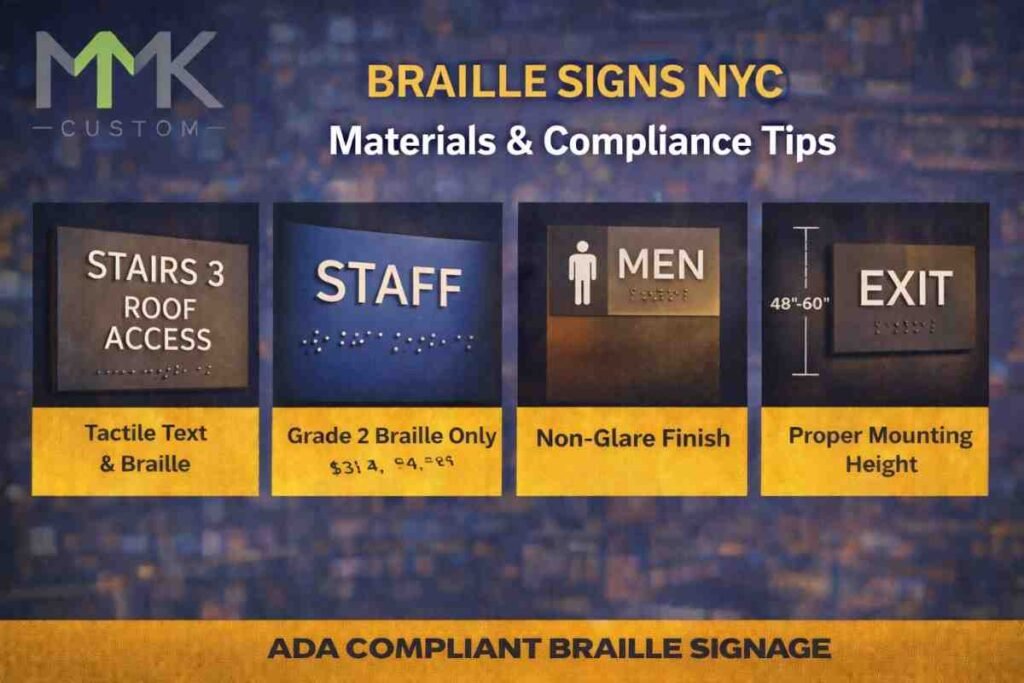
Braille signage plays a critical role in accessibility, helping people with visual impairments navigate public and commercial spaces safely and independently. In New York City, Braille signs NYC are not optional. They are a core requirement under ADA regulations and local building codes. This guide explains what braille signage is, which materials work best, where braille signs are required, and how NYC businesses can stay compliant without compromising on design. What Is Braille Signage? Braille signage includes raised tactile lettering and Grade 2 Braille, allowing individuals who are blind or visually impaired to identify rooms, exits, and essential facilities through touch. In NYC, braille signage is mandatory for: 👉 For full compliance solutions, explore ADA Signs NYC. ADA Braille Sign Requirements in NYC To meet ADA and NYC code standards, braille signs must follow strict guidelines: ✔ Grade 2 Braille Only ✔ Raised Tactile Text ✔ High Contrast & Non-Glare Finish ✔ Proper Mounting Height Incorrect placement is one of the most common reasons NYC businesses fail inspections. Best Materials for Braille Signs in NYC Choosing the right material is essential for durability, hygiene, and long-term compliance—especially in high-traffic NYC environments. 1. Acrylic Braille Signs Acrylic is one of the most popular materials for office buildings, medical facilities, and hospitality spaces. 2. Metal Braille Signs Metal braille signs are common in luxury hotels, corporate offices, and Class A buildings. 3. ADA-Compliant Plaque Signs Braille plaques combine durability with a premium look and are widely used for room identification. 👉 See options for custom plaques designed to meet ADA requirements. 4. Photopolymer Braille Signs Where Braille Signs Are Required (NYC) Braille signage must be installed in all permanent interior locations, including: Temporary spaces and movable signs do not require braille, but permanent identification signs always do. Common Braille Sign Mistakes to Avoid NYC inspectors frequently cite these errors: Avoiding these mistakes saves money and prevents legal risk. Custom Braille Signage vs Generic Signs Generic, off-the-shelf braille signs often fail NYC-specific requirements. Custom braille signage ensures: Professional fabrication is especially important for hospitality, healthcare, and multi-tenant buildings. Why Braille Signage Matters Beyond Compliance? Beyond regulations, braille signage: In a city as diverse and regulated as NYC, accessible signage is both a legal and ethical standard. Get ADA-Compliant Braille Signs in NYC If you’re planning a new space or upgrading existing signage, working with an experienced provider ensures compliance from day one. 👉 Request a Quote for custom braille signs in NYC tailored to your building, branding, and regulatory needs. Final Thoughts Braille signage is a small detail with a major impact. By choosing the right materials, following ADA rules, and ensuring proper installation, NYC businesses can stay compliant while creating accessible, welcoming spaces for everyone.