
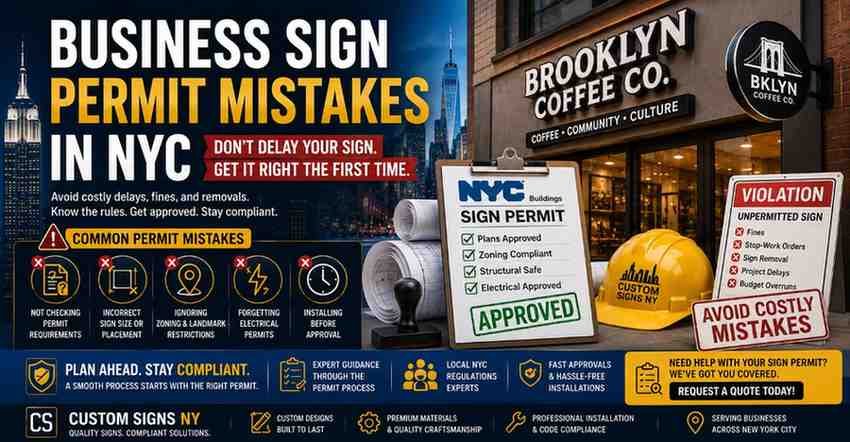
Installing a new business sign is an exciting milestone, but before your sign goes up, it’s essential to understand New York City’s permitting requirements. Many business owners assume they can simply order a sign and install it immediately. In reality, overlooking permit requirements can lead to costly delays, fines, failed inspections, or even mandatory sign removal.
Whether you’re opening a retail store, office, restaurant, or commercial facility, understanding business sign permits NYC requirements can save you time, money, and frustration.
This guide covers the most common permit mistakes businesses make and explains how to avoid them.
Why Business Sign Permits Matter in NYC?
New York City has some of the most comprehensive signage regulations in the country. Sign permits help ensure that commercial signs are:
- Structurally safe
- Properly installed
- Compliant with zoning laws
- Safe for pedestrians
- Consistent with building codes
Failure to obtain the proper permits may result in:
- Installation delays
- Building violations
- Financial penalties
- Required sign removal
- Failed inspections
For a complete overview of the permitting process, read our How to Get Sign Permits in NYC: Step-by-Step Guide for Business Owners
Mistake #1: Assuming Every Sign Doesn’t Need a Permit
One of the biggest misconceptions is believing that every business sign automatically requires a permit—or that none do.
In reality, permit requirements depend on factors such as:
- Sign size
- Sign type
- Installation method
- Building location
- Illumination
- Local zoning regulations
For example:
- Interior office signs may not require permits.
- Large exterior illuminated signs often do.
- Building-mounted signs usually require approval.
Always verify permit requirements before fabrication begins.
Mistake #2: Ordering a Sign Before Checking Local Regulations
Many businesses purchase signs before confirming whether they comply with NYC regulations.
Problems may include:
- Oversized signs
- Incorrect placement
- Prohibited illumination
- Non-compliant projections
- Zoning restrictions
If your sign doesn’t meet city requirements, redesigning or replacing it can become expensive.
Working with an experienced signage company early in the process helps avoid these issues.
Mistake #3: Ignoring Zoning Restrictions
Different NYC neighborhoods have different zoning rules.
Factors that may affect your signage include:
- Commercial zoning district
- Historic districts
- Landmark buildings
- Mixed-use developments
- Residential proximity
Ignoring zoning restrictions can delay approvals or prevent installation altogether.
Mistake #4: Choosing the Wrong Sign Size
Larger isn’t always better.
NYC regulations often limit:
- Sign height
- Width
- Square footage
- Projection distance
- Mounting location
A sign that’s too large may require redesign before approval.
Proper planning helps ensure compliance while maximizing visibility.
Mistake #5: Installing a Sign Without Approval
Some business owners install signs before receiving official approval to avoid delays.
This can create significant problems.
Possible consequences include:
- Stop-work orders
- Removal requirements
- Fines
- Inspection failures
It’s always safer—and often less expensive—to wait until permits are approved.
Mistake #6: Forgetting About Electrical Permits
Illuminated signs frequently require additional approvals.
These may include:
- Electrical permits
- Licensed electrical contractors
- Wiring inspections
- Final electrical approval
Common illuminated signs include:
- Channel letters
- Cabinet signs
- LED logo signs
- Digital displays
Ignoring electrical requirements can delay project completion.
Mistake #7: Hiring Inexperienced Installers
Professional installation isn’t just about appearance.
Experienced installers understand:
- NYC building regulations
- Permit requirements
- Structural engineering
- Safety codes
- Inspection standards
Choosing an experienced sign company reduces compliance risks.
Mistake #8: Missing Required Documentation
Permit applications often require documentation such as:
- Site surveys
- Engineering drawings
- Sign specifications
- Structural calculations
- Building information
Incomplete applications are one of the most common reasons for approval delays.
Mistake #9: Overlooking Historic District Rules
Businesses located within historic districts may face additional requirements.
Historic preservation regulations often affect:
- Sign materials
- Colors
- Lighting
- Mounting methods
- Sign dimensions
Additional approvals may be necessary before fabrication begins.
Mistake #10: Not Planning for Inspection Timelines
Permitting isn’t the final step.
Many projects also require inspections before signs can be considered fully compliant.
Common inspection stages include:
- Structural inspection
- Electrical inspection
- Final approval
Building these timelines into your project schedule helps prevent opening delays.
Signs That Commonly Require NYC Permits
Permit requirements vary depending on the project, but common examples include:
- Channel letter signs
- Building-mounted signs
- Illuminated storefront signs
- Cabinet signs
- Blade signs
- Monument signs
- Pole signs
- Large wall signs
Some temporary or interior signs may not require permits, depending on the installation.
How to Avoid Permit Problems
The easiest way to avoid costly mistakes is to plan ahead.
Best practices include:
- Research Requirements Early: Understand permit requirements before ordering your sign.
- Work With Experienced Professionals: A knowledgeable signage company can help navigate NYC regulations.
- Verify Building Restrictions: Some landlords or property managers have additional signage requirements.
- Allow Time for Approvals: Permit approvals often take longer than expected.
Starting early helps keep projects on schedule.
Why Professional Sign Companies Simplify the Process?
Experienced signage professionals can often assist with:
- Site evaluations
- Permit applications
- Design adjustments
- Engineering coordination
- Fabrication
- Installation
- Inspection preparation
This saves business owners significant time while reducing compliance risks.
For more information about outdoor signage regulations, explore our NYC Outdoor Sign Permit Guide
Invest in Compliance From Day One
Business signage is a long-term investment, and obtaining the proper permits protects that investment.
By avoiding common permit mistakes, you can:
- Reduce delays
- Avoid unnecessary expenses
- Ensure code compliance
- Open your business on schedule
- Install signage with confidence
Whether you’re installing storefront signs, illuminated channel letters, or building signage, proper planning makes the entire process smoother.
Get Expert Help With NYC Sign Permits
Navigating NYC permit regulations doesn’t have to be complicated. At Custom Signs NY, we assist businesses throughout the permitting, design, fabrication, and installation process. Our experienced team understands local regulations and works to help your project move forward efficiently and compliantly.
👉 Request a Quote today to discuss your signage project and permit requirements:
Frequently Asked Questions
Do all business signs require permits in NYC?
No. Permit requirements depend on the sign type, size, location, illumination, and installation method.
How long does a business sign permit take?
Approval timelines vary depending on the project, documentation, and city review process.
Can I install a sign before receiving approval?
No. Installing a sign before permit approval may result in violations, fines, or removal requirements.
Do illuminated signs require additional permits?
Often, yes. Electrical permits and inspections may be required for illuminated signage.
Can a sign company help obtain permits?
Yes. Experienced sign companies often assist with permitting, engineering documentation, fabrication, and installation.