
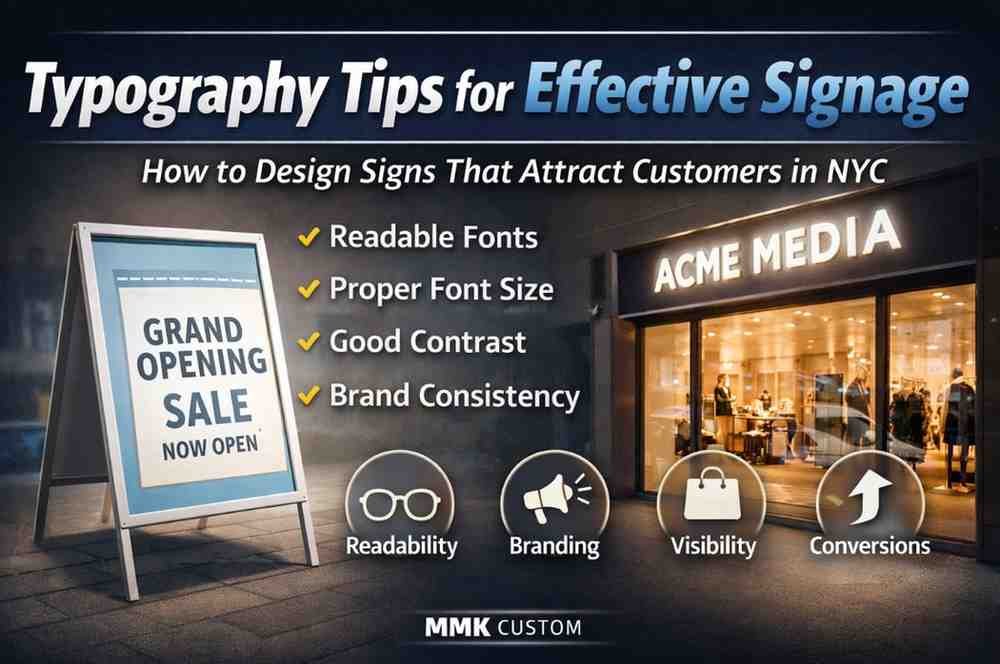

Typography plays a crucial role in how your signage communicates with customers. Whether it’s a storefront sign, office branding, or wayfinding system, the right font choice can improve readability, reinforce brand identity, and drive customer action.
For businesses investing in custom signs and signage solutions, typography is not just about style—it’s about performance.
Why Typography Matters in Signage?
Good typography ensures your message is:
- Easy to read from a distance
- Visually appealing
- Consistent with your brand
- Effective in guiding customer decisions
In competitive markets like NYC, signage must grab attention instantly—making typography one of the most important design elements.
1. Choose Readable Fonts Over Decorative Ones
While decorative fonts may look attractive, they often reduce readability—especially from a distance.
Best Practice:
- Use sans-serif fonts for modern signage
- Avoid overly stylized or script fonts
- Keep letterforms clean and simple
Businesses focusing on interior signage solutions in NYC often prioritize readability to ensure clear navigation and communication inside offices and commercial spaces.
2. Focus on Font Size and Viewing Distance
The size of your text should match the viewing distance.
General Rule:
- 1 inch letter height = visibility from 10 feet
- Large outdoor signs require bold, oversized fonts
- Indoor signs can use smaller but still legible text
For storefronts and large-scale displays, proper typography is essential in custom signage strategies to ensure visibility from passing traffic.
3. Maintain Strong Contrast
Contrast between text and background is key for readability.
Effective Combinations:
- Dark text on a light background
- Light text on a dark background
- Avoid low-contrast combinations like gray on white
Good contrast ensures your signage stands out in both daytime and nighttime conditions.
4. Limit the Number of Fonts
Using too many fonts creates visual clutter and confusion.
Best Practice:
- Stick to 1–2 fonts maximum
- Use one font for headings and another for body text
- Maintain consistency across all signage
Consistent typography strengthens branding and improves customer recognition.
5. Pay Attention to Letter Spacing (Kerning)
Proper spacing between letters improves readability and overall design balance.
Tips:
- Avoid letters that are too close or too far apart
- Ensure uniform spacing for a clean look
- Test readability from different distances
6. Use Hierarchy to Guide Attention
Typography should guide the viewer’s eye to the most important information first.
Example:
- Headline (largest, boldest)
- Subheading (medium size)
- Supporting text (smaller size)
This structure helps customers quickly understand your message without confusion.
7. Align Typography with Your Brand Identity
Your font choice should reflect your brand personality.
Examples:
- Modern brands → clean sans-serif fonts
- Luxury brands → elegant serif fonts
- Creative brands → bold and unique typography
Businesses investing in custom signs and branding solutions often use typography to create a lasting impression and reinforce brand identity.
8. Avoid ALL CAPS Overuse
While uppercase text can be powerful, overusing it reduces readability.
Best Practice:
- Use ALL CAPS for short headlines only
- Avoid using it for long sentences
- Combine uppercase with lowercase for better readability
9. Test Your Signage in Real Conditions
Before finalizing your signage:
- View it from different distances
- Check visibility in various lighting conditions
- Ensure readability from multiple angles
This step ensures your typography performs well in real-world environments.
10. Keep It Simple and Clear
The most effective signage is simple and easy to understand.
Remember:
- Less is more
- Focus on key messaging
- Avoid overcrowding text
Clear typography leads to better engagement and higher customer response.
How Typography Impacts Business Results?
Well-designed typography can:
- Increase foot traffic
- Improve customer experience
- Strengthen brand recall
- Boost conversions
Whether it’s a storefront, office, or retail space, typography directly affects how customers interact with your business.
Upgrade Your Signage with Better Typography
If you want signage that stands out and delivers results, typography should be a top priority. From font selection to layout and spacing, every detail matters.
Start your project with a custom signage quote request and bring your vision to life with expert design and execution.