Custom Signs NYC

Typography Tips for Effective Signage

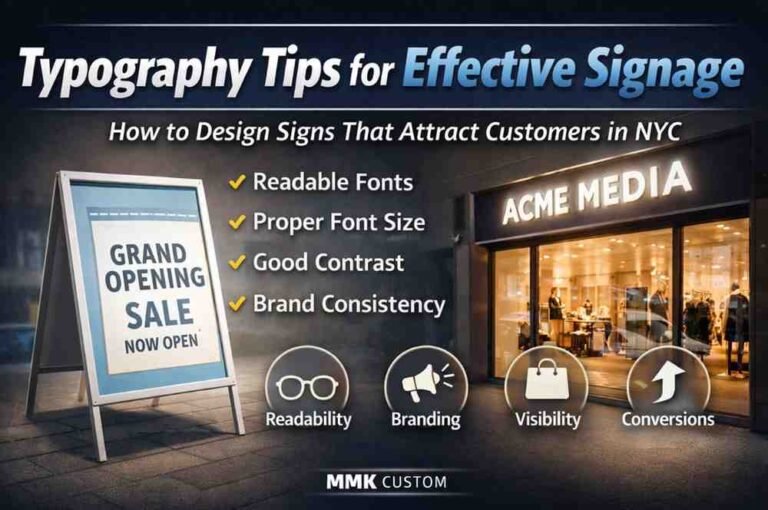
Typography plays a crucial role in how your signage communicates with customers. Whether it’s a storefront sign, office branding, or wayfinding system, the right font choice can improve readability, reinforce brand identity, and drive customer action. For businesses investing in custom signs and signage solutions, typography is not just about style—it’s about performance. Why Typography Matters in Signage? Good typography ensures your message is: In competitive markets like NYC, signage must grab attention instantly—making typography one of the most important design elements. 1. Choose Readable Fonts Over Decorative Ones While decorative fonts may look attractive, they often reduce readability—especially from a distance. Best Practice: Businesses focusing on interior signage solutions in NYC often prioritize readability to ensure clear navigation and communication inside offices and commercial spaces. 2. Focus on Font Size and Viewing Distance The size of your text should match the viewing distance. General Rule: For storefronts and large-scale displays, proper typography is essential in custom signage strategies to ensure visibility from passing traffic. 3. Maintain Strong Contrast Contrast between text and background is key for readability. Effective Combinations: Good contrast ensures your signage stands out in both daytime and nighttime conditions. 4. Limit the Number of Fonts Using too many fonts creates visual clutter and confusion. Best Practice: Consistent typography strengthens branding and improves customer recognition. 5. Pay Attention to Letter Spacing (Kerning) Proper spacing between letters improves readability and overall design balance. Tips: 6. Use Hierarchy to Guide Attention Typography should guide the viewer’s eye to the most important information first. Example: This structure helps customers quickly understand your message without confusion. 7. Align Typography with Your Brand Identity Your font choice should reflect your brand personality. Examples: Businesses investing in custom signs and branding solutions often use typography to create a lasting impression and reinforce brand identity. 8. Avoid ALL CAPS Overuse While uppercase text can be powerful, overusing it reduces readability. Best Practice: 9. Test Your Signage in Real Conditions Before finalizing your signage: This step ensures your typography performs well in real-world environments. 10. Keep It Simple and Clear The most effective signage is simple and easy to understand. Remember: Clear typography leads to better engagement and higher customer response. How Typography Impacts Business Results? Well-designed typography can: Whether it’s a storefront, office, or retail space, typography directly affects how customers interact with your business. Upgrade Your Signage with Better Typography If you want signage that stands out and delivers results, typography should be a top priority. From font selection to layout and spacing, every detail matters. Start your project with a custom signage quote request and bring your vision to life with expert design and execution.

Wall Signs vs Blade Signs vs Storefront Signs: NYC Business Guide

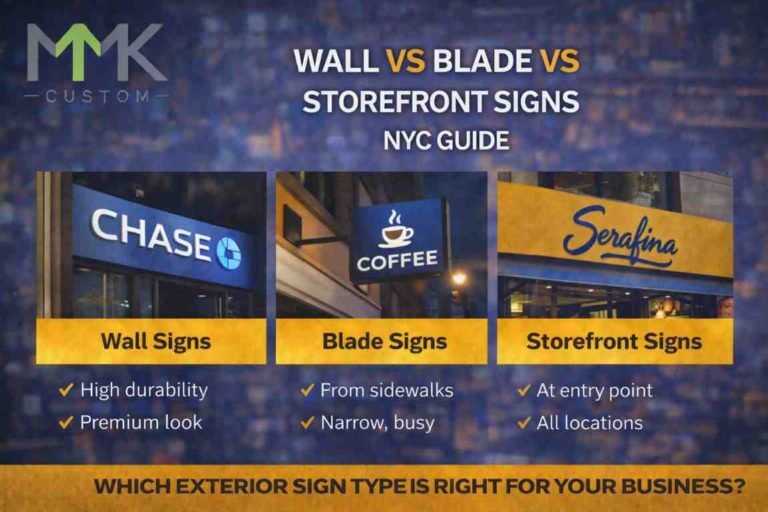
Comparison of wall signs, blade signs, and storefront signs for NYC businesses, showing visibility, placement, and use cases by MMK Custom Signs.

Choosing the right exterior signage in New York City isn’t just about looks—it’s about visibility, zoning rules, foot traffic, and brand impact. With crowded sidewalks, tall buildings, and strict regulations, NYC businesses must choose signage that works hard from every angle. In this guide, we compare wall signs, blade signs, and storefront signs, explain where each performs best, and help you decide which option delivers the highest return for your location. Why Exterior Sign Choice Matters in NYC? NYC streets are fast-moving and visually competitive. Your sign often has seconds to capture attention. Choosing the wrong sign type can mean poor visibility, missed foot traffic, or compliance issues. If you’re planning or upgrading your exterior signage, explore our full range of exterior signage solutions in NYC to understand what’s allowed and what performs best. What Are Wall Signs? Wall signs are mounted directly to the building façade and face forward toward pedestrian and vehicle traffic. They’re among the most common sign types in NYC. Benefits of Wall Signs Best NYC Use Cases Wall signs are especially effective on buildings with minimal obstructions and strong sightlines. What Are Blade Signs? Blade signs (also called projecting signs) extend perpendicular from the building, making them visible to foot traffic walking along the sidewalk. Benefits of Blade Signs Best NYC Use Cases Blade signs are one of the most effective options for high-foot-traffic areas like Manhattan and Brooklyn. What Are Storefront Signs? Storefront signs typically include signage placed above entrances, on awnings, or integrated into window displays. Benefits of Storefront Signs Best NYC Use Cases Storefront signs often work best in combination with wall or blade signage. Wall vs Blade vs Storefront Signs: Quick Comparison Feature Wall Signs Blade Signs Storefront Signs Best Visibility From a distance From sidewalks At entry point Ideal Streets Wide roads Narrow, busy streets All locations Branding Impact High High for foot traffic Medium Installation Cost Medium–High Medium Low–Medium NYC Popularity Very common Highly effective Essential Which Sign Type Is Best for Your NYC Business? Choose wall signs if: Choose blade signs if: Choose storefront signs if: Many NYC businesses use two or even all three sign types together for maximum impact. Custom Exterior Signage Solutions in NYC At MMK Custom Signs, we design, fabricate, and install NYC-compliant wall signs, blade signs, and storefront signage tailored to your location and business goals. Explore our complete range of custom signage solutions to see how we help NYC businesses stand out—day and night. Get Expert Advice on NYC Exterior Signage Not sure which sign type is best for your building or neighborhood? Our team can evaluate visibility, zoning rules, and branding needs. 👉 Request a custom signage quote today and let’s create exterior signage that actually drives foot traffic.

Materials Breakdown: Acrylic vs. Metal Signs for NYC Retailers

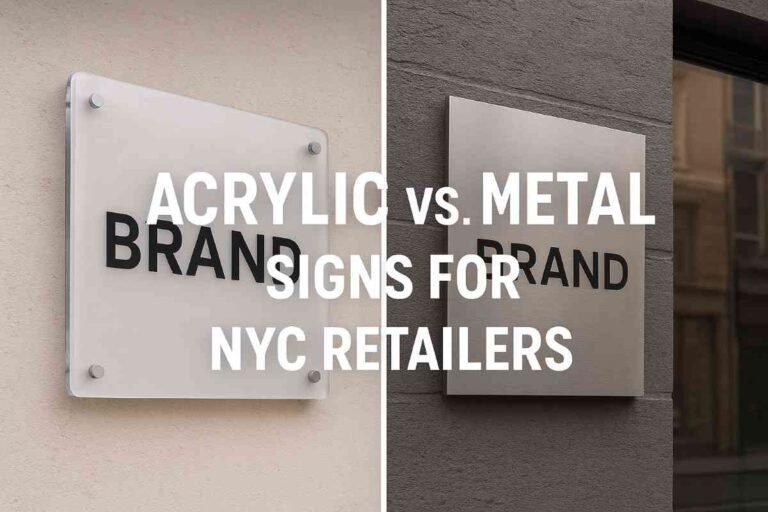
Side-by-side comparison of acrylic and metal business signs on real NYC storefronts showing clarity, durability, and lighting differences.

When NYC retailers choose a new storefront or interior sign, one of the first questions they face is:“Should we use acrylic or metal?” Both materials are extremely popular across Manhattan, Brooklyn, and Queens — but they offer very different benefits in durability, appearance, cost, and branding impact. This guide breaks down acrylic vs. metal signs so NYC retailers can choose the perfect fit for their storefront. 1. Acrylic Signs: Modern, Clean & Highly Customizable Acrylic is a top choice for businesses that want a sleek, contemporary look without the high cost of premium metals. Why NYC Retailers Choose Acrylic Signs Acrylic is often used in Manhattan boutiques, salons, corporate lobbies, medical offices, and modern retail stores. 👉 If you’re planning a reception or wall sign, explore customization options here: https://customsignsny.com/custom-signs-signage/ 2. Metal Signs: Durable, Premium & Built for Harsh NYC Weather Metal signs are the go-to option when a brand needs a strong, elegant, and long-lasting presence. Why NYC Businesses Prefer Metal Metal signs are commonly used by high-end fashion shops, restaurants, banks, real estate offices, and flagship stores. Check premium 3D metal options here: https://customsignsny.com/3d-letters-logos/ 3. Acrylic vs. Metal Signs NYC — Which Should You Choose? Feature Acrylic Metal Cost More budget-friendly Higher investment Durability Good (indoors/outdoors) Excellent (outdoors) Look & Feel Modern, clean, glossy Luxury, bold, premium Lighting Compatibility Great for LED/backlit Excellent for channel letters Weather Resistance Moderate Outstanding Best For Interiors, modern brands Exteriors, luxury retailers Quick Recommendation 4. Cost Comparison (NYC Average 2026) Type Typical Price Range Acrylic signs $250–$1,200+ Metal signs (aluminum, stainless steel) $600–$3,500+ 3D Metal Lettering $900–$5,000+ depending on size (Prices vary based on size, finish, installation height, and lighting.) 5. Which Material Makes Your Brand Look More Premium? If your store is in Manhattan’s luxury districts (SoHo, Tribeca, Midtown), metal signs often outperform acrylic in terms of prestige and visibility.However, acrylic remains unbeatable for: Both materials support 3D letters, layered designs, and LED illumination—so the choice depends more on brand personality and budget. 6. Need Help Choosing the Right Material? Whether you prefer acrylic or metal, NYC retailers can get a tailored recommendation based on location, weather exposure, branding style, and budget. Request a quick quote here:👉 https://customsignsny.com/request-quote/

Best Signage for Small Shops & Boutiques in Manhattan

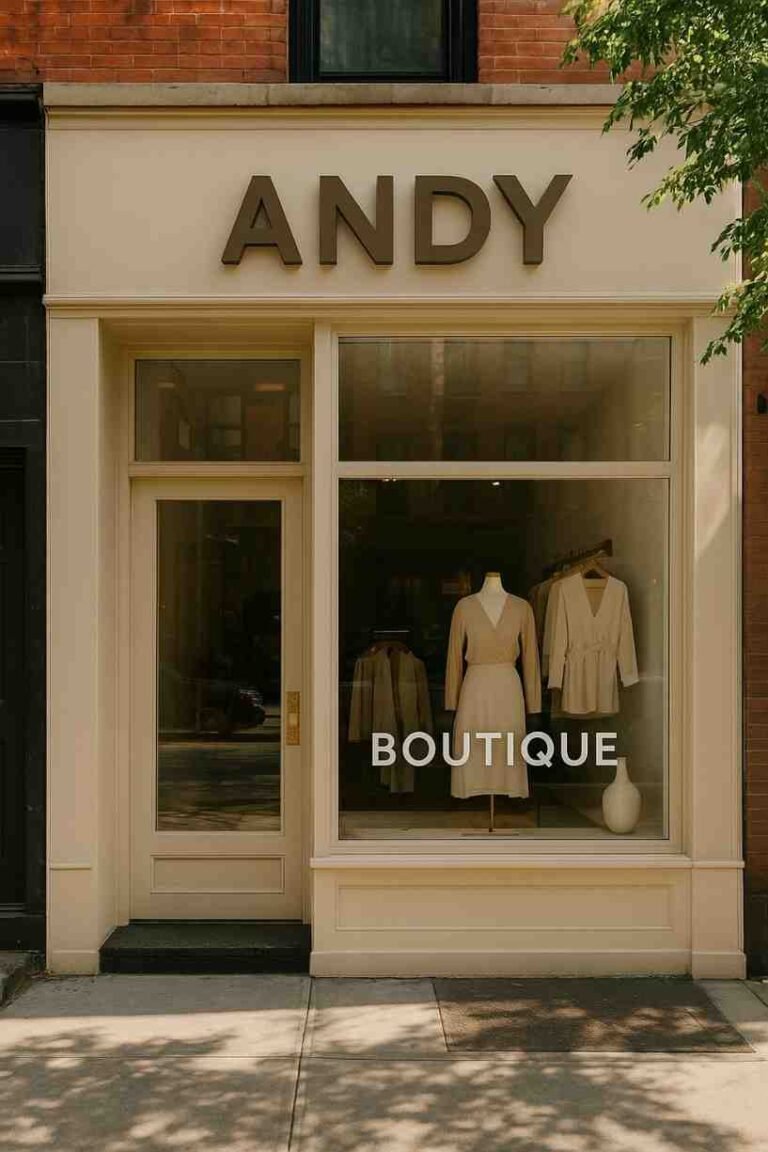
Boutique storefront in Manhattan with custom boutique signage and vinyl graphics.

In Manhattan, where style meets sophistication, your boutique’s storefront is more than just a sign — it’s a statement. The right signage can make your small shop stand out on busy New York streets, attract the right audience, and leave a memorable impression. Whether you run a chic clothing boutique, an artisan jewelry shop, or a vintage décor store, investing in custom boutique signs in NYC can set your business apart in one of the world’s most competitive retail markets. Why Boutique Signage Matters in Manhattan? In New York City, your storefront is your handshake to the world. A well-designed sign not only guides customers to your door but also communicates your brand’s personality before they ever step inside. Your sign should: An effective boutique sign bridges aesthetics with function; it’s both art and advertising rolled into one. Top Boutique Signage Options for Manhattan Stores When it comes to creating a distinctive storefront, boutique owners have several creative options that blend visual appeal with practicality. Here are the most effective types of boutique signs NYC businesses love: 1. Vinyl Graphics & Window Decals Vinyl graphics are one of the most versatile ways to elevate your boutique’s exterior and interior. Perfect for storefront windows, mirrors, or walls, they allow you to change designs seasonally or during promotions without heavy investment. Best for: Fashion boutiques, seasonal campaigns, or minimalist storefronts. 2. Dimensional Lettering Dimensional or 3D lettering signs add depth and sophistication to your storefront. These can be crafted from materials like acrylic, brushed metal, or PVC and can include lighting for evening visibility. Pro Tip: Pair metallic finishes with soft backlighting for an elegant, modern boutique look. Learn more about how we design 3D lettering and logos for retail spaces here → 3D Letters & Logos 3. Blade Signs Also known as projecting signs, blade signs extend perpendicularly from the building facade. This is ideal for busy Manhattan streets where pedestrians view stores from the side rather than head-on. Best for: Narrow sidewalks, corner stores, and high-foot-traffic areas like SoHo or Greenwich Village. 4. Illuminated Signs LED-lit or halo-lit signs offer 24/7 visibility and give your storefront a premium, high-end appearance. These are particularly effective for boutiques that stay open late or want to attract attention during evening hours. 5. Custom Interior Signs Your interior signage is just as important as your exterior branding. Interior wall graphics, directional signs, and branded décor enhance customer experience and reinforce your identity. Explore how our Custom Signs & Signage solutions can help you maintain consistent branding across your boutique. Design Tips for Boutique Signs That Convert When planning your boutique signage, consider these essentials to ensure your sign stands out and draws in foot traffic: How MMK Custom Helps Your Boutique Shine At CustomSignsNY, we specialize in crafting unique, eye-catching signage for small shops and boutiques across Manhattan. From vinyl graphics to 3D letter signs and custom interiors, our team helps you create a cohesive brand experience inside and out. We handle: Ready to give your boutique the attention it deserves? 👉 Request a Free Quote Today and let’s make your storefront stand out.

The Role of Signage in Increasing Foot Traffic in NYC Retail Districts

In New York City’s fast-paced retail districts, competition for attention is fierce. With thousands of storefronts vying for visibility, an effective retail signage strategy in NYC can make the difference between being overlooked and standing out. Signage acts as both a marketing tool and a silent salesperson, communicating your brand identity, attracting customers, and guiding them into your store. 1. First Impressions Matter Your storefront sign is often the first interaction potential customers have with your business. A well-designed exterior sign creates instant brand recognition and sets the tone for what’s inside. High-quality exterior signage can convey professionalism, trust, and creativity, key factors that influence foot traffic and sales. 2. 3D Signage and Lighting for Maximum Impact In crowded NYC streets, dimensional and illuminated signs perform best. 3D letters and logos add depth and visual appeal that capture attention even from a distance. Combine LED backlighting or neon edges to ensure your storefront remains visible day and night, rain or shine. 3. Strategic Placement for Pedestrian Visibility The height, angle, and placement of your sign significantly affect how people see it. Install your signage at eye level for pedestrians and ensure visibility from multiple approach angles. For corner stores or multi-entrance locations, consider double-sided hanging signs to reach traffic from all directions. 4. Consistent Branding Across All Signage Your signage should align seamlessly with your overall brand identity colors, fonts, and logo style. Consistency builds familiarity, which increases brand recall and customer trust. Many NYC retailers work with professional sign designers to ensure their visuals maintain a cohesive message across all touchpoints. 5. Regular Maintenance to Protect Your Investment Outdoor signage endures the city’s extreme weather conditions—heat, rain, and snow. Regular cleaning, lighting checks, and repainting are essential to maintain a fresh and professional look. A faded or flickering sign can drive potential customers away. Boost Your Retail Presence with Custom Signage Whether you’re launching a boutique in SoHo or managing a chain in Midtown, a tailored signage strategy can directly influence your store’s success. Investing in high-quality, well-placed signs is one of the most cost-effective ways to increase foot traffic and brand recognition. 👉 Ready to enhance your retail signage strategy in NYC? Get started with expert installation and design—request a quote today.

NYC Sign Permit Guide (2026): How to Get Business Sign Permits in New York City

Installing a business sign in New York City is one of the most effective ways to attract customers and build brand visibility. However, before installing most commercial signage, business owners must obtain the proper NYC sign permits. The New York City Department of Buildings (DOB) regulates signage to ensure safety, structural stability, and compliance with zoning laws. Whether you’re installing illuminated channel letters, storefront signage, or a large building banner, understanding the permit process is essential. If you’re opening a new restaurant, retail store, medical practice, or corporate office, understanding these signage regulations in NYC is crucial. Failing to follow the rules can result in fines, permit rejections, or even removal orders from the city. This step-by-step guide explains exactly how to get sign permits in NYC, what documents you’ll need, and how to streamline the process with professional help from Custom Signs NY. Why Sign Permits Matter in NYC? New York City has strict regulations regarding building signage to maintain public safety and the visual integrity of city streets. Getting a permit is not just a bureaucratic step — it ensures your business: ✅ Meets NYC structural and electrical safety codes✅ Avoids heavy fines or removal orders✅ Complies with zoning and building regulations✅ Protects your investment in professional signage Working with an experienced signage company like Custom Signs NY helps ensure the entire process — from design to installation — is completed legally and efficiently. Step 1: Determine If Your Sign Requires a Permit Not every sign requires a permit in NYC, but most exterior commercial signs do, especially if they are illuminated or permanently mounted. Signs That Require a Permit Signs That May Not Need a Permit If you’re unsure which category your signage falls into, it’s best to consult with a professional before starting design or installation. Types of Signs That Usually Require NYC Permits Sign Type Permit Required Illuminated Channel Letters Yes Blade / Projecting Signs Yes LED Storefront Signs Yes Large Wall Signs Yes Window Vinyl Graphics Usually No Interior Lobby Signs No Businesses planning to install exterior signs should review their options for custom signage solutions Step 2: Understand NYC’s Building & Zoning Rules Every property in New York City falls within a specific zoning district, which determines the type, size, and placement of business signage. For example: To avoid complications, it’s crucial to design your sign according to these zoning guidelines before applying for a permit. Business owners often choose compliant signage, such as interior business signs or building-mounted signs that follow NYC regulations. If you want an overview of signage types that meet NYC standards, explore our Custom Signs & Signage collection for compliant options. Step 3: Hire a Licensed Sign Hanger or Installation Expert NYC requires that any sign larger than six square feet or heavier than 75 pounds be installed by a licensed sign hanger. There are two types: Working with a certified professional ensures your installation meets DOB structural and safety standards.At Custom Signs NY, our experienced installation team is licensed and equipped to handle everything — including the permit process and final inspections. Step 4: Prepare the Required Documentation Before applying for an NYC sign permit, you’ll need several documents. These help the DOB verify that your signage complies with structural, zoning, and electrical requirements. Here’s what’s typically required: Working with a full-service signage company can simplify this process, as professionals typically handle documentation preparation and submission. Step 5: Submit Your Permit Application The DOB NOW portal is the city’s digital platform for all permit-related filings. Here’s how the process typically works: Approval timelines vary but generally take 1–3 weeks, depending on documentation and zoning review. Once your permit is approved, you’ll receive a Work Permit Number that must be displayed at the job site during installation. Step 6: Schedule Inspections After Installation After your sign is installed, the DOB may schedule an inspection to confirm that your installation matches the approved plans and meets safety standards. Inspectors typically verify: If everything meets regulations, the permit is officially closed, and your sign is considered fully compliant. Step 7: Keep Your Permits Updated Sign permits are not always permanent. Depending on your building, location, or sign type, you may need to renew your permit periodically. Additionally, any changes to your sign (such as lighting upgrades, structural modifications, or relocation) require a new or amended permit. Our team at Custom Signs NY can manage renewals, amendments, and maintenance — ensuring your signage stays compliant year after year. How Long Does It Take to Get a Sign Permit in NYC? The timeline for obtaining a sign permit depends on documentation preparation and DOB review times. Typical timeline: Step Estimated Time Sign design and engineering 3–5 days Permit submission 1 day DOB review 1–3 weeks Installation scheduling 3–7 days Most businesses can complete the entire process in 2–4 weeks. Working with experienced signage professionals often speeds up approvals because they understand NYC submission requirements. How Much Do NYC Sign Permits Cost? The cost of sign permits varies depending on sign size, location, and electrical requirements. Typical costs include: Cost Type Estimated Price Application fee $100 – $300 Permit fee $6 – $12 per sq ft Engineering drawings $200 – $800 Electrical permits Varies For a detailed cost breakdown of design, fabrication, and installation, visit our guide on How Much Does Company Signage Cost in NYC? Common Mistakes Businesses Make When Applying for Sign Permits Even experienced business owners can make errors during the permit process. Here are some common pitfalls to steer clear of: ❌ Skipping the zoning check – Always verify your building’s zoning before designing your sign.❌ DIY installations – Only licensed installers can mount commercial signage in NYC.❌ Missing inspections – Failure to schedule a DOB inspection can delay approvals.❌ Ignoring electrical codes – LED and neon signs must comply with NYC electrical standards.❌ Inaccurate measurements or drawings – Even small discrepancies can result in permit rejections. Working with experienced signage professionals helps avoid these costly errors. Why