
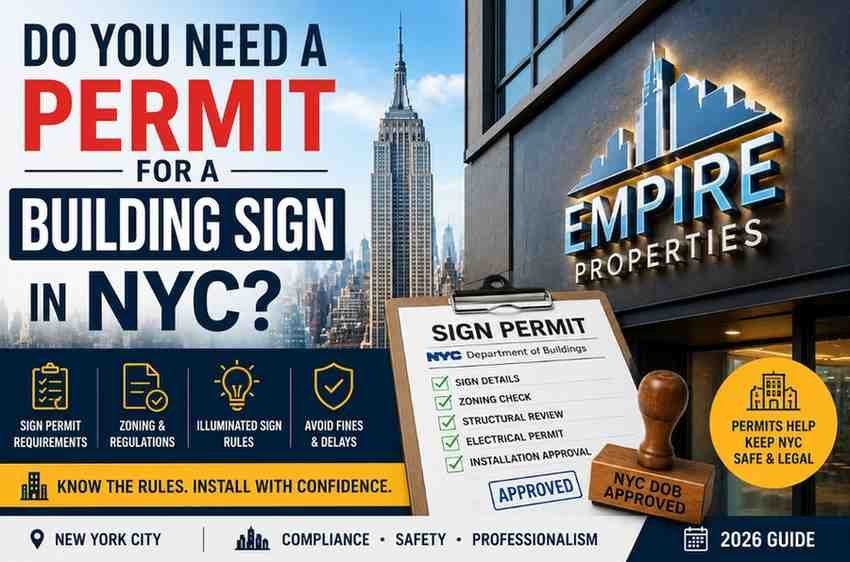

Planning to install a new building sign in Manhattan or elsewhere in New York City? One of the first questions you should ask is: Do I need a permit for my building sign?
In most cases, yes. NYC requires permits for most business sign installations, and the sign may also need to comply with zoning, construction, electrical, and installation requirements.
There are limited exceptions for certain small or painted signs, but assuming your sign is automatically exempt can create expensive problems later.
This guide explains when a building sign permit NYC project may require, what approvals may be involved, and what to check before fabrication or installation.
Important: NYC sign regulations can depend on the property’s zoning district, sign size, location, illumination, projection, and building conditions. Always verify the requirements applicable to your specific property before installation.
Does a Building Sign Require a Permit in NYC?
Generally, yes.
The NYC Department of Buildings states that permits are required for most business sign displays and installations. A sign permit is generally filed through DOB NOW: Build.
There are limited exceptions.
For example, NYC DOB identifies the following among signs that do not require a sign permit:
- A sign painted directly onto the exterior wall or fence
- A wall sign of 6 square feet or less
- Certain small temporary or ground signs
- Certain temporary construction-related signs
However, not needing a permit does not mean the sign is exempt from zoning or other applicable requirements.
Simple rule for businesses
If you’re planning a substantial exterior building sign, don’t assume it’s permit-free. Have the project reviewed before fabrication.
When Does a Building Sign Permit Become Necessary?
A permit is generally required when the sign exceeds the applicable exemption or otherwise falls within the NYC Construction Code’s permit requirements.
For example, NYC DOB’s business-sign guidance states that a wall sign greater than 6 square feet generally requires a permit.
This means many common commercial signs—including larger:
- Building signs
- Channel letters
- Dimensional lettering
- Illuminated signs
- Cabinet signs
- Exterior logo signs
will need permitting or other approvals.
What About Illuminated Building Signs?
Illuminated signs require additional attention. NYC DOB states that all illuminated signs require Department of Buildings permits, and an electrical permit is also required for a sign that requires an electrical connection.
If an illuminated sign extends beyond the building line, an annual illuminated sign permit may also be required.
This is particularly important for businesses considering:
- LED channel letters
- Backlit building signs
- Halo-lit letters
- Illuminated cabinet signs
- Large illuminated logos
So if you’re considering an illuminated building sign, don’t budget only for fabrication and installation. Electrical and permitting requirements can also affect the project.
What Permits May Be Required?
Depending on your project, more than one approval may be involved.
- Sign Permit: A Sign (SG) permit addresses the sign itself, including factors such as its copy, size, and location. NYC DOB says sign permit applications are filed through DOB NOW: Build.
- Electrical Permit: If your sign requires an electrical connection, a separate electrical work permit is required and is filed by a licensed electrician through DOB NOW: Build. This applies to many illuminated signs.
- Structural/Alteration Approval: If the sign is attached to a structure rather than directly to the building wall or façade, an alteration permit may be required for that structure. Large signs can also require engineering or professional design services depending on their size, weight, and installation conditions.
- Annual Illuminated Sign Permit: An annual illuminated sign permit may be required when an illuminated sign extends beyond the building line. These permits must be renewed annually.
NYC Zoning Rules Also Matter
Getting a permit is only one part of the process. Your sign must also comply with the NYC Zoning Resolution.
Zoning can affect:
- Sign size
- Sign location
- Height
- Projection
- Illumination
- Number of signs
- Permitted sign type
NYC DOB specifically notes that sign requirements are governed by both the Construction Codes and Zoning Resolution.
Your property’s zoning district can therefore influence which building sign you can install and how large it can be.
Why Your Manhattan Location Matters
A building sign in Midtown Manhattan may face different considerations from one in another zoning district.
Before designing the sign, determine:
- Property zoning district
- Sign location on the building
- Distance from the curb
- Height above the curb
- Sign dimensions
- Whether it projects from the building
- Whether it is illuminated
- Whether the property has special district requirements
NYC DOB’s sign-installation guidance notes that Special District and Historic District regulations may also apply.
What About Historic Buildings?
If your property is located in a historic district or involves a landmarked building, don’t treat it like a standard commercial façade.
Additional requirements may affect:
- Sign placement
- Materials
- Attachment methods
- Size
- Lighting
- Exterior alterations
This is another reason to verify requirements before ordering the sign.
Do Small Building Signs Need a Permit?
Some small signs may qualify for exemptions. The most commonly referenced exemption is a wall sign of 6 square feet or less, provided it falls within the applicable exemption. A sign painted directly onto the building can also qualify for an exemption from the sign permit requirement.
But there is an important distinction:
No permit ≠ no regulations
Even when a permit isn’t required, NYC DOB states that the exemption does not authorize work that violates zoning, building code, or other applicable laws.
So don’t use the 6-square-foot rule as a blanket exemption for every small sign project.
Who Can Install a Building Sign?
Installation requirements also depend on the sign.
NYC requires licensed sign hangers for many sign installations, with specific exemptions. DOB explains that the size and weight of a sign can determine whether a Master or Special Sign Hanger or another qualified professional is required.
For larger projects, a registered architect or licensed professional engineer may also need to prepare and submit design plans.
This is especially relevant for:
- Large building signs
- High-rise installations
- Heavy metal signs
- Large illuminated signs
- Signs requiring structural attachment
2026 Update: NYC’s Accessory Sign Moratorium
There is an important current NYC development businesses should understand.
Local Law 15 of 2026 extends certain temporary protections and assistance for qualifying accessory signs. According to NYC DOB, from February 9, 2019 through February 8, 2028, DOB will generally not issue violations for certain qualifying accessory signs that existed on or before February 9, 2025, subject to exceptions.
However, this does not mean businesses can install a new building sign without a permit. The moratorium also does not make an unsafe or noncompliant sign legal.
What does this mean for a new sign?
If you’re installing a new building sign in 2026, you should still follow the normal permitting and zoning process applicable to the project.
Don’t rely on the existing-sign moratorium as permission to install new signage without approvals.
What Happens If You Install a Sign Without the Required Permit?
Installing a sign without the required approvals can create problems when:
- The building is sold
- The business changes tenants
- The property undergoes renovation
- A new sign is installed
- The building receives a complaint
- The DOB reviews the property
- The business needs to correct an existing violation
NYC DOB notes that failure to comply with applicable sign regulations can result in violations and civil penalties, subject to current rules and protections.
Even if enforcement circumstances change, it’s much better to establish compliance from the beginning.
NYC Building Sign Permit Checklist
Before ordering your sign, review these items:
Building & Location
- Confirm the property address
- Determine the zoning district
- Check whether the property is in a special or historic district
- Determine where the sign will be mounted
- Measure the available wall area
Sign Design
- Confirm sign dimensions
- Choose materials
- Determine whether illumination is required
- Check projection from the building
- Confirm mounting method
Permits & Approvals
- Determine whether an SG sign permit is required
- Determine whether an electrical permit is required
- Determine whether structural/alteration approval is required
- Check whether an annual illuminated sign permit applies
- Confirm who will file the application
Installation
- Confirm licensed sign-hanger requirements
- Determine whether engineering is required
- Plan lift/scaffolding requirements if applicable
- Coordinate electrical installation
How Much Does a Building Sign Cost in NYC?
Permit requirements are only one part of your total project budget.
Your overall investment may include:
- Design
- Materials
- Fabrication
- Illumination
- Electrical work
- Engineering
- Permits
- Installation
- Lifts or specialized equipment
For a detailed breakdown, read: Building Sign Costs in NYC
Common Building Sign Permit Mistakes
Businesses commonly make mistakes such as:
- Installing Before Checking Zoning: A sign may look appropriate but still violate zoning restrictions.
- Assuming a Small Sign Is Automatically Exempt: The exemption requirements are specific. Don’t assume every small sign qualifies.
- Forgetting Electrical Permits: Illuminated signs can require separate electrical permitting.
- Ignoring Historic District Requirements: Special rules can apply to buildings in historic districts.
- Ordering the Sign Before Permit Review: If the approved design differs from what you’ve fabricated, you may have to pay for modifications or remake the sign.
- Hiring an Installer Without Checking Licensing Requirements: The type, size, and weight of the sign can affect who is legally permitted to install it.
How to Make the NYC Sign Permit Process Easier
The easiest approach is to address permitting before fabrication.
A professional sign company can help coordinate:
- Site assessment
- Sign measurements
- Design
- Material selection
- Permit requirements
- Electrical requirements
- Engineering coordination
- Fabrication
- Installation
This reduces the chance of discovering regulatory issues after you’ve already invested in manufacturing.
Choose the Right Building Sign for Your NYC Property
Permit requirements shouldn’t be an afterthought when planning commercial building signage. Whether you’re considering channel letters, dimensional building letters, illuminated logos, cabinet signs, or custom exterior signage, the right solution needs to work with your building, brand, budget, and applicable NYC regulations.
If you’re still deciding which sign is right for your property, read:
How to Choose the Right Building Sign for Your NYC Business
This can help you compare sign types, materials, illumination, visibility, installation, and budgeting considerations.
Get Help With Your NYC Building Sign Project
At Custom Signs NY, we help businesses plan professional exterior signage for NYC properties. From custom building signs and dimensional lettering to illuminated commercial signage, we can help you move from concept to fabrication and installation while considering the requirements applicable to your project.
Planning a new building sign in Manhattan or NYC? 👉 Request a custom quote
Frequently Asked Questions
Do all building signs require a permit in NYC?
No. There are limited exemptions, including certain painted signs and wall signs of 6 square feet or less. However, most commercial building signs require permits, and even exempt signs must still comply with applicable regulations.
Do illuminated building signs require a permit?
Yes. NYC DOB states that illuminated signs require Department of Buildings permits. An electrical permit is also required when electrical connection work is involved.
Do I need a permit for channel letters?
In most commercial applications, channel letter installations will require permitting because of their size, attachment, and/or illumination. The exact requirements depend on the specific project.
Can I install a building sign before getting approval?
You should not proceed with an installation that requires a permit before the required approvals are obtained. Plan the permit process before fabrication and installation.
Does NYC zoning affect building signs?
Yes. Zoning can regulate sign size, location, height, projection, illumination, and other characteristics.
Do historic buildings have different sign requirements?
Potentially. Special District and Historic District requirements can apply depending on the property and location.