
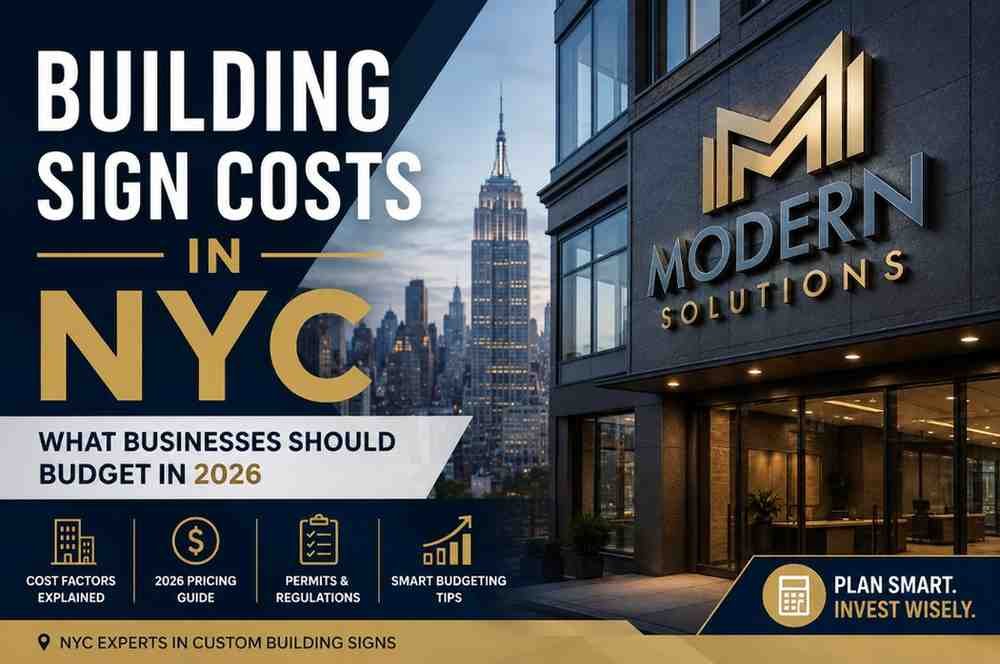

If you’re planning new signage for a commercial property, one of the first questions you’ll probably ask is: How much do building signs cost in NYC? The answer depends on several factors, including the size of the sign, materials, illumination, installation height, structural requirements, permitting, and the complexity of the design.
For Manhattan businesses, building signage can range from a relatively simple dimensional-letter installation to a large illuminated sign requiring engineering, electrical work, permits, and specialized installation equipment.
This guide explains the typical factors that affect building sign costs in NYC, what businesses should budget for in 2026, and how to choose the right signage solution for your property.
How Much Do Building Signs Cost in NYC?
There is no single price for a commercial building sign because every project is different.
As a general planning guide, businesses may encounter the following approximate ranges:
| Building Sign Type | Typical NYC Budget Range |
|---|---|
| Small dimensional building letters | $1,500–$4,000+ |
| Medium exterior building signs | $3,000–$8,000+ |
| Illuminated channel letters | $3,000–$15,000+ |
| Large illuminated building signs | $8,000–$25,000+ |
| Large custom building signage | $10,000–$30,000+ |
| Complex high-rise installations | $20,000+ |
These are general budgeting ranges rather than fixed prices. A site survey and custom quote are necessary to determine the actual project cost.
For example, a small low-rise office building may require only dimensional letters, while a large Manhattan property may require engineering, electrical work, permits, lifts, and specialized installation.
What Determines Building Sign Costs in NYC?
Several factors can significantly affect your final signage investment.
1. Sign Size
Size is one of the most obvious cost factors.
A larger sign requires:
- More materials
- More fabrication
- More mounting hardware
- More installation time
- Potentially larger equipment
A small building logo may cost considerably less than a sign spanning an entire storefront or building façade.
2. Sign Material
The material you select also influences the overall cost.
Acrylic
Acrylic is a popular option for businesses looking for a clean and contemporary appearance.
It can be used for:
- Dimensional letters
- Logos
- Exterior lettering
- Illuminated signs
Aluminum
Aluminum is lightweight, durable, and suitable for many exterior applications.
It is frequently used for:
- Building letters
- Cabinet signs
- Sign faces
- Exterior panels
Stainless Steel
Stainless steel provides a premium appearance and excellent durability.
It can be a good choice for corporate buildings, luxury properties, financial offices, and professional businesses.
Brass and Bronze
These materials create a distinctive upscale appearance and are often selected for premium commercial properties.
3. Illumination
Adding lighting can significantly increase the cost of a building sign, but it can also dramatically improve visibility.
Popular illuminated options include:
- Front-lit channel letters
- Halo-lit letters
- Backlit logos
- LED cabinet signs
- Internally illuminated dimensional letters
For businesses operating in Manhattan, illuminated signage can be particularly valuable because the sign remains visible after sunset and can stand out among surrounding buildings and storefronts.
4. Channel Letters vs Dimensional Letters
Channel letters are individually fabricated letters that can be illuminated or non-illuminated.
They are commonly used for:
- Corporate buildings
- Retail businesses
- Restaurants
- Hotels
- Medical facilities
Dimensional letters, on the other hand, can provide a sophisticated appearance without necessarily requiring illumination.
The best option depends on your location, visibility requirements, branding, and budget.
If you’re considering channel letters, our detailed guide can help you understand the investment: How Much Does a Channel Letter Cost in NYC?
5. Building Height and Installation Difficulty
Installation is often one of the biggest variables in NYC building signage.
A sign installed at street level is generally easier and less expensive to install than signage located several floors above the sidewalk.
Higher installations may require:
- Lifts
- Scaffolding
- Specialized access equipment
- Additional safety procedures
- Experienced installation crews
For high-rise Manhattan properties, installation requirements can have a significant effect on the final project cost.
6. Structural Engineering
Large building signs may require structural considerations to ensure they are safely attached to the building.
Depending on the project, costs may include:
- Site surveys
- Structural drawings
- Engineering
- Mounting calculations
- Additional hardware
The exact requirements depend on the sign, building, location, and installation method.
7. Electrical Work
Illuminated building signs require electrical components and installation.
Electrical costs can depend on:
- Number of illuminated letters
- LED configuration
- Existing electrical infrastructure
- Wiring distance
- Electrical connections
- Required electrical permits
If your building does not already have suitable electrical service near the sign location, additional work may be necessary.
8. NYC Sign Permits
Depending on the type, size, location, and installation of your sign, permits or other approvals may be required.
Businesses should consider permitting early in the project rather than waiting until fabrication is complete.
A permit-related delay can affect:
- Installation schedules
- Business openings
- Contractor coordination
- Project budgets
For more information, see our guide: How to Get Sign Permits in NYC: Step-by-Step Guide for Business Owners
You can also read: NYC Outdoor Sign Permit Guide
Building Sign Cost Breakdown
When comparing quotes, don’t look only at the price of the sign itself.
A building signage project may include several components:
| Cost Component | What It Covers |
| Design | Logo preparation, layouts, specifications |
| Materials | Acrylic, aluminum, steel, etc. |
| Fabrication | Manufacturing the letters or sign |
| Illumination | LEDs, wiring and lighting components |
| Engineering | Structural planning where required |
| Permits | Required applications and approvals |
| Installation | Mounting the finished sign |
| Equipment | Lifts, scaffolding or specialized access |
| Electrical Work | Connections and related work |
Understanding these components makes it easier to compare quotes from different sign companies.
Are Illuminated Building Signs Worth the Extra Cost?
For many businesses, yes.
Illuminated signs can provide greater visibility during:
- Evening business hours
- Winter months
- Low-light conditions
- High-traffic areas
- Busy commercial streets
An illuminated sign can also give a building a more prominent and professional appearance.
However, illumination isn’t necessary for every property. If your building receives strong daytime visibility, non-illuminated dimensional letters may provide the right balance between appearance and cost.
How to Reduce Building Sign Costs Without Sacrificing Quality
You don’t necessarily need the largest or most expensive sign to create a strong visual presence.
Consider these strategies:
- Choose the Right Size: A well-designed medium-sized sign can be more effective than an oversized sign that overwhelms the building.
- Select Durable, Cost-Effective Materials: Aluminum and acrylic can provide excellent results without the premium price of certain metals.
- Simplify the Design: Complex shapes, custom fabrication, and unusual installation requirements can increase costs.
- Plan Permits Early: Resolving permit requirements before fabrication can help prevent expensive changes later.
- Combine Branding Elements: A carefully designed logo and dimensional lettering can create a premium appearance without requiring an oversized sign.
Building Signs vs Storefront Signs
Building signs and storefront signs serve different purposes.
Building signs are generally designed to identify a business or property from a greater distance and may be installed higher on a façade.
Storefront signs are usually positioned closer to pedestrian level and focus heavily on attracting immediate foot traffic.
Some businesses benefit from using both.
For example, a Manhattan retail business could use:
- Building-mounted illuminated letters for long-distance visibility
- Storefront signage for pedestrian traffic
- Window graphics for promotions and branding
This creates a layered signage strategy rather than relying on a single sign.
What Should a Manhattan Business Budget for Building Signage?
For a straightforward commercial building sign, a business may want to start planning around $3,000–$10,000.
Projects involving illuminated channel letters, larger dimensions, difficult installation locations, engineering, permits, or premium materials can easily move into the $10,000–$25,000+ range.
Large-scale or high-rise installations may require substantially larger budgets.
The most important point is that building sign cost NYC projects vary significantly based on the property and installation conditions. A professional site assessment is the best way to establish an accurate budget.
When Should You Start Planning Your Building Sign?
Don’t wait until you’re ready to install the sign.
Ideally, begin the process several weeks or even months before your desired installation date.
A typical project may involve:
- Initial consultation
- Site survey
- Sign design
- Material selection
- Quote approval
- Engineering, if required
- Permit applications
- Fabrication
- Installation
- Final inspection, when applicable
Starting early gives your business more time to address unexpected permitting, fabrication, or installation requirements.
How to Choose a Building Sign Company in NYC
Look for a signage company that can manage more than fabrication.
A reliable commercial sign partner should be able to assist with:
- Site surveys
- Custom design
- Material selection
- Engineering coordination
- Permit assistance
- Fabrication
- Electrical work
- Professional installation
This makes the project easier to manage and reduces the need to coordinate multiple contractors.
Get a Custom Building Sign Quote in NYC
Every building is different, which is why online pricing can only provide a starting point.
At Custom Signs NY, we create custom commercial signage for businesses and properties throughout New York City. From dimensional building letters and illuminated channel letters to large custom exterior signs, our team can help you select a solution based on your building, brand, visibility requirements, and budget.
Ready to plan your building sign? 👉 Request a custom signage quote
Frequently Asked Questions About Building Sign Costs in NYC
How much does a building sign cost in NYC?
Building signs can range from approximately $1,500 for smaller dimensional lettering to $25,000 or more for large illuminated or complex installations. The final cost depends on size, materials, lighting, engineering, permits, and installation.
What is the cheapest material for a building sign?
Acrylic and aluminum are often among the more cost-effective choices, depending on the design and application.
Are illuminated building signs more expensive?
Yes. Illumination adds LED components, electrical work, and potentially additional installation requirements. However, illuminated signs can provide significantly better visibility after dark.
Do building signs require a permit in NYC?
Some exterior building signs require permits or additional approvals. Requirements depend on the sign and property. Businesses should verify requirements before fabrication and installation.
How much does building sign installation cost?
Installation costs vary depending on sign size, building height, access, mounting conditions, and equipment requirements. High-rise or difficult-access installations generally cost more than street-level installations.
How long do commercial building signs last?
The lifespan depends on the material, construction quality, exposure to weather, lighting components, and maintenance. Durable exterior materials and properly installed LED systems can provide years of service.