
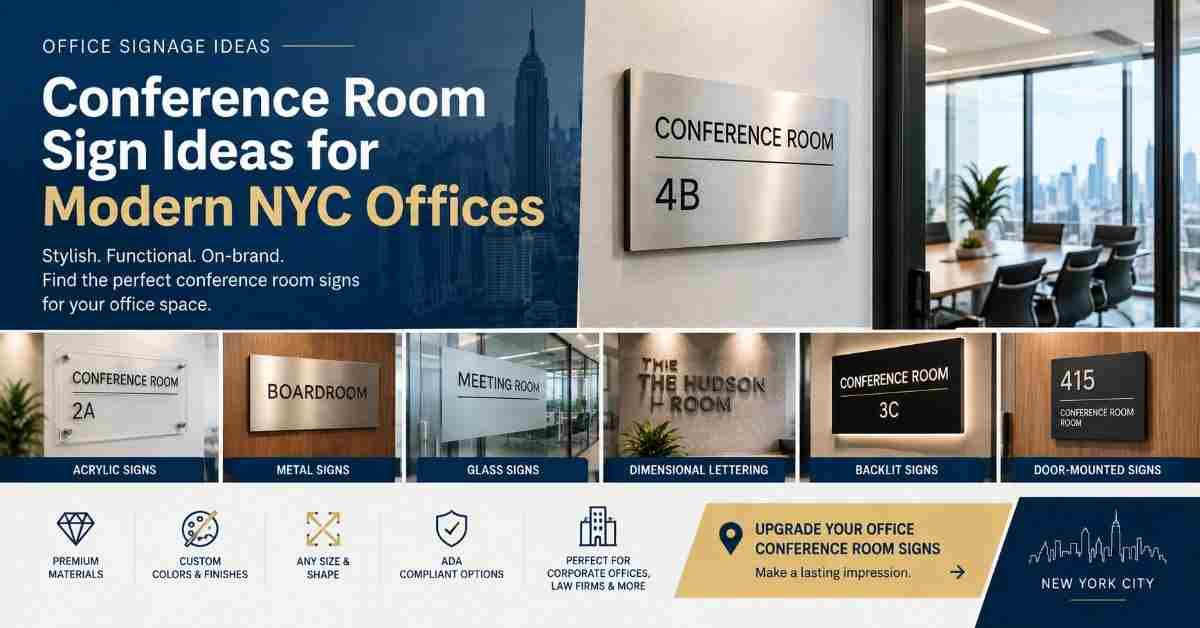

A conference room sign may seem like a small part of an office renovation, but it plays an important role in how employees and visitors navigate the workplace. The right sign can identify rooms clearly, reinforce your brand, complement your interior design, and create a more polished, professional environment.
For businesses renovating corporate offices in Manhattan and across New York City, conference room signs in NYC can be designed in a wide range of materials, finishes, sizes, and styles.
From minimalist acrylic plaques to dimensional metal lettering and modern room-identification systems, there are plenty of options to match the look and function of your office.
Why Conference Room Signs Matter in Modern Offices
Conference rooms are among the most frequently used spaces in a corporate workplace.
Employees need to know which room they are entering, visitors need clear directions, and meeting spaces often form part of the overall office experience.
A well-designed conference room sign can help with:
- Room identification
- Visitor navigation
- Office organization
- Brand consistency
- Interior design
- Professional presentation
- Wayfinding
- Privacy and room management
Instead of treating conference room signs as an afterthought, businesses can incorporate them into the overall office signage system.
1. Minimalist Acrylic Conference Room Signs
Acrylic is one of the most versatile materials for modern office signage.
Acrylic conference room signs can create a clean, contemporary appearance without overwhelming the surrounding interior.
Popular options include:
- Clear acrylic
- Frosted acrylic
- White acrylic
- Black acrylic
- Colored acrylic
- Layered acrylic
- Acrylic with dimensional lettering
Acrylic signs work particularly well in modern corporate offices where glass partitions, neutral walls, and contemporary furniture are already part of the design.
For a premium appearance, dimensional lettering or a company logo can be added to the sign.
2. Brushed Metal Conference Room Signs
Metal signage can provide a more executive and sophisticated appearance.
Popular finishes include:
- Brushed aluminum
- Stainless steel
- Brushed brass
- Bronze
- Satin metal
- Polished metal
Metal conference room signs can work particularly well for:
- Law firms
- Financial companies
- Investment firms
- Corporate headquarters
- Executive offices
- Luxury businesses
A brushed metal sign with simple typography can create a professional look while remaining understated.
3. Dimensional Lettering
Instead of using a flat printed sign, businesses can use dimensional letters to identify conference rooms.
For example:
BOARDROOM
or
EXECUTIVE CONFERENCE ROOM
Dimensional lettering adds depth and can make room identification feel more architectural.
Depending on the design, letters can be fabricated from acrylic, aluminum, stainless steel, brass, bronze, or other materials.
This approach is especially useful when the office design already incorporates dimensional branding throughout the space.
4. Backlit Conference Room Signs
For companies looking for a more distinctive design, illuminated signage can create a premium visual effect.
Backlit conference room signs can use:
- LED illumination
- Halo-lit lettering
- Edge lighting
- Illuminated acrylic
- Backlit logos
Lighting can be subtle rather than overly bright.
A softly illuminated room name can work particularly well in executive offices, hospitality-inspired corporate workplaces, and modern headquarters.
5. Glass-Mounted Conference Room Signs
Glass conference rooms are common in modern office designs.
Instead of mounting a traditional sign on a wall, businesses can install signage directly onto glass.
Options include:
- Frosted vinyl lettering
- Etched-look graphics
- Acrylic panels
- Metal lettering
- Adhesive-mounted signage
- Privacy film combined with room identification
Glass-mounted signage can identify the room while maintaining the open visual character of the office.
For offices using extensive glass partitions, coordinating conference room signs with office window frosting can create a more consistent design.
6. Frosted Glass Conference Room Signs
Frosted graphics can provide both identification and privacy.
For example, a conference room might feature:
CONFERENCE ROOM A
combined with a frosted band or custom pattern across part of the glass.
This approach can help create a visual separation between meeting spaces and common areas while maintaining a modern appearance.
Businesses can also incorporate:
- Company logos
- Geometric patterns
- Brand elements
- Privacy gradients
- Decorative graphics
The result can be functional signage that also contributes to the interior design.
7. Custom Conference Room Names
Not every conference room needs to be called “Conference Room 1” or “Meeting Room 2.”
Modern companies sometimes use customized naming systems.
Examples include:
Location-Based Names
- Manhattan
- Brooklyn
- Madison
- Hudson
- Central Park
Industry-Themed Names
A financial company might use:
- Capital
- Market
- Equity
- Exchange
A technology company might use:
- Innovation
- Cloud
- Data
- Digital
Company Heritage
Rooms can also be named after:
- Company founders
- Important milestones
- Historic locations
- Major projects
- Company values
Custom naming can make an office feel more connected to the company’s identity.
8. Conference Room Signs With Company Branding
A conference room sign does not need to be covered with branding.
In many corporate environments, subtle branding works better.
A sign might include:
HUDSON
Conference Room
with a small company logo positioned underneath.
Another approach is to use your corporate typeface, colors, and material finishes without displaying the logo on every sign.
This creates consistency while keeping the signage visually clean.
9. Modern Black and White Conference Room Signs
Black-and-white signage can provide a minimalist appearance that works with many office interiors.
Examples include:
- Black acrylic with white lettering
- White acrylic with black lettering
- Black aluminum with white graphics
- White dimensional letters on a dark wall
This style works particularly well for contemporary offices with minimalist architecture.
It is also relatively easy to coordinate with other interior signs throughout the workplace.
10. Brass and Bronze Conference Room Signs
Businesses looking for a more traditional or upscale appearance can consider brass or bronze.
These materials can work particularly well in:
- Law firms
- Private equity offices
- Financial firms
- Executive suites
- Luxury professional offices
A brushed brass room sign can provide warmth and sophistication, while bronze can create a more classic appearance.
The finish should be selected based on the surrounding interior materials so the sign feels integrated rather than visually disconnected.
11. ADA-Compliant Conference Room Signage
Accessibility should also be considered when planning office signage.
Depending on the specific application and building requirements, conference room identification may require ADA-compliant features such as tactile characters and Braille.
The exact requirements can vary depending on the location, building, and sign application, so businesses should confirm the applicable requirements for their project.
ADA signage can also be designed to coordinate visually with the rest of the office.
This allows accessibility requirements and interior design to work together rather than treating ADA signs as a completely separate system.
For more information, see our guides on ADA sign costs in NYC and common ADA sign compliance mistakes businesses make.
12. Conference Room Signs With Room Numbers
For larger offices, room numbers can make navigation significantly easier.
A sign might display:
CONFERENCE ROOM
4B
or:
HUDSON ROOM
4B
Room numbering can be particularly useful when a business occupies multiple floors or has several meeting rooms.
The numbering system should be consistent throughout the office so employees and visitors can understand it quickly.
13. Sliding or Changeable Conference Room Signs
Some businesses need a way to indicate whether a conference room is occupied.
Changeable signage can incorporate:
- Available/occupied indicators
- Sliding panels
- Magnetic inserts
- Digital displays
- Status indicators
These systems can be particularly useful in offices with shared meeting spaces.
For companies using digital room-booking systems, the physical sign can also be designed to complement the technology rather than compete with it.
14. Door-Mounted Conference Room Signs
For enclosed meeting rooms, door-mounted signage provides a straightforward identification solution.
Signs can be mounted:
- Directly on the door
- Beside the door
- Above the door
- On adjacent walls
The best placement depends on the office layout, door configuration, visibility, and applicable accessibility requirements.
For a minimalist look, a small metal or acrylic plaque can provide clear identification without taking over the door.
15. Large Feature-Wall Conference Room Signs
Some conference rooms have large feature walls that provide an opportunity for more substantial branding.
Instead of a small room plaque, businesses can use:
- Large dimensional letters
- Oversized room names
- Company graphics
- Metal lettering
- Acrylic logos
- Custom wall graphics
For example:
THE HUDSON ROOM
could be fabricated as dimensional lettering across a feature wall.
This approach can turn an ordinary conference room into a memorable part of the office environment.
16. Conference Room Signs for Executive Offices
Executive conference rooms often benefit from more premium materials and finishes.
Possible combinations include:
Brushed stainless steel + dimensional lettering
Brass + dark wood
Bronze + acrylic
Black metal + gold lettering
Backlit acrylic + dimensional logo
The objective is not necessarily to make the sign elaborate. Premium materials and careful proportions can create a sophisticated appearance without excessive decoration.
17. Create a Consistent Office Signage System
Conference room signs should not be designed in isolation.
They should ideally coordinate with other office signage, including:
- Reception signs
- Lobby signs
- Office door signs
- Directional signs
- ADA signs
- Employee identification signs
- Glass graphics
- Restroom signs
For example, if your reception sign uses brushed aluminum and black acrylic, similar materials can be carried into the conference room signs.
This creates a consistent visual language throughout the office.
Our guide to [interior signage in NYC] covers how different types of interior signs can work together as part of a complete workplace signage system.
18. Conference Room Sign Ideas by Office Type
Different businesses may benefit from different styles.
Law Firms
Consider:
- Brushed brass
- Bronze
- Dark acrylic
- Dimensional lettering
- Traditional typography
The objective may be a sophisticated and established appearance.
Financial Companies
Financial offices may benefit from:
- Metal signage
- Minimalist typography
- Premium finishes
- Dimensional lettering
- Subtle corporate branding
Technology Companies
Technology offices can experiment with:
- Frosted acrylic
- Backlit signs
- Bold typography
- Glass-mounted graphics
- Modern room naming systems
Medical and Professional Offices
These environments may benefit from:
- Clean acrylic
- Easy-to-read typography
- Clear room identification
- ADA-compliant signage
- Consistent wayfinding
Creative Agencies
Creative businesses may have more flexibility with:
- Custom shapes
- Color
- Graphics
- Unique materials
- Artistic room names
19. How Much Do Conference Room Signs Cost?
The cost of conference room signs depends on several factors.
Important variables include:
- Sign dimensions
- Number of signs
- Material
- Finish
- Typography
- Dimensional lettering
- ADA requirements
- Lighting
- Mounting method
- Custom fabrication
- Installation
A simple room plaque will generally require a different budget than a large illuminated feature-wall sign.
For a broader understanding of office signage budgets, see our guide to [office signs cost in NYC].
When planning a larger renovation, it can also be useful to price the conference room signs as part of the complete office signage package rather than individually.
20. Planning Conference Room Signs During an Office Renovation
The best time to plan conference room signage is before the renovation is complete.
Your signage plan should consider:
- Number of conference rooms
- Room names
- Room numbers
- Door and wall dimensions
- Glass partitions
- Existing brand guidelines
- Material finishes
- ADA requirements
- Mounting locations
- Installation timing
Coordinating signage with the interior designer, architect, contractor, or facilities team can help avoid last-minute changes.
It also makes it easier to ensure that signs fit properly with walls, doors, glass partitions, lighting, and furniture.
Final Thoughts
Conference room signs may be small, but they can have a significant impact on the usability and appearance of a modern office.
For NYC businesses renovating corporate workplaces, the options range from simple acrylic room plaques to premium metal signs, dimensional lettering, frosted glass graphics, illuminated signage, and fully customized room-identification systems.
The right choice depends on your office design, brand identity, budget, accessibility requirements, and how you want visitors and employees to experience the space.
Rather than choosing every sign separately, consider creating a complete office signage system where conference room signs coordinate with reception, lobby, office door, directional, and ADA signage.
Planning Conference Room Signs for Your NYC Office?
Whether you are renovating a Manhattan corporate office, opening a new location, or updating an existing workplace, custom conference room signs can be designed to match your brand and interior.
Request a custom signage quote for your NYC office project and discuss your conference room signage requirements with a professional sign com
How to Choose the Right Conference Room Sign
Before choosing a design, ask:
Does the sign need to be primarily functional or branded?
A small room plaque may be enough for a back-office meeting room, while an executive conference room may benefit from a custom design.
What materials already exist in the office?
Match or complement materials such as wood, glass, stone, metal, and architectural finishes.
Will the sign be mounted on glass?
If so, consider frosted vinyl, acrylic, or other glass-compatible solutions.
Are accessibility requirements applicable?
Determine whether the specific sign needs tactile or Braille elements.
How many conference rooms are involved?
Multiple rooms provide an opportunity to create a consistent signage system.
Is the office being renovated?
If so, coordinate signage early with the broader interior design and construction schedule.