Custom Signs NYC

Metal vs Acrylic ADA Signs: Which Is Best for NYC Businesses?

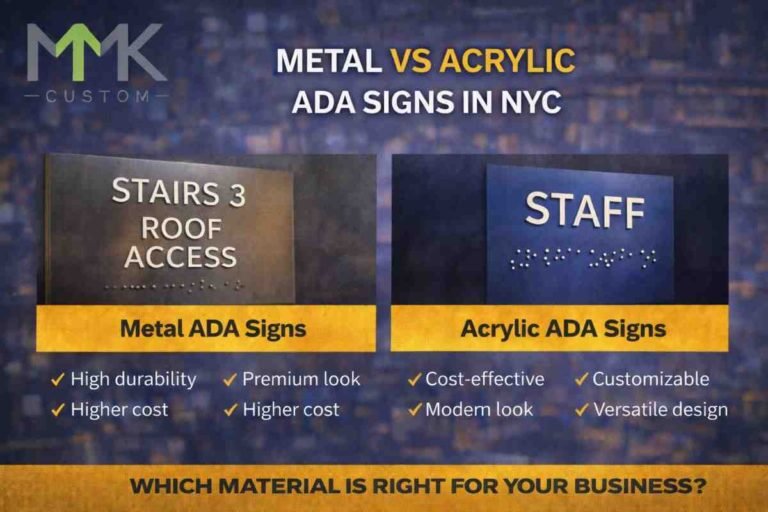
Metal vs acrylic ADA signs comparison in NYC showing tactile braille signage options for commercial buildings by MMK Custom

When it comes to ADA-compliant signage in New York City, choosing the right material is just as important as meeting legal requirements. Two of the most popular options are metal ADA signs and acrylic ADA signs—each offering distinct advantages depending on your space, brand, and budget. In this guide, we’ll break down the differences between metal and acrylic ADA signs, explain where each performs best, and help you decide which option makes sense for your NYC business. Understanding ADA Sign Requirements in NYC Before comparing materials, it’s essential to understand that ADA signs must meet specific federal and local accessibility standards. These include tactile lettering, Grade 2 Braille, proper character spacing, mounting height, and placement on the latch side of doors. NYC businesses—from offices and hotels to healthcare facilities and retail spaces—must follow these rules to avoid penalties and ensure accessibility. If you’re new to compliance, explore our complete guide to ADA signs in NYC to understand the basics before selecting materials. What Are Metal ADA Signs? Metal ADA signs are typically made from materials such as aluminum, stainless steel, brass, or bronze. These signs are known for their durability, premium appearance, and long-term performance. Benefits of Metal ADA Signs in NYC Because of their strength and upscale feel, metal ADA signs NYC businesses choose often reflect a more formal or high-end brand image. What Are Acrylic ADA Signs? Acrylic ADA signs are made from durable plastic with smooth, clean finishes. They are widely used across NYC due to their versatility, affordability, and modern look. Benefits of Acrylic ADA Signs Acrylic ADA signs are especially popular in newly renovated interiors where branding and color coordination are important. Metal vs Acrylic ADA Signs: Side-by-Side Comparison Feature Metal ADA Signs Acrylic ADA Signs Durability Extremely high Moderate to high Appearance Premium, professional Modern, clean Cost Higher upfront More affordable Customization Limited finishes Wide color & style options Best For Corporate, luxury, public buildings Retail, offices, hospitality Both options can be fully ADA-compliant when manufactured correctly—it’s about choosing what aligns with your environment and brand. Which ADA Sign Material Is Best for Your NYC Business? Choose metal ADA signs if: Choose acrylic ADA signs if: Many NYC businesses even combine both—using metal signs in main areas and acrylic signs in secondary spaces. Custom ADA Signage Solutions in NYC No matter which material you choose, professional fabrication and installation are key to avoiding compliance issues. At MMK Custom Signs, we design and produce fully compliant metal and acrylic ADA signs tailored to NYC regulations and your brand identity. Explore our full range of custom signs and signage solutions to see how we help businesses stay accessible and compliant. Get a Quote for Metal or Acrylic ADA Signs in NYC Still unsure whether metal or acrylic ADA signage is right for your space? Our team can guide you based on layout, usage, and local code requirements. 👉 Request a custom ADA signage quote today and ensure your NYC business is accessible, compliant, and professionally branded.

Braille Signage: Materials & Compliance Tips (NYC Guide)

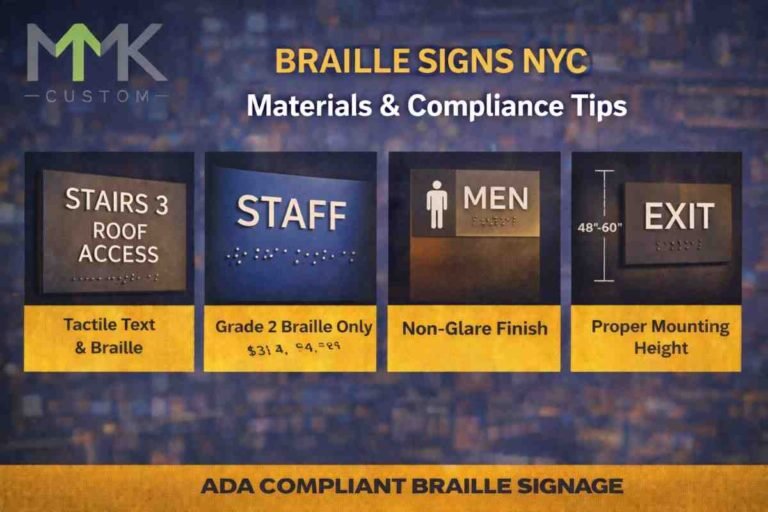
Braille signs NYC showing tactile text, Grade 2 Braille, non-glare finish, and proper ADA mounting height with MMK Custom branding

Braille signage plays a critical role in accessibility, helping people with visual impairments navigate public and commercial spaces safely and independently. In New York City, Braille signs NYC are not optional. They are a core requirement under ADA regulations and local building codes. This guide explains what braille signage is, which materials work best, where braille signs are required, and how NYC businesses can stay compliant without compromising on design. What Is Braille Signage? Braille signage includes raised tactile lettering and Grade 2 Braille, allowing individuals who are blind or visually impaired to identify rooms, exits, and essential facilities through touch. In NYC, braille signage is mandatory for: 👉 For full compliance solutions, explore ADA Signs NYC. ADA Braille Sign Requirements in NYC To meet ADA and NYC code standards, braille signs must follow strict guidelines: ✔ Grade 2 Braille Only ✔ Raised Tactile Text ✔ High Contrast & Non-Glare Finish ✔ Proper Mounting Height Incorrect placement is one of the most common reasons NYC businesses fail inspections. Best Materials for Braille Signs in NYC Choosing the right material is essential for durability, hygiene, and long-term compliance—especially in high-traffic NYC environments. 1. Acrylic Braille Signs Acrylic is one of the most popular materials for office buildings, medical facilities, and hospitality spaces. 2. Metal Braille Signs Metal braille signs are common in luxury hotels, corporate offices, and Class A buildings. 3. ADA-Compliant Plaque Signs Braille plaques combine durability with a premium look and are widely used for room identification. 👉 See options for custom plaques designed to meet ADA requirements. 4. Photopolymer Braille Signs Where Braille Signs Are Required (NYC) Braille signage must be installed in all permanent interior locations, including: Temporary spaces and movable signs do not require braille, but permanent identification signs always do. Common Braille Sign Mistakes to Avoid NYC inspectors frequently cite these errors: Avoiding these mistakes saves money and prevents legal risk. Custom Braille Signage vs Generic Signs Generic, off-the-shelf braille signs often fail NYC-specific requirements. Custom braille signage ensures: Professional fabrication is especially important for hospitality, healthcare, and multi-tenant buildings. Why Braille Signage Matters Beyond Compliance? Beyond regulations, braille signage: In a city as diverse and regulated as NYC, accessible signage is both a legal and ethical standard. Get ADA-Compliant Braille Signs in NYC If you’re planning a new space or upgrading existing signage, working with an experienced provider ensures compliance from day one. 👉 Request a Quote for custom braille signs in NYC tailored to your building, branding, and regulatory needs. Final Thoughts Braille signage is a small detail with a major impact. By choosing the right materials, following ADA rules, and ensuring proper installation, NYC businesses can stay compliant while creating accessible, welcoming spaces for everyone.

ADA Signs for NYC Restaurants & Hospitality: A Complete Compliance Guide

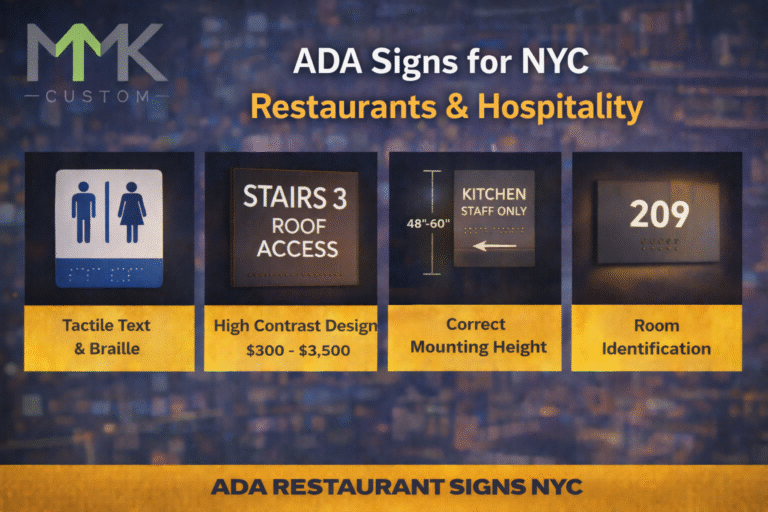
ADA restaurant signs NYC showing tactile braille, high-contrast signage, proper mounting height, and room identification with MMK Custom branding

Running a restaurant, café, hotel, or hospitality business in New York City comes with strict accessibility responsibilities. ADA restaurant signs in NYC are not just a legal requirement; they are essential for creating an inclusive, welcoming experience for every guest. From restrooms and entrances to wayfinding and room identification, compliant signage protects your business while improving customer trust. In this guide, we explain ADA signage requirements specifically for NYC restaurants and hospitality spaces, what signs you need, and how to stay compliant without sacrificing design. Why ADA Signs Matter for NYC Restaurants & Hospitality? New York City sees high foot traffic, diverse visitors, and frequent inspections. ADA-compliant signage helps: Well-designed ADA signs also integrate seamlessly into modern interiors, especially when custom-made for hospitality environments. 👉 Learn more about professional solutions on our ADA Signs NYC page. ADA Sign Requirements for Restaurants in NYC 1. Tactile Text & Braille All permanent room signs must include: Common examples include: 2. High Contrast & Readability ADA restaurant signs NYC must feature: This ensures visibility in dim dining areas, bars, and lounges. 3. Correct Mounting Height & Placement ADA-compliant signs should be: Hotels and larger hospitality venues must apply these rules across corridors, restrooms, and guest-access areas. 👉 For integrated interior solutions, explore Interior Signage NYC. Essential ADA Signs for Restaurants & Hospitality Venues ✔ Restroom ADA Signs ✔ Entry & Wayfinding Signs ✔ Room Identification Signs (Hotels & Venues) Design-Friendly ADA Sign Options for Hospitality ADA signs do not have to look generic. Popular materials for NYC hospitality spaces include: Custom ADA signage ensures compliance while maintaining a premium aesthetic. Common ADA Sign Mistakes NYC Restaurants Should Avoid These issues are frequent causes of failed inspections and complaints. Why Choose Custom ADA Signs for NYC Hospitality? Generic ADA signs often fail NYC-specific requirements. Custom fabrication ensures: 👉 Need compliant signage designed for your space? Visit Restaurant & Hospitality Signage NYC to see tailored solutions. Get ADA-Compliant Restaurant Signs in NYC Whether you operate a restaurant, café, hotel, or hospitality venue, professional ADA signage protects your business and improves guest experience. 📞 Ready to get started? 👉 Request a Quote for custom ADA restaurant signs in NYC designed to meet regulations and elevate your space. Final Thoughts ADA restaurant signs in NYC are more than a requirement; they are a sign of professionalism, accessibility, and care. With the right materials, placement, and design, your hospitality business can stay compliant while making every guest feel welcome.

NYC ADA Sign Requirements: Complete Guide

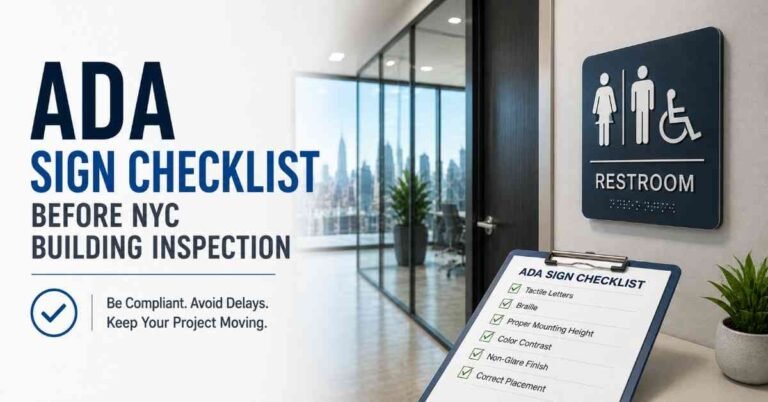
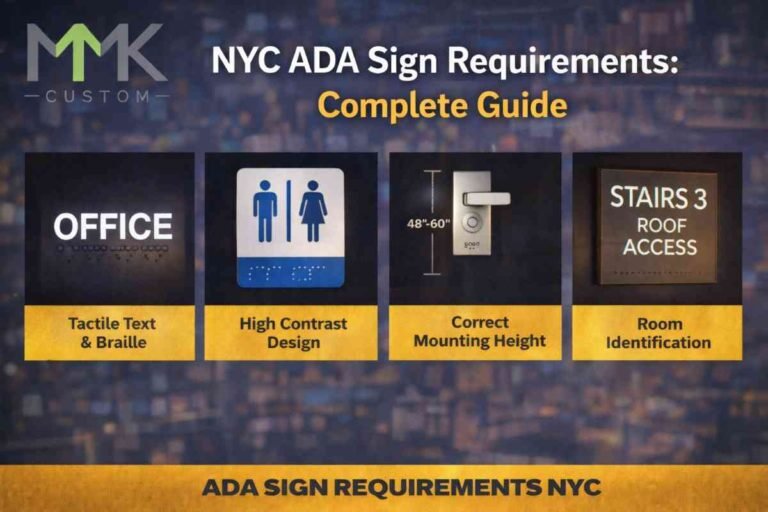
NYC ADA sign requirements infographic showing tactile braille signs, high contrast design, correct mounting height, and room identification with MMK Custom logo

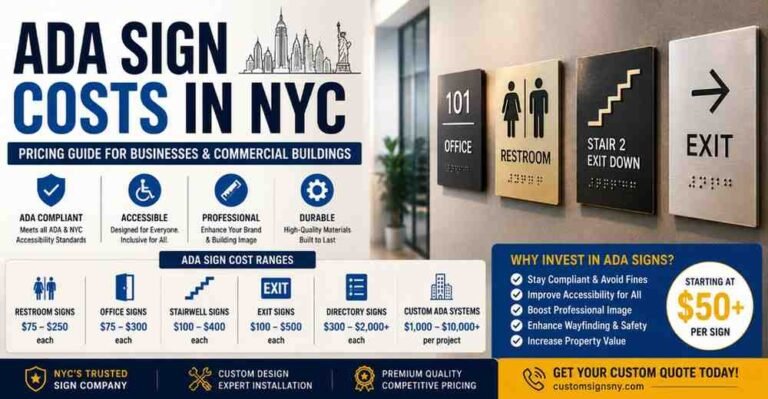
Accessibility isn’t optional in New York City—it’s the law. Businesses, property managers, medical offices, and commercial buildings must comply with ADA sign requirements NYC regulations to ensure spaces are accessible to everyone, including people with disabilities. Failure to meet ADA signage standards can lead to fines, failed inspections, lawsuits, and reputational damage. This complete guide explains what ADA signs are required in NYC, where they must be installed, and how to stay compliant without sacrificing design. What Are ADA Signs? ADA signs are accessibility-compliant signs designed to assist individuals with visual, mobility, or cognitive impairments. These signs follow federal ADA (Americans with Disabilities Act) guidelines, which are strictly enforced in NYC alongside local building codes. ADA-compliant signs typically include: 👉 Learn more about compliant solutions here: ADA Signs NYC Which Businesses in NYC Need ADA Signage? ADA signage is required in most public and commercial spaces, including: If the public can access your space, ADA signage is mandatory. Required ADA Signs in NYC 1. Room Identification Signs These are the most common ADA signs and must include raised text and Braille. Examples include: 2. Restroom ADA Signs Restroom signs must: 3. Exit & Stairwell Identification Signs Stairwell and exit signs in multi-story buildings require: 4. Directional ADA Signs Directional signs guide visitors to accessible routes, entrances, elevators, and restrooms. While not all directional signs require Braille, they must remain clear, legible, and properly contrasted. ADA Sign Design Requirements (NYC Standards) To meet ADA sign requirements NYC, signage must follow these core rules: ✔ Text & Font ✔ Braille ✔ Color Contrast ✔ Mounting Height ADA Interior Signage & NYC Compliance ADA signs are most commonly part of a larger interior signage system. When designed correctly, ADA signage blends seamlessly into your branding while remaining fully compliant. 👉 Explore interior solutions here: Interior Signage NYC Professionally designed interior ADA signage ensures: Common ADA Signage Mistakes NYC Businesses Make Avoid these costly errors: These mistakes can result in violations even if the sign “looks compliant.” ADA Inspections, Fines & Legal Risks in NYC NYC enforces ADA compliance aggressively. Non-compliance may lead to: Proper ADA signage is far less expensive than correcting violations later. How to Ensure ADA Compliance in NYC? The safest approach is working with a professional signage provider who understands: 👉 Request a Compliance Quote An expert consultation helps ensure every sign is correctly designed, produced, and installed the first time. Final Thoughts Understanding and meeting ADA sign requirements in NYC is essential for every business and property owner. Compliant signage protects your business legally, improves accessibility, and creates a welcoming environment for all visitors. Whether you’re opening a new space or upgrading existing signage, investing in proper ADA signs is a smart and responsible decision.