
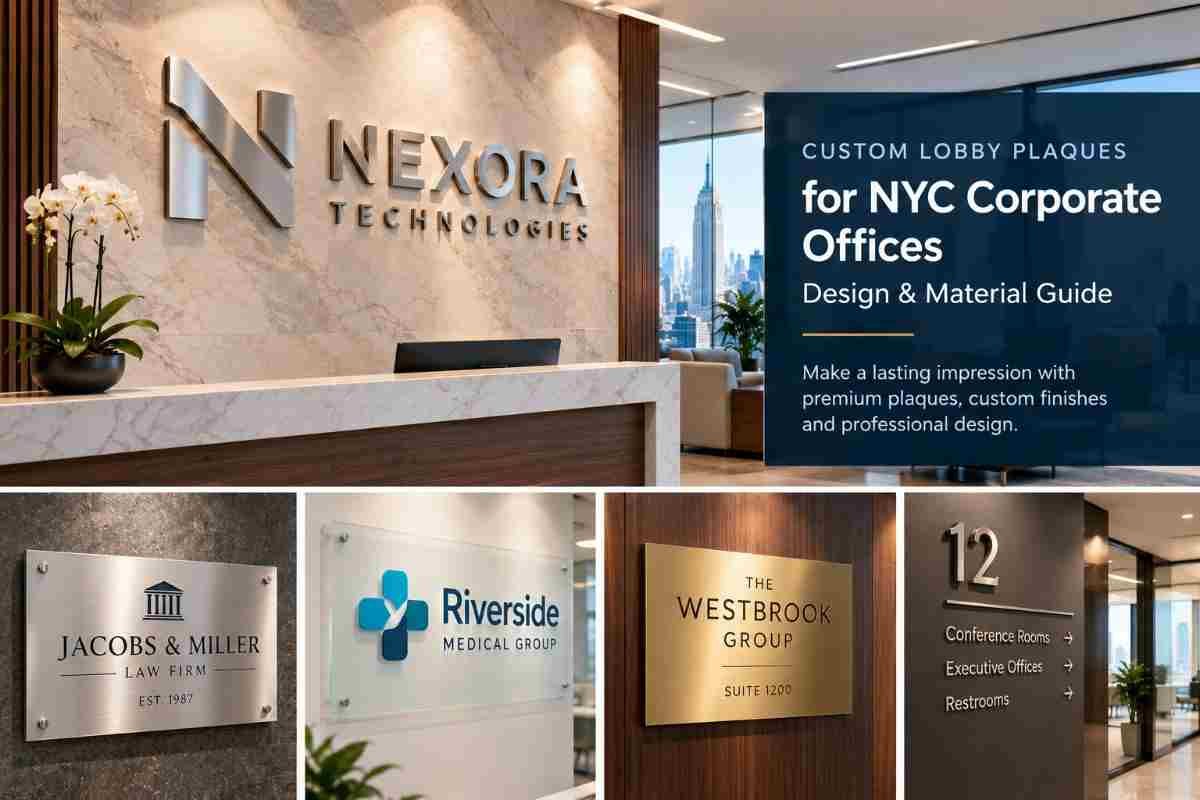

A corporate lobby is often the first place where clients, business partners, employees, and visitors experience a company’s brand. Every detail contributes to that impression, from the reception desk and wall finishes to lighting, furniture, and signage.
One detail that deserves careful attention is the lobby plaque. Custom lobby plaques in NYC provide a professional way to display a company name, building identity, corporate logo, floor information, or other important details. Unlike temporary printed signs, professionally fabricated plaques can become a permanent part of an office’s interior design.
For corporate offices, choosing the right plaque involves more than selecting a material or adding a logo. Size, typography, finish, mounting method, visibility, and placement all influence the final result.
This guide explains how to choose custom lobby plaques for NYC corporate environments, including material comparisons, design considerations, practical applications, and installation advice.
1. Why Corporate Offices Choose Custom Lobby Plaques
Corporate lobby plaques serve both branding and identification purposes. They help visitors understand where they are, identify the organization occupying the space, and navigate the building more confidently.
A well-designed plaque can also complement the architecture and reinforce the company’s visual identity.
- Create a professional first impression: A custom plaque displaying the company name or logo can give a reception area a more complete and organized appearance. Metal, acrylic, and other dimensional materials can be selected to complement the office’s interior finishes.
- Reinforce corporate branding: Businesses often invest in consistent logos, colors, typography, and visual elements across their websites, marketing materials, and physical locations. A custom lobby plaque extends that identity into the workplace.
- Identify companies and office spaces: In shared commercial buildings, multiple businesses may operate from different floors or suites. Lobby plaques can help identify tenants, professional offices, and corporate departments.
- Complement interior architecture: The right plaque can coordinate with marble, stone, glass, wood, metal, or painted feature walls. It can be designed as a subtle identification element or a prominent branded feature.
- Provide long-term identification: A professionally fabricated plaque can offer a durable alternative to temporary printed displays. The appropriate material and mounting method depend on the location and expected use.
2. Where Can Custom Lobby Plaques Be Installed?
Before choosing a material or design, identify the plaque’s purpose and installation location. A plaque behind a reception desk has different requirements from one placed near an elevator or building entrance.
Main reception areas
Reception areas are among the most common locations for corporate lobby plaques. A company name, logo, or combination of both can be displayed on a feature wall behind the reception desk. The design should be proportionate to the wall and desk while remaining easy to read from the main entrance.
For premium corporate interiors, brushed metal, acrylic, or layered plaque designs can create a refined appearance.
Corporate building entrances
Building entrance plaques can display the property name, company identity, or other approved identification information. These plaques may need to withstand more frequent contact, cleaning, and environmental exposure than signs installed in private office areas. Material selection should reflect the actual installation conditions.
Elevator lobbies
Elevator areas often require clear identification of businesses, floors, departments, or suites. Plaques in these locations should prioritize readability and consistent formatting. They should also coordinate with other building signage rather than compete with it.
Executive office entrances
Some organizations use smaller plaques outside executive offices, boardrooms, or private meeting spaces. These installations may incorporate the company logo, room name, executive title, or other identification details. A consistent design language helps maintain a coordinated office environment.
Shared commercial office buildings
Property managers may require a standardized plaque system for multiple tenants. In these cases, the plaque design should allow tenant names and suite information to be updated without compromising the overall appearance of the building’s signage.
3. Choosing the Right Material for Your Lobby Plaque
Material selection has a major influence on the appearance, durability, maintenance, and cost of a custom lobby plaque. The best option depends on the office environment, brand identity, budget, and desired finish.
Metal lobby plaques
Metal plaques are popular in corporate environments because they can create a formal, professional appearance. Common options include stainless steel, aluminum, and brass, depending on the intended design and fabrication requirements.
Stainless steel plaques
Stainless steel can provide a clean, contemporary appearance. Brushed finishes are particularly suitable for corporate reception areas where a subtle metallic look is preferred. They can be used for company identification, reception branding, building names, and executive office plaques.
Aluminum plaques
Aluminum is worth considering when a business needs a lightweight metal plaque with flexibility in fabrication and finishing. It can be finished in different colors and styles, making it suitable for contemporary corporate branding and identification applications.
Brass plaques
Brass offers a traditional metallic appearance that can suit law firms, financial institutions, established corporate offices, and formal reception environments. Depending on the finish and design, brass can create a classic or premium presentation.
Acrylic lobby plaques
Acrylic is another popular option for corporate lobby signage. It offers flexibility in color, thickness, shape, and design. Acrylic plaques can be produced in different finishes, including clear, colored, frosted, and other customized appearances. They can also incorporate printed graphics, engraved details, or dimensional lettering, depending on the fabrication method.
Acrylic is particularly useful when a company wants to reproduce its brand colors or create a contemporary reception display.
Engraved plaques
Engraving is a customization method rather than a separate base material. It can be applied to suitable materials such as metal and acrylic. Engraved plaques are useful for company names, room identification, building information, and other text-focused applications.
The engraving method and contrast should be selected carefully to ensure the finished text remains legible.
Layered and mixed-material plaques
Some corporate environments benefit from combining materials rather than using a single surface. For example, a plaque may incorporate a metal backing with raised acrylic lettering, or a branded logo may be mounted on a contrasting panel.
These combinations can create visual depth and help distinguish the company’s logo from supporting information.
4. Metal vs. Acrylic Lobby Plaques: Which Should You Choose?
Both metal and acrylic can work well for corporate lobby plaques, but they offer different visual characteristics.
| Feature | Metal plaques | Acrylic plaques |
|---|---|---|
| Appearance | Metallic, formal, contemporary, or traditional depending on finish | Clean, modern, and available in many colors |
| Customization | Engraving, cut lettering, and selected surface finishes | Printing, engraving, layered designs, and varied colors |
| Brand colors | Depends on the selected finish and fabrication method | Flexible for reproducing many brand colors |
| Visual style | Suitable for understated or premium corporate environments | Suitable for modern and creative office interiors |
| Maintenance | Depends on the metal and finish; may show fingerprints or scratches | Depends on the acrylic finish; may scratch if cleaned incorrectly |
| Common applications | Corporate reception, building names, executive offices | Reception branding, office identification, decorative plaques |
When to choose metal
Consider metal when the office requires a formal or understated presentation.
Examples include:
- Law firm reception areas.
- Financial and professional services offices.
- Corporate headquarters.
- Building identification plaques.
- Executive office entrances.
When to choose acrylic
Consider acrylic when brand color flexibility and contemporary styling are priorities.
Examples include:
- Technology company reception areas.
- Creative agencies.
- Medical and professional offices.
- Modern corporate interiors.
- Multi-color logo displays.
When to combine both materials
A mixed-material plaque may be suitable when a company wants the metallic appearance of a backing panel with the visual flexibility of raised acrylic lettering. The final choice should be based on the actual logo, wall finish, lighting, and intended viewing distance.
For more information about available plaque options, explore custom plaques and plaque signage.
5. Popular Finishes for Premium Corporate Lobby Plaques
The finish can change the entire character of a plaque, even when the material and design remain the same.
Here are several finishes worth considering for NYC corporate interiors.
- Brushed stainless steel: Brushed stainless steel has a directional texture that creates a restrained metallic appearance. It works well in modern offices where a polished but understated design is preferred.
- Polished metal: Polished finishes create a brighter, more reflective surface. They may suit formal reception areas, but the surrounding lighting should be considered to avoid distracting reflections.
- Satin finishes: Satin finishes offer a softer appearance than highly reflective surfaces. They can be a good option for corporate spaces that require a refined look without excessive shine.
- Matte black: Matte black plaques or lettering can create strong contrast against lighter walls, stone finishes, and neutral interiors.
They are especially suitable for contemporary office designs.
Brushed brass and bronze-style finishes
Warm metallic finishes can complement wood paneling, darker stone, and traditional interior materials. They may be suitable for law firms, financial offices, private corporate suites, and established professional organizations.
Frosted and clear acrylic
Frosted acrylic creates a subtle, modern look, while clear acrylic suits layered designs or installations where the wall remains visually prominent. Evaluate the best finish against the actual wall surface and lighting conditions, not from a product sample alone.
6. How to Design a Professional Corporate Lobby Plaque
An effective lobby plaque should communicate the company’s identity clearly without making the reception area feel crowded.
Several design decisions should be made before fabrication begins.
Logo placement and proportions
If the company logo is the primary element, it should remain recognizable and proportionate to the plaque. Avoid stretching or compressing the logo to fit a particular shape. Provide the original approved artwork whenever possible.
Typography and readability
The company name should be easy to read from the expected viewing distance. Decorative typefaces may look attractive in a design file but can become difficult to read when fabricated at smaller sizes.
For plaques that include additional details, use a clear hierarchy:
- Company name or primary logo.
- Supporting business name or department.
- Suite, floor, or other identification information where required.
Color and contrast
The plaque should stand out sufficiently from its background. For example, dark lettering on a light wall may provide clear visibility, while metallic lettering against a similar-colored surface may create a more subtle appearance.
The correct choice depends on the intended design and viewing conditions.
Shape and dimensions
Rectangular plaques are common for corporate identification, but custom shapes may be appropriate when they follow the company’s logo or branding. Before approving dimensions, consider the available wall area, furniture placement, surrounding signage, and distance from the main entrance.
Simplicity and visual balance
A corporate lobby plaque usually does not need a long list of services, slogans, or contact information. Prioritize the company identity and include only the supporting information that visitors genuinely need.
7. Custom Lobby Plaques vs. 3D Reception Wall Logos
- A plaque and a dimensional reception logo can serve similar branding purposes, but they are not always interchangeable.
- A plaque typically uses a defined backing surface or panel on which the company name, logo, and other details are displayed.
- A 3D reception logo may consist of individual dimensional letters or logo elements mounted directly onto the wall.
When a plaque is the better option
Choose a plaque when the design needs a contained layout, a defined background, or multiple pieces of information.
It may be particularly useful for:
- Company name and logo combinations.
- Building and tenant identification.
- Reception areas with limited wall space.
- Standardized signage across multiple offices.
- Installations that need a consistent panel format.
When a dimensional wall logo is the better option
Choose individual dimensional letters when the main objective is to create a prominent branded feature wall. This can work well for large corporate reception areas where the company logo is the primary visual element.
Can both be used together?
Yes. A corporate reception may feature a large dimensional logo behind the desk and smaller plaques near elevators, meeting rooms, and office entrances. The important consideration is to maintain consistent brand colors, typography, and finishes throughout the space.
Explore custom 3D letters and logos for additional dimensional branding options.
8. Size, Placement, and Visibility: What Should You Consider?
Even a premium plaque can look out of place if its dimensions or position are poorly planned.
Before ordering, evaluate the installation location carefully.
- Measure the available wall space: Record the usable width and height of the wall, including any areas occupied by lighting, furniture, architectural features, or other signage. The plaque should be proportionate to its surroundings rather than simply filling as much space as possible.
- Consider the viewing distance: A plaque installed directly behind a reception desk may be viewed from the building entrance, while an elevator identification plaque may be read from much closer. Letter size and text layout should reflect the expected viewing distance.
- Coordinate with the reception desk: The plaque should visually relate to the desk below it. A very small plaque may disappear against a large feature wall, while an oversized design may overwhelm a compact reception area.
- Evaluate lighting: Overhead lighting, windows, and spotlights can influence how metal and acrylic finishes appear. Check for glare and reflections, especially when using polished metal or clear acrylic.
- Confirm the mounting surface: Different wall materials may require different installation methods.
Painted drywall, stone, glass, wood paneling, and concrete should be evaluated before selecting adhesives, fasteners, or mounting hardware.
9. Installation Considerations for NYC Corporate Buildings
Corporate buildings in New York City may have specific procedures for signage installation. Property management, landlords, and building operators may require approval before drilling, using adhesives, transporting large plaques, or carrying out work in shared spaces.
Before fabrication and installation, confirm the following:
- Building approval: Check whether the property manager or landlord needs to approve the design, dimensions, location, or mounting method.
- Wall conditions: Confirm the wall material, surface condition, and suitability of the proposed mounting hardware.
- Installation access: Discuss elevator access, loading areas, building security procedures, and permitted working hours.
- Sign dimensions and weight: Larger or heavier plaques may require additional planning and suitable mounting support.
- Electrical requirements: If the design includes illuminated elements, discuss electrical planning and access to power before approving production.
- Applicable regulations: Confirm whether any specific building, fire, accessibility, or other requirements apply to the intended location and plaque function.
Decorative lobby plaques should not automatically be treated as substitutes for required accessibility or life-safety signage. Where applicable, those signs need to be specified separately.
10. What Determines the Cost of Custom Lobby Plaques in NYC?
The cost of a custom lobby plaque depends on its design, dimensions, material, finish, fabrication method, and installation requirements.
A simple engraved office plaque will generally involve a different scope from a large corporate reception panel with multiple materials and dimensional lettering.
Consider these factors when requesting a quotation.
- Material selection: Metal, acrylic, and mixed-material plaques have different fabrication requirements and material costs.
- Plaque dimensions: Larger plaques generally require more material and may involve additional handling and installation work.
- Design complexity: Custom shapes, detailed logos, multiple colors, engraved information, and layered elements can influence production time and cost.
- Finish requirements: Specialty finishes, polished surfaces, custom colors, and other finishing processes may affect the final quote.
- Mounting method: Direct mounting, standoffs, backing panels, and specialty hardware can involve different costs and installation requirements.
- Installation conditions: Wall preparation, building access, working-hour restrictions, and installation height may influence labor and project coordination.
- Quantity: A project involving several plaques across multiple floors or office locations may require coordinated production and installation planning.
What should your quotation include?
To compare proposals accurately, request an itemized breakdown covering:
- Material and finish specifications.
- Plaque dimensions and thickness.
- Logo and artwork preparation.
- Engraving, printing, or dimensional lettering.
- Mounting hardware and backing panels.
- Installation and wall preparation.
- Delivery and building access requirements.
- Production and installation timeline.
- Applicable warranty and maintenance information.
For a project-specific estimate, visit the CustomSignsNY quote request page.
11. Common Mistakes to Avoid When Ordering Corporate Lobby Plaques
- Selecting materials based only on appearance: A finish may look attractive in a sample but may not suit the installation environment. Consider cleaning requirements, wall conditions, lighting, and expected use.
- Making the plaque too crowded: Adding too much information can reduce readability and weaken the overall design. Keep the main company identity prominent.
- Ignoring the surrounding interior: A plaque should complement the reception desk, wall finish, lighting, and other architectural elements.
- Choosing poor color contrast: Low contrast can make the company name difficult to read. Always review the proposed colors against the actual installation background.
- Overlooking mounting requirements: A plaque that is not properly mounted can become misaligned or insecure. Confirm that the hardware is suitable for the plaque’s dimensions, weight, and wall surface.
- Approving artwork without checking the details: Review the spelling, logo proportions, colors, layout, and dimensions before fabrication. Corrections after production may require additional time and expense.
12. Corporate Lobby Plaque Buying Checklist
Use this checklist when preparing a new corporate lobby plaque project.
-
Identify the purpose of the plaque.
-
Confirm the exact installation location.
-
Measure the available wall space.
-
Prepare the approved company logo and artwork.
-
Select a suitable material and finish.
-
Decide whether engraving, printing, or dimensional lettering is required.
-
Confirm the plaque’s size and text hierarchy.
-
Evaluate visibility and contrast.
-
Confirm wall material and mounting requirements.
-
Check building management approval and access rules.
-
Request an itemized quotation.
-
Approve the final artwork before fabrication.
-
Confirm installation and maintenance arrangements.
Providing these details helps the signage provider understand the project and recommend a suitable plaque design.
Create a Professional First Impression With Custom Lobby Plaques
A corporate lobby plaque is a small but important part of the workplace environment. It helps visitors identify the business, reinforces corporate branding, and contributes to the overall appearance of the reception area.
For NYC corporate offices, the right solution starts with understanding the space and the plaque’s purpose. Metal plaques may suit formal professional interiors, acrylic can provide greater flexibility for branded designs, and mixed-material options can create a distinctive reception feature.
Before ordering, evaluate the material, finish, dimensions, typography, visibility, and mounting requirements. A well-planned plaque should look appropriate within the office while remaining clear and functional.
Planning a corporate reception or building identification project in New York City? Explore custom plaque signage from CustomSignsNY or request a quote to discuss your requirements.
Frequently Asked Questions
What are custom lobby plaques?
Custom lobby plaques are professionally fabricated identification or branding panels installed in reception areas, corporate entrances, elevator lobbies, and other shared spaces. They can display a company name, logo, building identity, floor information, or other approved details.
Which material is best for corporate lobby plaques?
Metal and acrylic are both popular options. Stainless steel and brass-style finishes can provide a formal appearance, while acrylic offers flexibility in color, thickness, and design. The right material depends on the office’s branding, interior style, and installation requirements.
Are metal lobby plaques better than acrylic plaques?
Not necessarily. Metal may be preferable for a traditional or understated corporate appearance, while acrylic may be better for colorful branding and contemporary designs. Both should be evaluated based on the intended application.
Can a company logo be engraved on a lobby plaque?
Yes. Depending on the selected material and fabrication method, a logo can be engraved, printed, cut, or incorporated as raised lettering. The original approved artwork should be provided to ensure accurate reproduction.
Can lobby plaques be customized to match corporate brand colors?
Yes. Acrylic and certain coated or finished metal options can be customized to coordinate with a company’s approved brand palette. The final color should be reviewed against the actual interior lighting and background.
How are custom lobby plaques installed?
Installation methods depend on the plaque material, dimensions, weight, and wall surface. Options may include suitable adhesives, fasteners, standoffs, or mounting hardware. The installation method should be confirmed before fabrication.
Can lobby plaques be installed in multi-tenant office buildings?
Yes. Custom plaques can be designed for tenant identification, suite information, and shared building directories. Property management approval and building signage standards should be confirmed before ordering.
How much do custom lobby plaques cost in NYC?
Pricing depends on material, dimensions, finish, design complexity, quantity, mounting method, and installation conditions. Request a project-specific quotation with an itemized scope for an accurate estimate.
How long does it take to make a custom lobby plaque?
Production time depends on artwork approval, material availability, fabrication complexity, and installation scheduling. Ask the provider for a timeline covering design, proof approval, fabrication, and installation.