
Your business signage is often one of the first things customers notice when they enter your office, visit your storefront, or walk through your commercial property. The right sign can communicate professionalism, reinforce brand identity, and make your business easier to recognize.
When choosing signage, one important decision is whether to invest in 3D business signs or flat signs.
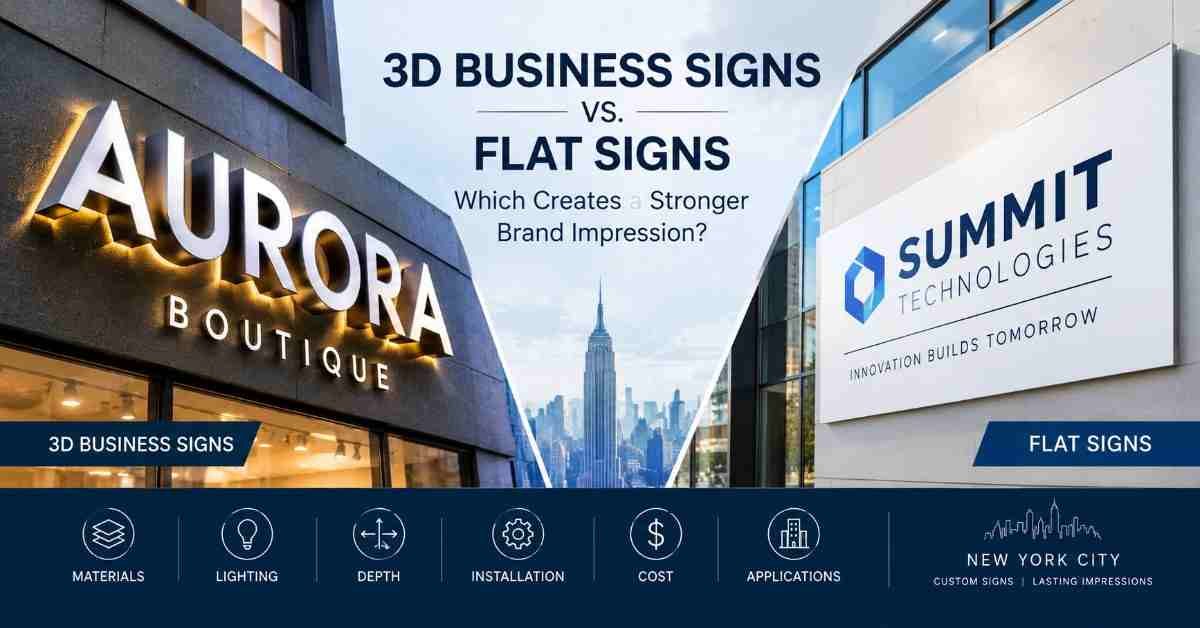
Three-dimensional signage uses depth, raised lettering, or layered materials to create a more dimensional appearance. Flat signs typically use printed graphics, lettering, or logos on a smooth, two-dimensional surface. Both options can be effective, but the right choice depends on your location, branding goals, budget, and installation requirements.
For businesses in New York City, where storefronts, office interiors, and commercial buildings compete for attention, understanding these differences can help you choose signage that supports your brand.
What Are 3D Business Signs?
3D business signs use raised letters, dimensional logos, layered materials, or fabricated components to create visible depth. Rather than appearing entirely flat against a surface, the sign projects outward or incorporates multiple levels.
Common types include:
- Dimensional lettering: Individual letters mounted directly onto a wall or sign surface.
- 3D acrylic signs: Acrylic letters or logos fabricated with depth for a clean, modern finish.
- Metal letter signs: Aluminum, stainless steel, brass, or other metal finishes that create a premium appearance.
- Built-up letters: Fabricated letters with greater depth for a more substantial visual effect.
- Illuminated dimensional signs: Three-dimensional letters combined with lighting to improve visibility and create visual impact.
These signs are popular in corporate offices, reception areas, retail storefronts, restaurants, and commercial buildings.
For example, a company logo made from brushed metal letters mounted on a reception wall can create a different impression from the same logo printed on a flat panel. Both can communicate the same brand identity, but the dimensional version adds depth, shadows, and material texture.
What Are Flat Business Signs?
Flat business signs use a smooth, two-dimensional surface to display a business name, logo, message, or graphic. They may be printed, engraved, or produced using applied vinyl lettering and graphics.
Common examples include:
- Printed acrylic or plastic panels
- Aluminum composite sign panels
- Flat PVC or rigid-board signs
- Printed wall signs and promotional graphics
- Vinyl lettering applied to glass or other smooth surfaces
- Flat directory panels and informational signs
Flat signs can be an excellent choice when clarity, flexibility, and cost control are priorities. They also work well for temporary promotions, informational signage, directional messages, and applications requiring frequent graphic updates.
For example, a flat printed panel can communicate office department names or promotional offers clearly without requiring individually fabricated letters.
3D Business Signs vs. Flat Signs: Key Differences
The most suitable option depends on how you want customers to perceive your business and where the signage will be installed.
| Feature | 3D Business Signs | Flat Business Signs |
|---|---|---|
| Appearance | Raised, layered, or sculpted | Smooth, two-dimensional |
| Brand impression | Can create a premium, architectural look | Can create a clean, practical, graphic-led look |
| Visual depth | Visible depth and natural shadows | Little or no physical depth |
| Materials | Acrylic, metal, PVC, and fabricated components | Printed panels, vinyl, acrylic, aluminum, and similar substrates |
| Lighting options | Can incorporate front lighting, halo lighting, or other illuminated designs when suitable | Can use printed graphics or be combined with external or other suitable lighting |
| Customization | Shapes, letter thickness, finishes, and mounting styles | Colors, images, typography, layouts, and printed designs |
| Typical applications | Reception walls, storefronts, corporate logos, feature walls | Directories, notices, promotional panels, informational signs |
| Cost factors | Fabrication, material thickness, finishes, mounting, and lighting | Panel material, printing, size, graphics, and installation |
| Best suited for | Permanent brand displays and high-impact identification | Informational messaging, flexible graphics, and budget-conscious applications |
Neither option is automatically better for every business. A well-designed flat sign can be highly effective, while a poorly proportioned dimensional sign may not communicate the brand clearly.
1. Visual Impact: How Depth Changes Brand Perception
One of the biggest differences between dimensional and flat signage is how each interacts with its surroundings.
Why 3D signs can create a stronger impression
Raised letters create shadows and highlights as light falls across the sign. These details can make a logo feel more substantial and help it stand out from a wall or mounting surface. For a corporate reception area, dimensional lettering can give the company name a more architectural presence. In a retail setting, raised letters may help establish a distinctive storefront identity.
The effect depends on the design, materials, lighting, scale, and installation quality—not simply on whether the sign is three-dimensional.
When flat signs work just as well
Flat signage can be the better choice when the design depends on photography, detailed illustrations, complex graphics, or substantial written information. A flat panel can reproduce a complete brand design without needing to fabricate every letter or graphic element individually. It is also useful when the sign must communicate information quickly and clearly.
Best takeaway: Choose 3D signage when depth and physical presence support your brand. Choose flat signage when graphic flexibility and information delivery matter more.
2. Acrylic Logos vs. Metal Letter Signs
Acrylic and metal are two popular materials for dimensional business signage. Each offers a different visual style.
Acrylic business signs
Acrylic signs can deliver a clean, contemporary appearance. Depending on the design, acrylic may have a glossy, matte, translucent, colored, or layered finish.
Acrylic is often suitable for:
- Modern office reception walls
- Technology and professional service companies
- Interior brand displays
- Layered logos with contrasting colors
- Dimensional lettering in contemporary commercial spaces
Acrylic can also be combined with other materials to create contrast between the lettering and the background.
Metal letter signs
Metal letters can create a refined, substantial appearance. Finishes such as brushed stainless steel, polished metal, or bronze-colored surfaces can complement corporate, hospitality, retail, and professional environments.
Metal lettering is often suitable for:
- Corporate reception areas
- Premium office interiors
- Building identification
- Retail storefronts
- Permanent branded environments
The best material depends on the desired appearance, exposure conditions, mounting surface, maintenance needs, and budget.
For businesses comparing materials, explore the differences between bronze and brass plaques when evaluating metal finishes for identification and branded signage.
3. Flat Panels vs. Dimensional Lettering
Flat panels and individual dimensional letters serve different purposes, even when they display the same logo.
Dimensional lettering
With dimensional lettering, individual letters or logo elements are mounted onto a wall or another suitable surface. The spaces between the characters allow the background to remain visible.
This approach can create an open, uncluttered appearance, particularly when the logo is mounted directly onto a contrasting wall.
It works well for reception logos, interior feature walls, selected storefront applications, and corporate identification.
Flat panels
A flat panel creates a defined sign area. The logo, text, or graphics appear within the boundaries of the panel, which can help organize multiple elements in a single layout.
Panels are useful when the sign needs to include:
- A company logo and tagline
- Multiple lines of information
- Department or tenant identification
- Detailed graphics
- A consistent background behind the branding
The decision often comes down to the amount of information you need to display and whether you want the sign itself to blend into the architecture or become a distinct visual feature.
4. Lighting: Do 3D Business Signs Stand Out More?
Lighting can influence the appearance and visibility of both dimensional and flat signage.
Three-dimensional signs offer several possible approaches, depending on the letter construction and installation.
Front-lit dimensional signs
Light shines through or from the front of the letters, making the characters visible in lower-light conditions. This approach is commonly considered for illuminated storefront and building signage.
Halo-lit letters
Lighting is directed behind the letters toward the mounting surface, creating a glow around the characters. Halo lighting can work particularly well for corporate reception signs and premium interior branding.
Non-illuminated dimensional signs
Dimensional signs do not have to be illuminated. Raised acrylic or metal letters can create visual interest through their depth, finish, and interaction with ambient lighting.
Flat signs with lighting
Flat panels can also be illuminated using suitable external lighting or purpose-designed illuminated sign systems. Their effectiveness depends on the panel, installation, and lighting arrangement. For exterior applications, the sign’s location, electrical requirements, property restrictions, and applicable approvals should be reviewed before selecting an illuminated design. If you are comparing illuminated storefront options, our guide to channel letter sign costs in NYC provides a related starting point for understanding cost factors.
5. Which Sign Type Is Better for Different Business Locations?
The ideal sign type changes depending on where it will be installed.
Corporate offices and reception areas
For corporate offices, dimensional logos can help establish a consistent and professional brand identity. Acrylic lettering may suit modern, minimalist interiors, while metal letters can complement more traditional or premium environments. Flat panels may be preferable for directories and information-heavy displays.
Recommended approach: Use dimensional lettering for the primary company logo and flat signage for supporting information where appropriate.
Retail storefronts
Storefront signage needs to communicate the business name clearly to people approaching the premises. Dimensional letters can create a distinctive physical presence, while flat panels can provide a clear background for logos, colors, and other graphics. For illuminated storefronts, consider viewing distance, ambient light, facade materials, and local sign requirements.
Recommended approach: Evaluate dimensional lettering, flat panels, and illuminated options based on the storefront’s architecture and visibility needs.
Restaurants and hospitality businesses
Restaurants, cafés, hotels, and hospitality venues often use signage to reinforce a particular atmosphere. Dimensional letters may suit a branded feature wall, reception area, or exterior identification sign. Flat graphics can work well for menus, promotional displays, and informational messaging.
Recommended approach: Use the sign material and finish to support the atmosphere of the space while keeping essential information readable.
Commercial buildings and property management
Commercial properties may require tenant identification, entrance signs, lobby branding, and directory systems. Dimensional lettering can work well for a primary building name or property logo. Flat panels can accommodate multiple tenant names or organized directory information.
Recommended approach: Combine sign types when necessary to create a consistent signage system across the property.
6. Cost Comparison: Are 3D Business Signs More Expensive?
Three-dimensional signs can cost more than comparable flat signs because they may require additional fabrication, thicker materials, individual lettering, specialized finishes, mounting hardware, or lighting components.
However, there is no universal price difference. A small dimensional acrylic logo may be relatively straightforward to produce, while a large, highly customized flat panel with complex graphics and installation requirements may involve significant expense.
Factors affecting the cost of 3D signs
- Overall dimensions and letter depth
- Number of individual letters and logo components
- Material selection and finish
- Fabrication complexity
- Lighting and electrical requirements
- Mounting surface and installation access
- Design preparation and site-specific requirements
Factors affecting the cost of flat signs
- Panel dimensions and substrate
- Printing method and graphic complexity
- Material thickness and finish
- Protective coatings or specialized requirements
- Mounting hardware and installation
- Artwork preparation and quantity
When requesting estimates, compare signs with similar dimensions, materials, finishes, installation conditions, and lighting specifications. The lowest initial price is not necessarily the best choice. Consider the expected use, maintenance needs, appearance, and how well the sign supports your business objectives.
7. Which Option Is Better for Brand Recognition?
Brand recognition depends on more than physical depth. Your logo, colors, typography, placement, visibility, and consistency across different locations all play important roles. Three-dimensional signs can make a brand feel tangible and distinctive, particularly in spaces where visitors encounter the sign at close range. Flat signs can communicate the same brand identity effectively when the layout is clear and the graphics are well executed.
For the strongest overall result, consider the following principles:
- Maintain brand consistency: Use approved logo files, colors, and typography.
- Prioritize legibility: Make sure the business name is easy to read at the expected viewing distance.
- Choose suitable contrast: Ensure letters and graphics stand out against the background.
- Match the environment: Consider the wall, facade, interior design, and surrounding visual elements.
- Use lighting strategically: Add illumination when it serves a genuine visibility or design purpose.
- Plan the complete signage system: Keep primary identification consistent with directories, room signs, and supporting graphics.
A thoughtfully designed flat sign can be more effective than a dimensional sign that is difficult to read. The goal is to choose the format that communicates your brand clearly and appropriately.
8. Can You Combine 3D and Flat Signage?
Yes. Combining dimensional and flat signage can provide a balanced solution for businesses that need both strong branding and practical information. For example, a corporate office might use raised metal letters for the primary reception logo and flat panels for department names or visitor information.
A retail business could use dimensional letters for its main business name while using printed window graphics for seasonal promotions. A commercial property could feature dimensional lettering at its main entrance and flat panels for tenant directories.
This approach allows each sign to perform a specific function without forcing one format to meet every need.
9. How to Choose the Right 3D Business Sign Company in NYC
Choosing the right signage partner involves more than comparing a few designs or prices. Your sign must suit the location, mounting surface, brand identity, and intended use.
Before selecting a provider, consider these questions:
- What is the primary purpose of the sign? Decide whether you need brand identification, storefront visibility, interior branding, or informational signage.
- Which materials suit the environment? Consider acrylic, metal, panels, finishes, exposure, and maintenance.
- Will the sign be illuminated? Determine whether lighting is necessary and whether the location can accommodate it.
- How will it be mounted? Review the wall or facade, access, hardware, and installation requirements.
- Does the design match your brand? Check logo proportions, color accuracy, readability, and the overall presentation.
- What approvals may be required? Exterior signs can be subject to property rules and applicable NYC requirements. Confirm the relevant requirements for your particular project.
- What does the estimate include? Clarify design, fabrication, installation, lighting, and any other specified services.
Working through these questions early can help reduce design revisions and make it easier to compare proposals accurately.
Give Your Brand a More Distinctive Presence with Custom Business Signs
Your business sign should do more than display a name. It should help customers recognize your brand, understand your business, and experience a consistent visual identity. Whether you choose dimensional acrylic letters, custom metal lettering, a flat sign panel, or a combination of formats, the right solution depends on your location, design objectives, and practical requirements.
Looking for custom 3D business signs in New York City? Contact CustomSignsNY to discuss your project, compare signage options, and request a customized estimate.
Request a Custom Signage Quote
Frequently Asked Questions
Are 3D business signs better than flat signs?
Not in every situation. Three-dimensional signs add physical depth and can create a premium or architectural appearance. Flat signs are often effective for detailed graphics, informational content, and projects where flexibility or budget is a priority.
What materials are commonly used for 3D business signs?
Common materials include acrylic, aluminum, stainless steel, PVC, and other suitable fabrication materials. The right choice depends on the desired appearance, application, exposure, mounting requirements, and budget.
Are acrylic or metal letters better for office signs?
Acrylic can suit modern, colorful, or layered designs, while metal can create a refined and substantial appearance. Both can work well for office branding; choose based on your interior design, finish preferences, and project requirements.
Can 3D business signs be illuminated?
Yes. Depending on the construction, dimensional signs may use front lighting, halo lighting, or other illumination methods. Not every dimensional sign is designed for lighting, so the fabrication method should be selected according to the desired effect.
Are flat business signs cheaper than 3D signs?
They can be, particularly when the flat sign uses a straightforward panel and print. However, cost depends on size, materials, graphics, installation, and customization. Obtain comparable quotes before deciding.
Where are 3D business signs commonly used in NYC?
They are used in corporate reception areas, office interiors, retail storefronts, restaurants, commercial buildings, and other branded environments. The best format depends on the building, business needs, and installation conditions.
How do I get a quote for custom 3D business signs in NYC?
Prepare your logo or artwork, approximate dimensions, installation location, preferred materials, and any lighting requirements. These details help a signage provider assess the project and recommend a suitable solution.