
Choosing the right material for dimensional signage can make a significant difference in how your business looks, how long your sign lasts, and how well it represents your brand. For New York City businesses, where storefronts, office interiors, and commercial buildings compete for attention, the right sign material can help create a memorable first impression.
Two popular options are metal and acrylic 3D letters. Both can be customized to match your logo, brand colors, and architectural style, but they offer different visual effects, finishes, installation requirements, and performance characteristics.
When comparing metal vs. acrylic letters, it helps to consider where the sign will be installed, the appearance you want to achieve, your budget, and how much maintenance the sign may require.
In this guide, we compare metal and acrylic 3D letters to help NYC business owners choose the right option for storefronts, reception areas, office walls, retail spaces, and other commercial environments.
What Are Metal and Acrylic 3D Letters?
Before comparing the two materials, it is useful to understand how each type of dimensional sign is made and where it works best.
What Are Metal 3D Letters?
Metal 3D letters are individual dimensional characters fabricated from materials such as aluminum, stainless steel, and brass. They can be mounted directly onto walls, building facades, sign panels, and reception areas.
Depending on the selected metal and finish, these letters can create anything from a clean, contemporary appearance to a premium, traditional look.
Common options include:
- Aluminum letters: Lightweight, versatile, and suitable for many interior and exterior applications.
- Stainless steel letters: Known for their polished or brushed appearance and resistance to corrosion.
- Brass letters: Offer a warm, gold-toned finish often used in luxury branding and professional interiors.
- Painted metal letters: Allow businesses to match brand colors while retaining the dimensional appearance of metal.
Metal letters are commonly used for corporate logos, building identification, storefront signage, reception walls, and upscale commercial interiors.
What Are Acrylic 3D Letters?
Acrylic 3D letters are fabricated from rigid acrylic sheets and can be cut into custom lettering, logos, and shapes. Acrylic is available in a wide range of colors, thicknesses, and finishes, making it a flexible option for branded signage.
Depending on the design, acrylic letters can have a glossy, matte, translucent, or solid-colored appearance.
Popular applications include:
- Office reception logos
- Retail and boutique signage
- Interior wall lettering
- Restaurant and salon branding
- Colored dimensional logos
- Backlit and illuminated sign designs
Acrylic is particularly useful when color accuracy, creative shapes, and a clean contemporary appearance are important.
Businesses exploring additional dimensional lettering styles can also review our custom 3D letters and logo signage options.
Metal vs. Acrylic Letters: Key Differences
The best choice depends on your project’s requirements rather than one material being universally better.
| Feature | Metal 3D Letters | Acrylic 3D Letters |
|---|---|---|
| Appearance | Premium, architectural, industrial, or classic | Modern, colorful, clean, or contemporary |
| Available finishes | Brushed, polished, painted, and selected specialty finishes | Glossy, matte, translucent, colored, and specialty finishes |
| Weight | Varies by metal, thickness, and letter size | Often lightweight relative to comparable metal designs |
| Durability | Depends on metal grade, finish, environment, and maintenance | Depends on acrylic grade, thickness, UV exposure, and installation |
| Corrosion resistance | Aluminum and stainless steel generally offer good corrosion resistance when appropriately specified | Does not rust, but can scratch, crack, or weather depending on conditions |
| Color customization | Available through paint and selected finishes | Broad range of solid and translucent colors |
| Lighting options | Compatible with selected illuminated and halo-lit designs | Suitable for many backlit and illuminated designs |
| Cost factors | Metal type, fabrication, thickness, finish, and installation | Thickness, color, complexity, lighting, and installation |
| Typical uses | Corporate branding, exterior signs, luxury interiors | Reception logos, retail branding, interior walls, and illuminated signage |
Neither material wins in every category. A well-designed acrylic sign can look premium, while carefully specified metal letters can be appropriate for both modern and traditional brands.
1. Appearance: Which Material Looks Better?
Appearance is often the first consideration when choosing dimensional signage because your sign contributes to how customers perceive your business.
The Look of Metal Letters
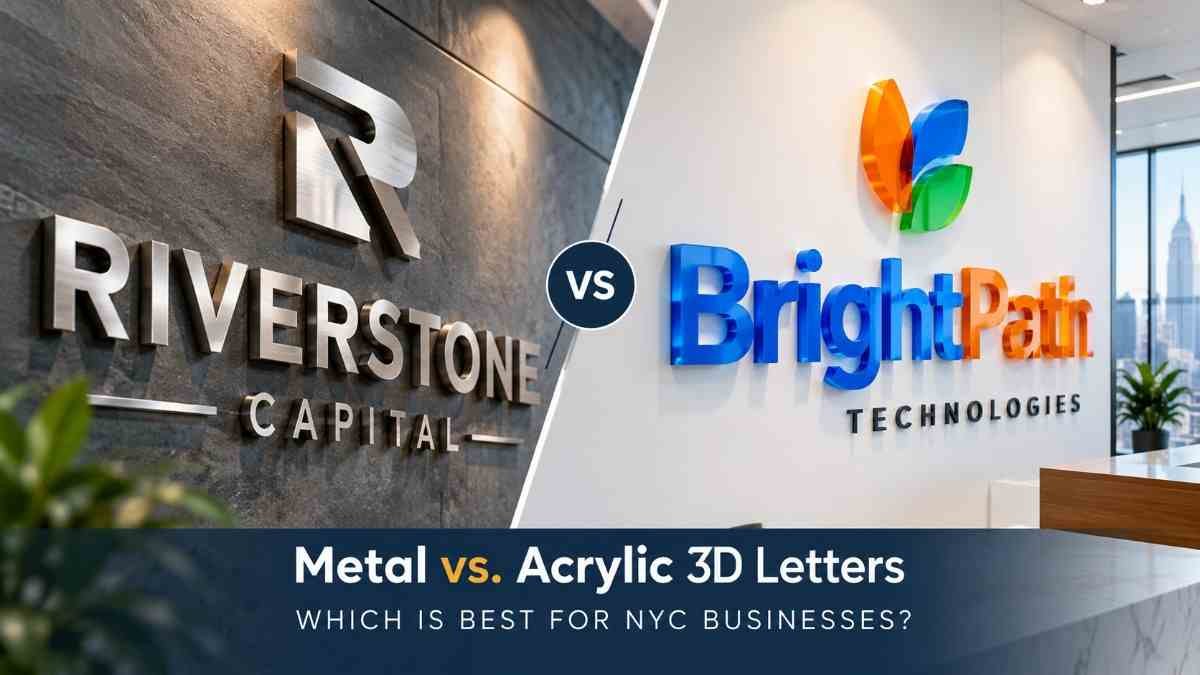
Metal letters create a substantial, refined appearance. Brushed stainless steel can suit modern corporate offices, while brass-colored or polished metal finishes can complement luxury retail environments and professional reception areas.
Metal lettering can be especially effective when you want the sign to coordinate with architectural details, glass partitions, stone walls, wood finishes, or other premium materials.
For example, a Manhattan law firm may choose brushed stainless steel lettering for its reception wall, while a boutique hotel may prefer brass-finish lettering to complement its interior design.
The Look of Acrylic Letters
Acrylic provides greater flexibility when a design requires precise brand colors, bold visual contrast, or a contemporary appearance. It can be fabricated into individual letters and custom logo shapes that stand out against painted walls, glass, or other surfaces.
Acrylic is also a practical choice for businesses that want colorful dimensional branding without the metallic appearance of traditional metal letters.
For example, a technology company might choose blue acrylic logo letters for a reception wall, while a retail store could use custom-colored lettering to match its brand identity.
Which should you choose?
Choose metal when you want a metallic finish, architectural character, or a premium material appearance. Choose acrylic when color flexibility, contemporary styling, or a particular lighting effect is a priority.
2. Durability: Which Lasts Longer?
Durability depends on more than the material itself. Letter thickness, fabrication quality, finish, mounting method, environmental exposure, and maintenance all affect how a sign performs over time.
Metal Letter Durability
Aluminum and stainless steel are widely used for dimensional signage because they can perform well in commercial environments when correctly specified.
Aluminum is relatively lightweight and can be finished or coated for the intended application. Stainless steel is often selected for its corrosion resistance and refined appearance.
However, metal is not maintenance-free. Some finishes can scratch, painted surfaces can deteriorate, and unsuitable metal grades or poorly protected installations may experience corrosion or discoloration.
For exterior signs in NYC, consider rain, temperature changes, pollution, building exposure, and the condition of the mounting surface when selecting a metal and finish.
Acrylic Letter Durability
Acrylic can be durable for interior applications and many appropriately designed exterior signs. It does not rust, and quality acrylic can retain its appearance for years when used in suitable conditions.
However, acrylic can scratch, crack under impact, and experience weathering or color changes depending on the grade, UV exposure, and installation conditions. Thin letters or poorly supported designs may also be more vulnerable to damage.
For exterior applications, select an appropriate grade and thickness, and confirm that the mounting system and fabrication method suit the installation environment.
Which should you choose?
Metal is often a strong option for exposed architectural lettering and applications where a metallic finish is essential. Acrylic can perform well for interior branding and suitable exterior projects when the material is specified correctly.
3. Cost: Are Metal or Acrylic 3D Letters More Affordable?
The cost of 3D letters depends on the complete sign design, not just the raw material. Size, letter depth, quantity, finish, mounting, illumination, access to the installation site, and labor can all affect the final quote.
What Affects the Cost of Metal Letters?
Metal lettering may involve additional fabrication steps, especially when the design uses complex shapes, deeper returns, specialty finishes, or individually fabricated characters.
Cost factors include:
- Type and grade of metal
- Letter size and thickness
- Brushed, polished, painted, or specialty finish
- Fabrication complexity
- Mounting hardware and installation method
- Exterior access and installation conditions
- Lighting, if included
Stainless steel and brass designs may have different material and finishing costs from aluminum letters. The final price depends on the specification and fabrication process.
What Affects the Cost of Acrylic Letters?
Acrylic can be economical for many flat-cut dimensional lettering projects, particularly when the design uses standard sheet colors and straightforward mounting.
Costs can increase with thicker material, custom colors, intricate logos, specialty finishes, illumination, or complicated installation requirements.
Important cost factors include:
- Acrylic thickness and grade
- Letter size and quantity
- Custom colors and finishes
- Intricate lettering or logo shapes
- Backlighting or other illumination
- Mounting and installation requirements
Which Offers Better Value?
Acrylic may offer better value for some colorful interior signs, while metal may justify its cost for projects where its specific finish, material character, or architectural appearance is important.
Rather than choosing only by the initial price, consider the intended lifespan, environment, maintenance, and the impression the sign needs to create.
For more guidance on selecting the right sign design and budget, explore our custom signage solutions and request a quote based on your project’s specifications.
4. Weight and Installation Requirements
Weight affects mounting design, handling, installation time, and the suitability of the wall or building surface.
Metal Letters
Metal lettering weight varies considerably by material, letter size, thickness, and construction. Aluminum is generally lighter than comparable solid steel designs, while stainless steel and brass can add more weight depending on their specifications.
Larger exterior letters may require engineered mounting details, appropriate anchors, and a careful assessment of the installation surface.
Acrylic Letters
Acrylic is generally lightweight compared with many metal alternatives of similar dimensions. This can make it attractive for interior logos, reception walls, and installations where managing weight is important.
However, lighter material does not eliminate the need for proper mounting. The installer must consider the wall surface, letter size, mounting method, and whether the sign will be installed indoors or outdoors.
NYC installation consideration: Older buildings, masonry facades, glass partitions, and finished interior walls can have different mounting requirements. Confirm the surface condition and installation method before fabrication.
5. Finishes and Customization Options
Both materials can be customized, but the available visual effects differ.
Popular Metal Letter Finishes
- Brushed stainless steel
- Polished stainless steel
- Painted aluminum
- Brushed or polished brass
- Bronze-tone finishes
- Matte and satin finishes
These finishes can complement corporate branding, luxury retail, hospitality, and architectural signage.
Popular Acrylic Letter Finishes
- Glossy colored acrylic
- Matte acrylic
- Frosted or translucent acrylic
- Clear acrylic
- Opaque brand-color acrylic
- Selected metallic-look finishes
Acrylic is especially useful when matching a specific brand color or creating a colorful logo is important. Metallic-look acrylic can approximate certain visual effects, but it does not have the same material character as genuine metal.
Before approving a design, request samples or a visual proof where possible. Screen colors may not accurately represent the final sign material or finish.
6. Indoor vs. Outdoor Applications
The installation environment should play a major role in your decision.
Best Uses for Metal 3D Letters
Metal letters are often well suited to:
- Exterior building identification
- Storefront lettering
- Corporate office reception walls
- Professional office logos
- Hotel and hospitality signage
- Premium retail branding
- Architectural and commemorative signs
For exterior installations, the appropriate metal grade, finish, mounting hardware, and maintenance plan matter as much as the appearance.
Explore our storefront retail signs in NYC for more information about signage options for commercial storefronts.
Best Uses for Acrylic 3D Letters
Acrylic letters are often well suited to:
- Office reception logos
- Interior brand walls
- Retail store lettering
- Salon and spa branding
- Restaurant interiors
- Colored dimensional logos
- Selected illuminated sign designs
Acrylic can also be used outdoors when the grade, thickness, fabrication, and installation method are appropriate for the conditions.
If you are planning an illuminated acrylic design, see our acrylic backlit signs in NYC for related signage options.
7. Can Metal and Acrylic 3D Letters Be Illuminated?
Yes. Both materials can be used in illuminated sign designs, but the construction depends on the intended lighting effect.
Illuminated Metal Letter Signs
Metal letters may be designed with halo lighting or other illumination systems, depending on the letter construction. Halo-lit designs typically direct light toward the mounting surface to create a glow around the characters.
This can be effective for corporate reception areas, premium storefronts, and branded architectural features.
Illuminated Acrylic Letter Signs
Acrylic can transmit light, making it useful for selected front-lit, backlit, or internally illuminated designs. The acrylic type, color, thickness, and lighting arrangement affect the final result. bNot every acrylic letter is illuminated, and not every metal letter can be illuminated in the same way. The appropriate design depends on the intended effect, visibility requirements, and installation conditions.
For a broader comparison of illuminated options, read our guide to illuminated versus non-illuminated signs.
8. Which Material Is Best for Different NYC Businesses?
The right choice depends on your brand, location, and desired result.
| Business type | Option to consider | Why |
|---|---|---|
| Law firms and financial offices | Brushed metal or brass-finish letters | Refined professional appearance |
| Technology companies | Acrylic or brushed aluminum | Modern branding and flexible finishes |
| Retail stores | Acrylic or metal | Depends on brand colors and storefront design |
| Luxury boutiques | Brass-finish or stainless steel letters | Premium material appearance |
| Medical offices | Acrylic or stainless steel | Clean, professional visual style |
| Restaurants and cafés | Acrylic, metal, or illuminated designs | Depends on interior theme and visibility needs |
| Corporate reception areas | Metal or acrylic logo letters | Both support custom dimensional branding |
| Exterior building identification | Suitable aluminum or stainless steel | Material and finish can be specified for exterior conditions |
These are starting points rather than fixed rules. A well-designed sign should complement the business identity and the surrounding architecture.
9. How to Choose the Right 3D Letters for Your Project
Before selecting a material, answer these questions:
1. Where will the sign be installed?
A reception wall and an exposed exterior facade have different requirements for materials, finishes, and mounting.
2. What visual effect do you want?
Choose metal for a genuine metallic finish or acrylic for a wider range of solid and translucent colors.
3. How large will the letters be?
Letter size and thickness affect visibility, weight, fabrication, and installation.
4. Does the design require illumination?
Decide whether you need non-illuminated lettering, halo lighting, or another lighting effect before finalizing the material.
5. What is your budget?
Compare complete project quotes, including fabrication, finishing, mounting, and installation, rather than comparing raw material prices alone.
6. What are the site requirements?
Confirm the mounting surface, building rules, landlord approval, and any applicable signage permits before fabrication.
A professional sign provider can help you evaluate these requirements and recommend a design that balances appearance, performance, and budget.
Frequently Asked Questions
Are metal or acrylic 3D letters better?
Neither is always better. Metal is often chosen for its genuine metallic finish and architectural appearance, while acrylic is useful for colorful branding, lightweight lettering, and selected illuminated designs. The right choice depends on your project requirements.
Are acrylic 3D letters cheaper than metal letters?
Acrylic can be more economical for some straightforward dimensional lettering projects, but this is not guaranteed. Letter thickness, material grade, finish, design complexity, lighting, and installation affect the final price.
Are metal letters suitable for outdoor signs in NYC?
Yes. Properly specified aluminum and stainless steel letters are commonly used for exterior signage. The metal grade, finish, mounting hardware, and exposure conditions should be evaluated for each installation.
Can acrylic letters be used outdoors?
Yes, when the appropriate acrylic grade, thickness, fabrication method, and mounting system are selected for the environment. UV exposure, impact risk, and weather conditions should be considered.
Can metal and acrylic letters be combined?
Yes. Combining materials can create contrast between metallic finishes and brand colors. The design should account for differences in thickness, weight, mounting, and finish.
Can 3D letters be made from my existing business logo?
In many cases, yes. Your logo can be adapted into dimensional letters or custom shapes. The final result depends on the logo’s detail, size, material, fabrication method, and mounting requirements.
How do I get a quote for custom 3D letters in NYC?
Provide your logo or artwork, approximate dimensions, installation location, preferred material, and whether you need illumination. These details help a signage provider prepare a more accurate project estimate.
Conclusion: Metal vs. Acrylic 3D Letters
When comparing metal vs. acrylic letters, focus on the sign’s purpose rather than choosing a material based on appearance or price alone. Metal 3D letters are a strong choice when your project calls for a genuine metallic finish, architectural character, or a refined corporate appearance. Acrylic 3D letters offer flexibility in color, contemporary design, and selected lighting applications.
For NYC businesses, the best solution depends on the building, installation environment, brand identity, and intended use. Carefully comparing materials, finishes, fabrication, and mounting requirements can help you invest in signage that represents your business effectively.
Planning a new dimensional sign for your business? Explore custom 3D letters and logos or request a custom signage quote to discuss your project.
Custom signage should be designed for the specific site, application, and applicable building requirements.