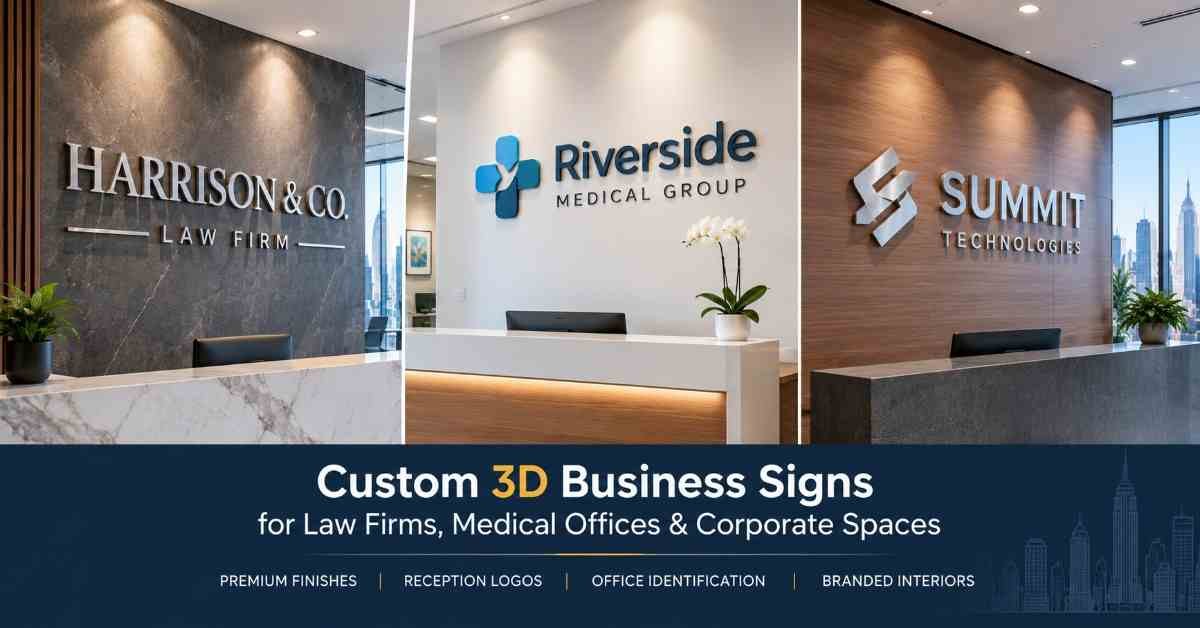

A professional office makes an impression long before a meeting begins. From the moment a visitor enters the reception area, the surroundings communicate something about the organization: its credibility, attention to detail, personality, and standards.
That is why custom 3D business signs in NYC are a valuable investment for law firms, medical practices, corporate headquarters, financial offices, and other professional environments. Dimensional lettering, raised logos, premium metal finishes, and carefully designed reception signs can turn an ordinary wall into a polished brand statement.
However, the right sign depends on where it will be installed and how the space is used. A law firm may prioritize understated sophistication, while a medical practice needs a welcoming and easy-to-identify reception area. A corporate office may require consistent branding across a lobby, meeting rooms, and multiple departments.
This guide explains how to choose custom 3D business signs for these professional environments, including material selection, finishes, placement, installation considerations, and application-specific buying advice.
Why Professional Offices Choose Custom 3D Business Signs
Flat graphics and printed panels can communicate a company name, but dimensional lettering adds physical depth to the design. Depending on the material, lighting, and mounting method, raised letters can create subtle shadows, a refined metallic appearance, or a bold visual focal point.
For professional offices, this added dimension can support several practical goals.
- Create a stronger first impression: A dimensional reception logo gives visitors an immediate visual reference point.
- Reinforce professional credibility: Carefully selected materials and clean installation communicate attention to detail.
- Maintain consistent branding: Custom lettering can reproduce a company’s logo, typography, and brand colors.
- Improve office identification: Dimensional signs can identify reception desks, meeting rooms, executive offices, and departments.
- Complement interior design: Acrylic, metal, and other finishes can coordinate with stone, glass, wood, and painted walls.
The goal is not simply to install a larger sign. It is to select a sign that suits the organization, the architecture, and the experience the business wants to create.
For a broader overview of dimensional lettering and logo options, explore custom 3D letters and logos.
1. Custom 3D Signs for Law Firms: Understated, Refined, and Professional
Law firm signage often needs to communicate trust, stability, and attention to detail without overwhelming the reception area. Whether the firm practices corporate law, litigation, real estate, immigration, or estate planning, the reception sign should feel consistent with its professional identity.
Recommended applications for law firms
Reception wall logos
A raised firm name or logo behind the reception desk provides a clear focal point for clients and visitors. Dimensional lettering can work particularly well against stone-look panels, wood finishes, neutral paint, or textured feature walls.
Executive and partner office identification
Smaller dimensional signs can identify partner offices, conference rooms, and private meeting spaces. Consistent typography and finish help maintain a cohesive appearance throughout the office.
Conference room branding
For firms that host clients, corporate representatives, or legal negotiations, a discreet logo or firm name outside a conference room can reinforce the professional environment without creating visual clutter.
Which finishes work best for law firms?
- Brushed stainless steel: Offers a restrained metallic appearance that suits contemporary professional interiors.
- Polished metal finishes: Create a brighter, more reflective look when a firm wants a more formal or premium presentation.
- Matte black lettering: Works well with light-colored walls, stone finishes, and minimalist office designs.
- Acrylic lettering: Provides flexibility in color, thickness, and overall appearance, including designs that resemble more expensive materials.
The best option depends on the firm’s existing logo, interior palette, lighting, and desired level of contrast. For example, brushed metal lettering against a dark wall can look sophisticated, but a low-contrast combination may be difficult to read from the entrance.
Buying tip for law firms: Request a design proof showing the actual firm name, logo proportions, proposed finish, and wall background. A material that looks attractive in a small sample may appear different when used for a large reception installation.
2. Custom 3D Signs for Medical Offices: Clear, Welcoming, and Easy to Maintain
Medical offices face a different set of priorities. The signage must represent the practice professionally while helping patients, caregivers, and visitors identify the correct reception area.
A dental clinic, specialist practice, diagnostic center, or multi-provider medical office may need several types of signs in addition to its main reception logo.
Recommended applications for medical practices
Main reception signage
A raised practice name and logo behind the reception desk can establish a recognizable entrance point. Acrylic and other suitable dimensional materials allow practices to coordinate their signage with the interior’s colors and design.
Department and room identification
Dimensional lettering can identify consultation rooms, treatment areas, administrative offices, and other spaces. Where signs communicate essential directions or accessibility information, those requirements should be evaluated separately from decorative branding.
Multi-provider and group practice branding
Medical groups may need to display a practice name alongside provider names, specialties, or affiliated departments. The design should establish a clear visual hierarchy so patients can identify the main practice without struggling to read a crowded wall.
Which materials should medical offices consider?
Acrylic is often worth considering for reception logos because it offers design flexibility, a clean appearance, and a range of colors and finishes. Metal lettering may suit specialist clinics or premium medical interiors, while contrasting finishes can help a sign remain visible against the wall.
When comparing materials, consider:
- Whether the surface can be cleaned using the facility’s approved cleaning products.
- How the sign will perform in a frequently touched or high-traffic area.
- Whether the material and mounting method suit the wall surface.
- How clearly the lettering can be read under the office’s actual lighting.
- Whether the design will remain appropriate if the practice expands or changes its branding.
Buying tip for medical offices: Choose the sign and mounting method based on the installation environment, not appearance alone. Confirm cleaning compatibility with the sign manufacturer or installer, especially if the sign will be installed in a clinical or patient-care area.
If your practice also needs broader branded interior elements, explore custom interior signage for offices and reception areas.
3. Custom 3D Signs for Corporate Spaces: Consistent Branding Across the Workplace
Corporate offices frequently have more complex signage requirements than a single reception logo. A headquarters may need a prominent lobby installation, meeting room identification, executive office signs, department names, and branding in shared spaces.
The challenge is to maintain one consistent brand identity across different locations without making every wall look identical.
Recommended applications for corporate offices
Corporate lobby logos
A large dimensional logo can anchor the main entrance or reception area. The design may incorporate corporate colors, a metal finish, layered acrylic, or a combination of materials selected to suit the architecture.
Executive suites and meeting rooms
Smaller signs can identify conference rooms, boardrooms, executive offices, and client-facing areas. Using consistent lettering and finishes helps the office feel coordinated.
Branded collaboration and common areas
Dimensional lettering can display a company name, short brand statement, or other approved identity element in employee collaboration spaces. These installations should complement the room rather than compete with displays, screens, or other visual elements.
Multiple offices and locations
Organizations with several floors or branches should establish signage standards before ordering. Documenting letter heights, logo proportions, material finishes, colors, and mounting methods can help preserve consistency across future installations.
Choosing finishes for corporate interiors
- Brushed metal: Suitable for understated, contemporary branding.
- Acrylic: Offers flexibility for corporate colors, layered designs, and varied visual effects.
- Matte finishes: Can reduce distracting reflections in brightly lit interiors.
- Dimensional painted lettering: Allows closer coordination with established brand colors, subject to the selected material and finish.
Buying tip for corporate spaces: Ask for a signage schedule rather than pricing each wall independently. A schedule should list each sign location, dimensions, material, finish, mounting method, and quantity. This makes it easier to compare proposals and maintain consistency throughout the project.
4. How to Choose the Right Material and Finish
The same logo can look substantially different depending on its material, thickness, color, and installation method. Before selecting a finish, consider the viewing distance, background, lighting, interior style, and available installation surface.
| Material or finish | Best suited for | Key consideration |
|---|---|---|
| Acrylic | Reception logos, office branding, colored lettering | Choose a color and thickness that provide sufficient contrast and the intended visual depth. |
| Brushed stainless steel | Law firms, executive suites, contemporary corporate offices | Review the grain direction and finish under the room’s lighting. |
| Polished metal | Formal reception areas and premium interiors | Reflections may affect visibility depending on lighting and wall placement. |
| Matte black lettering | Modern offices and light-colored feature walls | Ensure adequate contrast against the background. |
| Painted dimensional letters | Branded interiors that require specific colors | Confirm the proposed color, finish, and durability requirements. |
| Layered acrylic or mixed materials | Feature walls and distinctive corporate logos | Check the design proof and total thickness before approving fabrication. |
Material names alone do not guarantee a particular result. Fabrication quality, letter thickness, mounting hardware, surface preparation, and the wall behind the sign all influence the final appearance.
For example, a metal logo mounted directly against a wall may create a different effect from the same logo installed with spacers. The latter can introduce a visible shadow line that emphasizes the dimensional lettering.
Before placing an order, request samples or photographs of comparable completed installations whenever possible.
5. Reception Logos vs. Office Identification Signs
One common buying mistake is treating every sign in a professional office as if it has the same purpose.
A reception logo is primarily a branding feature. An office identification sign helps visitors recognize a particular room, department, or person. These functions call for different design decisions.
Reception logos
Reception signs are often the most prominent interior branding element. They may use larger lettering, a complete company logo, premium materials, and a carefully selected feature wall.
When planning a reception logo, evaluate:
- The width and height of the available wall.
- The size of the reception desk in relation to the logo.
- The viewing distance from the entrance.
- The position of furniture, lighting, and architectural features.
- Whether the logo should be mounted directly to the wall or on a backing panel.
Office identification signs
Room signs usually need to prioritize legibility and consistency. They may identify conference rooms, consultation rooms, partner offices, departments, or administrative areas. For these signs, consider a repeatable layout, readable lettering, appropriate contrast, and a mounting position that visitors can easily see.
Accessibility-related signs may have specific requirements concerning placement, tactile characters, Braille, or other features. Decorative 3D lettering should not be assumed to satisfy those requirements automatically.
Buying tip: Divide the project into branding signs and functional identification signs. This allows you to choose premium finishes for feature installations while maintaining practical, consistent specifications for the rest of the office.
6. How to Plan Sign Size, Placement, and Visibility
A sign that looks well-proportioned on a computer screen may appear too small, too large, or poorly positioned once installed. Scale and placement should be evaluated in the actual space.
Measure the installation area
Record the usable wall width and height, the location of doors and furniture, and any architectural features that could interfere with the design. For reception signs, assess the wall together with the desk rather than treating the wall as an isolated surface.
Consider viewing distance
A logo viewed from the main entrance may need different letter dimensions from a small room sign viewed at close range. Ask the designer or fabricator to recommend letter sizing based on the sign’s purpose and typical viewing distance.
Check the background and contrast
Metallic lettering against a similar-colored wall may look subtle but become difficult to read. Dark letters against a light wall, or light lettering against a darker background, can create clearer separation.
The goal is to preserve the intended visual style without compromising legibility.
Evaluate lighting and shadows
Natural light, overhead lighting, spotlights, and nearby windows can change how a finish appears. If the installation uses dimensional letters with spacers, review how the resulting shadows may affect the logo.
For illuminated applications, discuss the power supply, light distribution, maintenance access, and any installation constraints before approving the design.
Confirm wall conditions
Painted drywall, concrete, stone, glass, wood panels, and other surfaces may require different mounting approaches. The installer should assess the wall material, surface condition, sign weight, and any hidden services that could affect installation.
7. What Determines the Cost of Custom 3D Business Signs in NYC?
There is no single price for custom 3D business signs. A compact office identification sign and a large, multi-material corporate lobby logo involve different quantities of material, fabrication time, mounting requirements, and installation work.
When comparing quotes, consider the following cost factors.
- Sign dimensions and letter height: Larger signs generally require more material and may involve more fabrication and handling.
- Material selection: Acrylic, metal, specialty finishes, and mixed-material designs can have different production costs.
- Logo complexity: Intricate symbols, custom typography, multiple layers, and detailed brand artwork may require additional fabrication work.
- Letter thickness and mounting method: The requested depth, standoffs, backing panels, and installation hardware can affect the overall quote.
- Installation conditions: Wall preparation, access restrictions, building rules, elevator availability, working-hour limitations, and installation height may influence labor requirements.
- Illumination: LED lighting introduces additional components, electrical planning, and potential maintenance considerations.
- Quantity and consistency: A multi-room or multi-floor project may benefit from coordinated production, but the final price depends on the number and specifications of the signs.
How to compare sign quotes accurately
Ask each provider to specify:
- The dimensions and number of signs.
- The material, thickness, and finish.
- Whether the quote includes a backing panel or mounting hardware.
- Design proofs and the number of revisions included.
- Installation, wall preparation, and any electrical work.
- Delivery, building access, and other applicable charges.
- The expected production and installation timeline.
- Any applicable warranty and maintenance terms.
This helps you compare proposals based on the same scope instead of choosing solely by the headline price.
For a project-specific estimate, request a custom signage quote.
8. Installation Considerations for NYC Offices
Professional office installations may involve building management approval, scheduled access, elevator reservations, insurance documentation, or restrictions on drilling and work hours. Requirements vary by building and property, so these details should be confirmed before fabrication is finalized.
Before installation, make sure the following points are addressed:
- Building approval: Confirm any landlord or property-management requirements for signs, drilling, adhesives, or electrical connections.
- Wall assessment: Verify the surface and mounting method are suitable for the sign’s weight and dimensions.
- Final artwork approval: Check the company name, logo, spelling, colors, and proportions before production.
- Installation access: Confirm the installer can transport and position the sign safely.
- Electrical coordination: For illuminated signage, determine whether an appropriately qualified professional is required for the electrical work.
- Applicable regulations: Check whether the particular installation requires permits or must comply with building, fire, accessibility, or other applicable requirements.
Interior branding signs do not all have the same regulatory requirements. Do not assume that an interior sign is automatically exempt from every approval or accessibility obligation.
9. Common Mistakes to Avoid When Ordering 3D Office Signs
- Choosing a finish without considering the room: A finish may look impressive in a sample but clash with the wall, furniture, or lighting. Review the proposed material against the actual interior palette.
- Making the reception logo too small: A sign that is proportioned for a desktop mockup may lose impact across a large reception wall. Evaluate the design at the intended installation scale.
- Overloading the wall with branding: Adding taglines, service lists, contact details, and multiple logos can make a feature wall feel cluttered. Keep the main reception sign focused on the most important brand elements.
- Using inconsistent specifications across rooms: Different letter heights, finishes, and mounting methods can make an office feel disjointed. Establish shared specifications for signs that belong to the same environment.
- Ignoring maintenance and cleaning: Dust, fingerprints, cleaning products, and environmental conditions can affect the appearance of a sign. Ask about suitable cleaning methods and maintenance before choosing a finish.
- Approving artwork without checking the details: Incorrect logo proportions, spelling errors, unsuitable colors, or misplaced elements can be costly to correct after fabrication. Review the final proof carefully and obtain approval from the appropriate decision-maker.
10. A Practical Buying Checklist for Professional Buyers
Use this checklist before requesting a quote for your office signage project.
-
Define the purpose of each sign: branding, identification, or both.
-
Measure each installation location.
-
Prepare the company logo and approved brand guidelines.
-
Identify preferred materials and finishes.
-
Confirm the wall surface and mounting constraints.
-
Decide whether lighting or a backing panel is required.
-
List all reception, office, and meeting room signs.
-
Confirm building approvals and installation access.
-
Request an itemized quotation.
-
Review the final artwork, dimensions, and finish before production.
-
Confirm installation, cleaning, and maintenance arrangements.
Providing these details at the beginning can help the signage provider recommend a suitable design and prepare a more accurate proposal.
Make Your Professional Space Stand Out With Custom 3D Business Signs
For law firms, medical offices, and corporate spaces, effective signage should do more than display a company name. It should fit the architecture, reinforce the brand, help visitors identify the right spaces, and maintain a professional appearance over time.
The best result comes from matching the sign to its application. A law firm may benefit from restrained metallic lettering, a medical practice may prioritize clear identification and easy maintenance, and a corporate headquarters may need a coordinated signage system across multiple rooms and floors.
Start with the purpose of each sign, evaluate the available materials and finishes, and confirm the installation requirements before approving fabrication.
Planning a reception logo, office identification sign, or branded interior in New York City? Visit CustomSignsNY.com to explore custom signage options, or request a quote to discuss your project.
Frequently Asked Questions
What are custom 3D business signs?
Custom 3D business signs use dimensional letters, logos, or other fabricated elements to create a raised appearance. They can be produced using materials such as acrylic or metal and are commonly used for reception branding, office identification, and corporate interiors.
Are 3D signs suitable for law firm reception areas?
Yes. Dimensional lettering can create a refined reception feature for law firms. Brushed metal, matte finishes, and carefully designed acrylic lettering are options worth considering, depending on the firm’s branding and interior design.
Which material is best for a medical office reception sign?
There is no universal best material. Acrylic offers flexibility in color and design, while metal can provide a more premium appearance. The choice should reflect the practice’s visual identity, cleaning requirements, wall surface, and budget.
Can custom 3D signs be made using a company’s exact logo?
Yes, subject to the available artwork and fabrication requirements. Provide the approved logo files and brand guidelines, and review a design proof to confirm the proportions, colors, and layout before production.
Can 3D business signs be installed on glass or stone walls?
Potentially, but the mounting approach must suit the specific surface, sign weight, and installation conditions. Glass, stone, and other specialty surfaces may require particular hardware or professional installation methods.
How much do custom 3D business signs cost in NYC?
The price depends on dimensions, material, thickness, logo complexity, mounting method, installation conditions, and whether illumination is included. An itemized quote based on the actual project is the most reliable way to determine the cost.
Are 3D reception signs the same as ADA-compliant office signs?
No. A decorative dimensional logo does not automatically meet accessibility-signage requirements. Where tactile lettering, Braille, placement rules, or other accessibility features are required, those specifications should be addressed separately.
How long does it take to fabricate and install a custom 3D sign?
The timeline depends on design approval, material availability, fabrication complexity, installation access, and any building approvals. Ask the provider for an estimated schedule covering artwork, production, delivery, and installation.